
Anterior cruciate ligament (ACL) injuries
The anterior cruciate ligament, or ACL, is one of the main ligaments that keeps the knee stable. It is often injured when landing, pivoting or changing direction suddenly, and may cause a pop, rapid swelling or a knee that gives way. Structured rehabilitation is the foundation of care, with or without reconstruction surgery.
At the Specialist Orthopaedic Surgery Clinic in East Melbourne, orthopaedic assessment, physiotherapy, myotherapy and strength and hop testing sit in the same rooms, so your rehabilitation and return to sport can follow one clear plan.

What is an ACL injury?
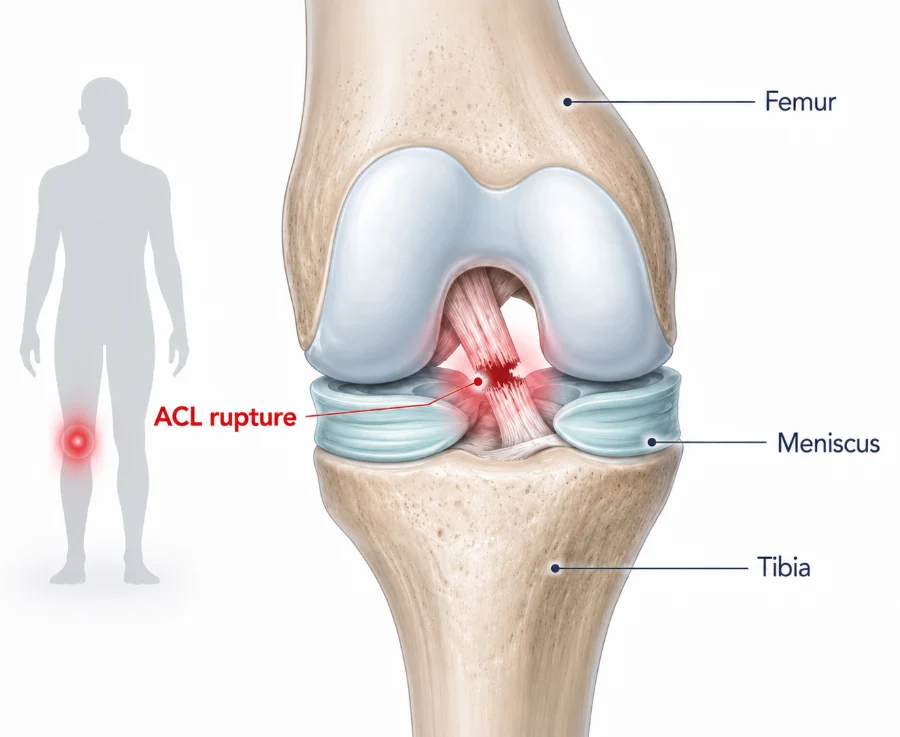
The ACL runs through the centre of the knee and joins the thigh bone to the shin bone. It stops the shin bone sliding too far forward and controls rotation when you turn, land or change direction.
An injury may be a partial sprain or a complete tear. The meniscus, cartilage or other ligaments can be hurt at the same time. Treatment depends on how stable the knee feels, any other injuries and the activities you want to return to.
Does this sound like you?
Arrange an early assessment after a suspected ACL injury, especially if there was a pop, rapid swelling or the knee gave way. Review is also important if the knee still feels unstable after the swelling settles.
How it is diagnosed
Diagnosis starts with how the injury happened, how quickly the knee swelled and any episodes of giving way. Movement and stability tests are carried out, usually comparing the injured knee with the other side.
MRI shows the ligament, menisci, cartilage and other soft tissues, and helps confirm the injury and find any other damage. Later on, strength, balance and hop testing can measure recovery and readiness for sport.
Treatment and recovery
Treatment depends on how stable the knee is, any other injuries, your age and the activities you want to return to. A structured physiotherapy program is important whether or not surgery is planned, and some people regain enough stability for their usual activities without an operation.
First weeks
Settle and straighten
Swelling is controlled, walking is restored and the knee is brought back to full straightening. Crutches may help for a short time.
Physiotherapy
Rebuild strength
Quadriceps and hamstring strength, balance and control are progressed step by step.
Building up
Train for your goals
Running, landing and change of direction work are added in stages. Strength and hop testing measure side to side differences.
If the knee stays unstable
Review the plan
If the knee keeps giving way, or you want to return to pivoting sport or demanding work, reconstruction may be discussed.
Exercises you may be given
Your physiotherapist will choose the right ones and the right level for you.
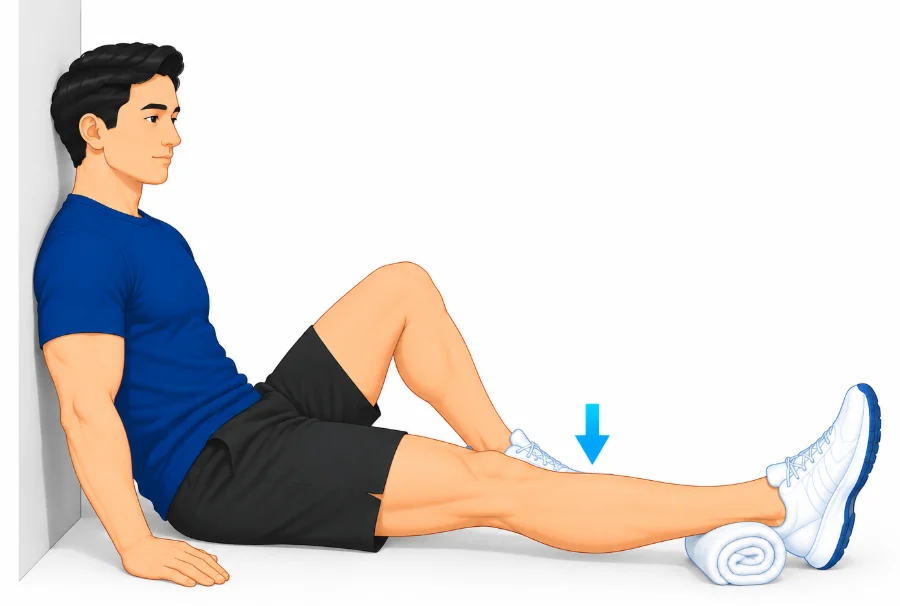
Heel prop
Sit with your heel resting on a rolled towel and nothing under the knee. Relax and let the knee gently straighten.
3 to 5 minutes, a few times a day
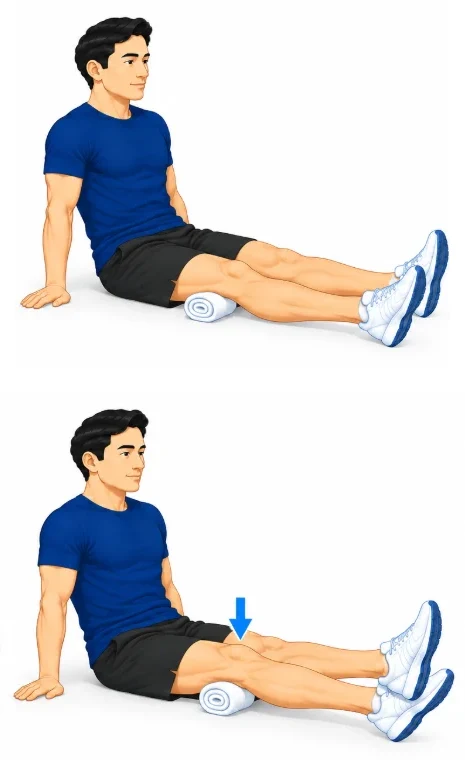
Quadriceps tightening
Sit with your leg straight. Tighten the thigh muscle to press the back of the knee down, hold, then relax.
10 holds of 5 seconds
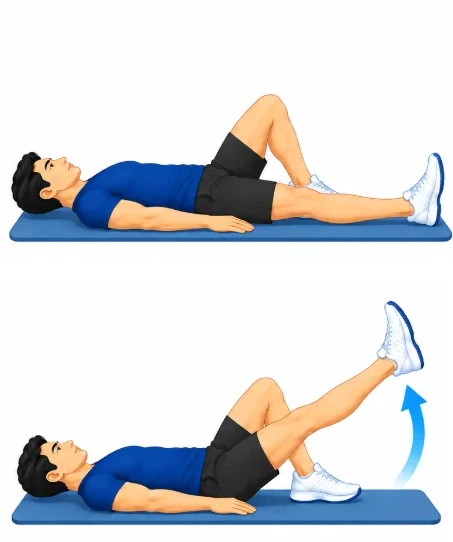
Straight leg raise
Lie on your back with the other knee bent. Tighten the thigh of the injured leg, keep it straight and lift it to the height of the bent knee, then lower slowly.
2 sets of 10
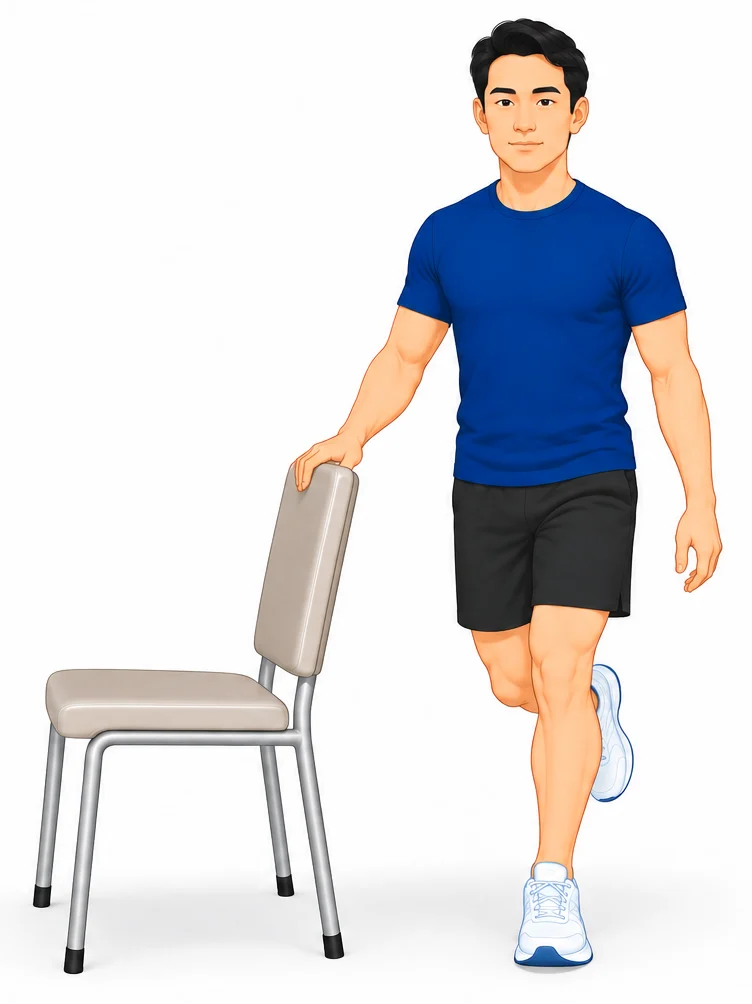
Single leg balance
Stand on the injured leg beside a bench or wall for support. Keep the knee soft and hold your balance.
5 holds of 30 seconds
Other treatment options
Bracing and pain relief
A brace may help some people during higher-risk activities, but it does not replace rehabilitation. Short-term pain relief can be discussed with your GP or pharmacist. Injections are not a routine treatment for an ACL tear. Injections are not given at the clinic. If one is recommended, your GP can arrange it, usually through a radiology practice.
When surgery is needed
ACL reconstruction may be considered when the knee keeps giving way despite rehabilitation, or when you want to return to pivoting sport or physically demanding work. Some meniscus or other ligament injuries may also favour surgery. Reconstruction needs a long rehabilitation program and does not guarantee a return to your previous level. If reconstruction is being considered, your GP can refer you to a knee surgeon who performs it. The physiotherapists at the clinic can manage your rehabilitation before and after the operation.
Common questions
Does every ACL tear need reconstruction?
No. Some people regain enough stability with rehabilitation for their usual activities. Surgery is considered for repeated giving way or a return to pivoting sport.
Can I walk with a torn ACL?
Many people can walk once pain and swelling settle, but the knee may feel unstable when turning, jumping or on uneven ground.
When should ACL surgery be done?
Timing is individual. Swelling, movement and strength are usually restored first, although some other injuries may need earlier treatment.
Is physiotherapy worthwhile if I am having surgery?
Yes. Getting the knee straight, strong and settled before surgery can help recovery, and the same program continues afterwards.
When can I return to sport?
Return to pivoting sport commonly takes nine to twelve months or longer after reconstruction, guided by strength, hop and movement testing and your confidence.
Book an assessment
An assessment can check the stability of your knee, look for other injuries and set out a plan for your goals. Physiotherapy with A/Prof Amir Takla and Imogen Clark, myotherapy with Joanne VanDer Haar, and specialist review with Prof Phong Tran, all at 166 Gipps Street, East Melbourne. Please bring any MRI report and details of rehabilitation already completed. Read about ACL rehabilitation.