
Meniscus tear
A meniscus tear affects one of the firm cartilage cushions inside the knee. It may follow a twisting injury or develop gradually as the tissue ages, and can cause pain along the joint line, swelling, clicking or catching. Many tears settle without surgery, and gradual age-related tears usually do best with exercise first.
At the Specialist Orthopaedic Surgery Clinic in East Melbourne, orthopaedic assessment, physiotherapy, myotherapy and strength testing are all in the same rooms, so your plan can be matched to the type of tear and what you need your knee to do.

What is a meniscus tear?
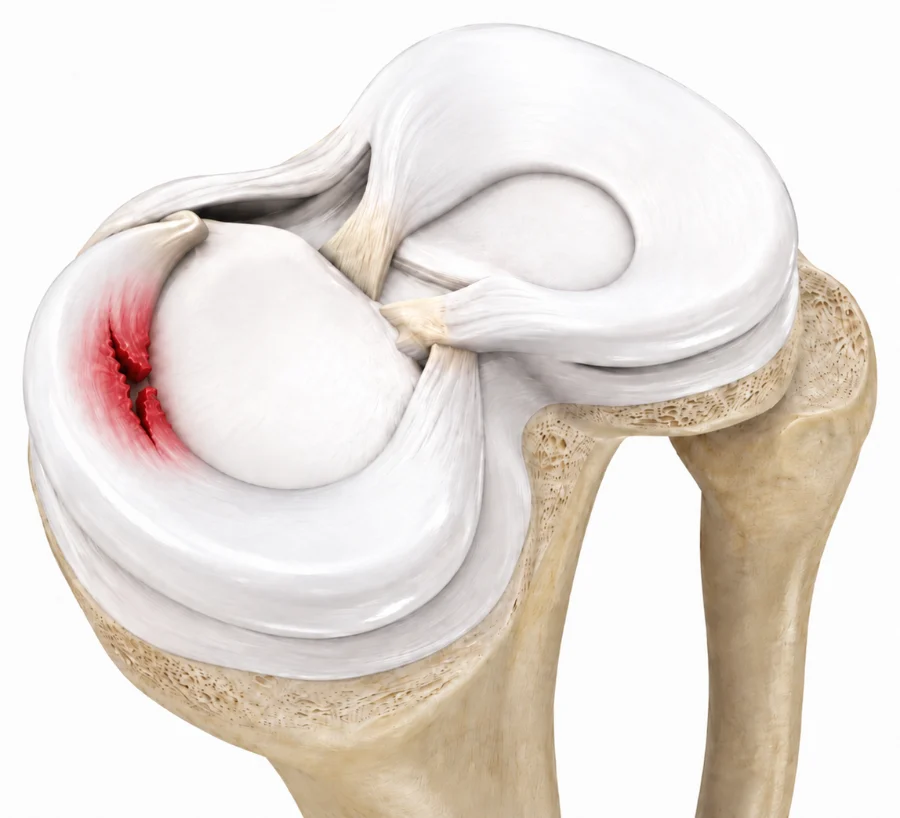
Each knee has two menisci. These are C-shaped pads of strong cartilage between the thigh bone and the shin bone that spread load, absorb force and help the knee feel stable.
A tear can happen suddenly when the knee twists, or develop slowly as the tissue becomes less flexible with age. Age-related tears are very common on MRI, often in people with no pain at all, so the scan is always matched with your symptoms and examination.
Does this sound like you?
Arrange an assessment if knee pain, swelling or catching persists, limits activity, or has not improved with rehabilitation. Earlier review is advised if the knee keeps giving way or becomes truly locked.
How it is diagnosed
Diagnosis starts with how the symptoms began, where the pain is and whether the knee catches, locks or swells. Movement, tenderness along the joint line, stability and the effect of twisting or squatting are checked.
MRI may help when the diagnosis is unclear, the knee is truly locked or surgery is being considered. Because meniscus tears are common on MRI without symptoms, the scan is always read together with the examination.
Treatment and recovery
Treatment depends on whether the tear followed an injury or developed gradually, whether the knee is truly locking, and how much arthritis is present. Many tears improve with activity changes, physiotherapy and time, and gradual age-related tears usually do best with a structured exercise program first.
First weeks
Settle the knee
Twisting, deep squatting and high impact are reduced while pain and swelling settle, but the knee stays moving and walking continues.
Physiotherapy
Restore movement
Exercises restore full bending and straightening, and rebuild quadriceps and hip strength and balance.
Building up
Strengthen and return
Load is increased gradually for stairs, work and sport. Strength and hop testing can guide a return to running or pivoting.
If progress stalls
Review the plan
If the knee locks, or clear meniscus symptoms remain limiting despite a structured program, a surgical opinion may be arranged.
Exercises you may be given
Your physiotherapist will choose the right ones and the right level for you.
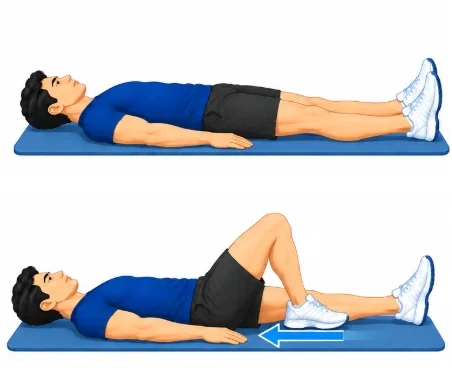
Heel slides
Lie on your back with legs straight. Slowly slide the heel of the sore leg towards you to bend the knee, then slide it back out.
10 slow slides, twice a day
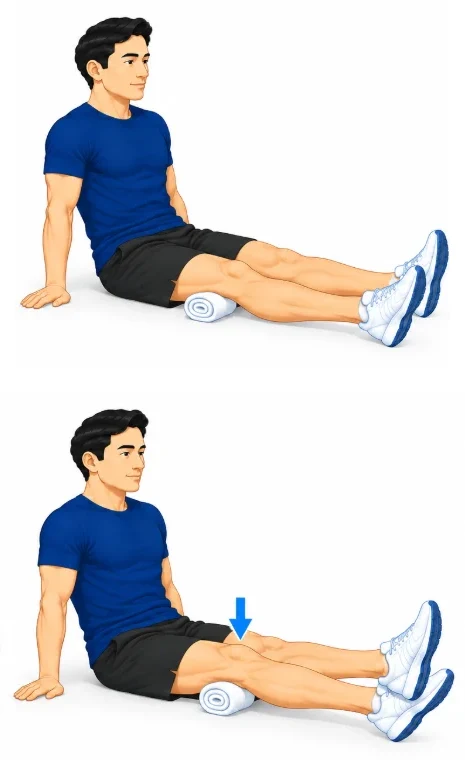
Quadriceps tightening
Sit with your leg straight and a rolled towel under the knee. Tighten the thigh to press the knee down into the towel, hold, then relax.
10 holds of 5 seconds
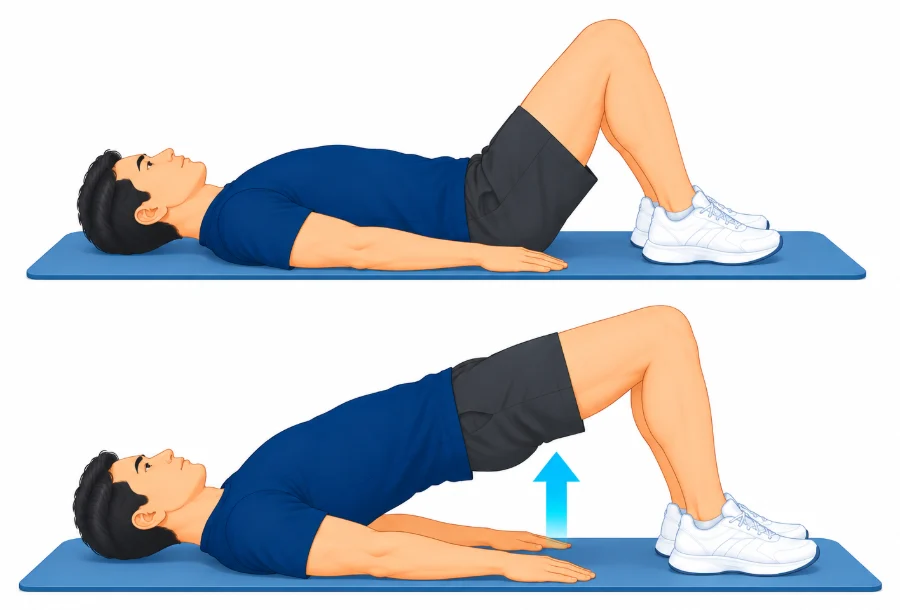
Bridge
Lie on your back with knees bent and feet flat. Squeeze your buttocks and lift your hips until your body is in a straight line, then lower slowly.
2 sets of 10
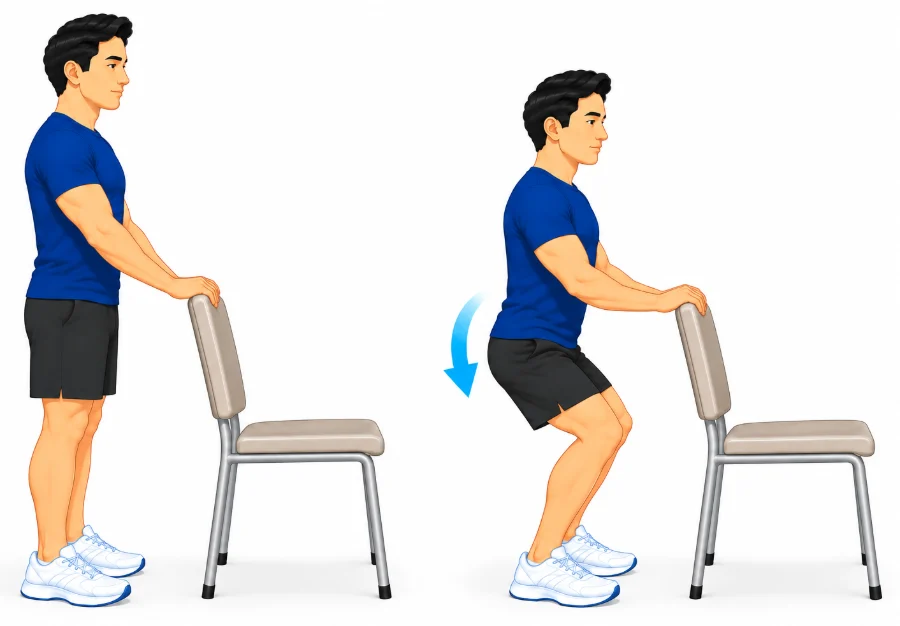
Mini squat
Stand with feet hip width apart, holding the back of a chair for balance. Bend the knees a small way, keeping the knees over the toes, then stand tall. Avoid deep bending.
2 sets of 10, shallow
Other treatment options
Medicines and injections
Short-term pain relief can be discussed with your GP or pharmacist. An injection may help when arthritis or joint inflammation is also contributing, but it does not repair the meniscus. Injections are not given at the clinic. If one is recommended, your GP can arrange it, usually through a radiology practice.
When surgery is needed
Knee arthroscopy may be considered for a torn fragment that locks the knee, for a repairable tear after an injury in an otherwise healthy knee, or when clear meniscus symptoms remain limiting despite a structured exercise program. Gradual age-related tears with arthritis usually do not benefit from routine arthroscopy. Prof Phong Tran performs knee arthroscopy, and his website explains the options and recovery.
Common questions
Does every meniscus tear need surgery?
No. Many tears improve with activity changes and physiotherapy, and gradual age-related tears usually do best with exercise first.
Can a meniscus tear heal?
Some tears in areas with a good blood supply can heal. Others may still show on a scan but cause fewer symptoms over time.
What does a locked knee mean?
It means a torn piece is blocking the knee so it cannot fully straighten. This needs early assessment.
Why does my MRI show a tear if my knee barely hurts?
Meniscus tears become more common with age and are often found in people without symptoms. Scan findings are always matched with your pain and function.
When is arthroscopy considered?
It may be considered for a repairable tear after an injury, a knee that keeps locking, or symptoms that remain clearly linked to the meniscus after rehabilitation.
Book an assessment
An assessment can work out whether the meniscus is the main source of your symptoms and what treatment suits you. Physiotherapy with A/Prof Amir Takla and Imogen Clark, myotherapy with Joanne VanDer Haar, and specialist review with Prof Phong Tran, all at 166 Gipps Street, East Melbourne. Please bring any previous X-ray or MRI reports and details of physiotherapy or other treatment already tried.