
Frozen shoulder (adhesive capsulitis)
Frozen shoulder, also called adhesive capsulitis, causes pain and a gradual loss of shoulder movement as the capsule around the joint becomes tight. Dressing, reaching behind your back and sleeping can all become difficult. Recovery takes time, but treatment can control pain, keep useful movement and guide a safe return of function.
At the Specialist Orthopaedic Surgery Clinic in East Melbourne, orthopaedic assessment, physiotherapy and myotherapy all happen in the same rooms, so treatment can be matched to the stage of your shoulder.

What is frozen shoulder?
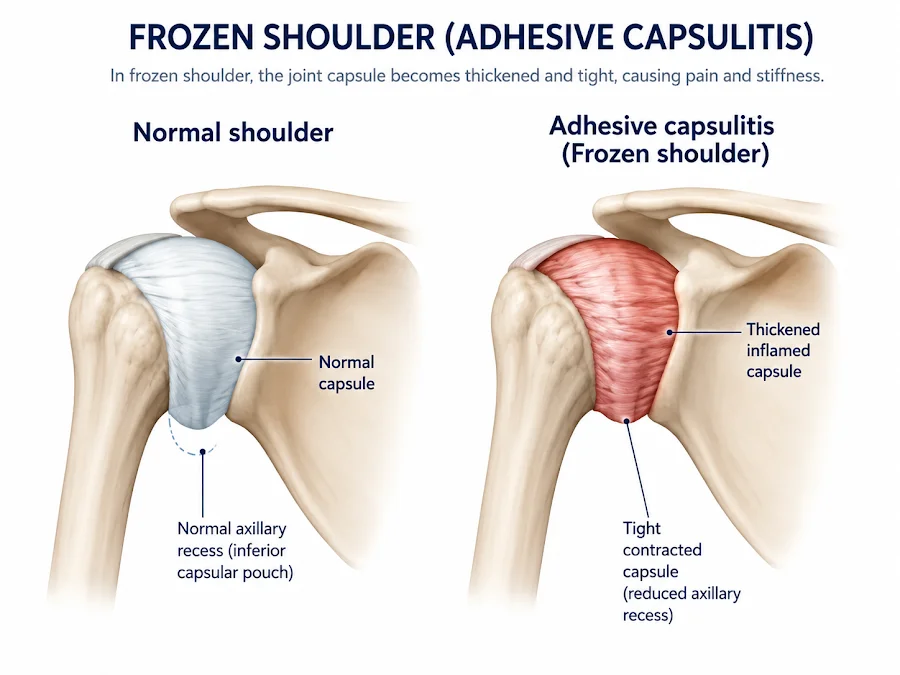
The shoulder joint sits inside a flexible capsule that holds it together while allowing a wide range of movement. In frozen shoulder, this capsule becomes inflamed, thickened and tight. The shoulder then loses movement both when you move it yourself and when someone else moves it for you.
It often begins without a clear cause. It is more common in people with diabetes or thyroid conditions, and can follow shoulder surgery, a fracture or a long period with the arm kept still. It is not caused by failing to stretch enough, and can happen to people who were very active. It usually passes through a painful stage and a stiff stage before movement slowly returns, although the timing varies a lot.
Does this sound like you?
Arrange an assessment if pain and stiffness are getting worse, affecting sleep or daily activities, or if movement has not started to improve over time. Earlier review is sensible if symptoms follow surgery or a fracture, or if you have diabetes or a thyroid condition.
How it is diagnosed
Frozen shoulder is usually diagnosed from your history and the typical loss of movement, both when you move the arm and when the clinician moves it. The shoulder and neck are examined and compared with the other side.
Ultrasound or MRI is not routinely needed, but may be used when the diagnosis is uncertain or a rotator cuff injury is also suspected. Blood tests may be suggested if diabetes or a thyroid condition has not been checked before.
Treatment and recovery
Treatment is guided by the stage of the condition, how much pain you have and how much movement has been lost. Most people improve gradually with time, although recovery can be slow and the timing varies.
Early painful stage
Control the pain
Education, pain relief and sleep strategies. Gentle movement within a comfortable range. An injection may help at this stage. Injections are not given at the clinic. If one is recommended, your GP can arrange it, usually through a radiology practice.
As pain settles
Keep the shoulder moving
Physiotherapy uses gentle, stage-appropriate movement without forcing the shoulder. Myotherapy can ease the neck, upper back and nearby muscles.
Stiff stage
Regain movement
Movement is progressed within a tolerable range as the capsule slowly loosens. Hydrodilatation may be considered for selected patients.
Recovery
Rebuild strength and function
Strength and function are built up for work, sport and daily life. Functional strength testing can help at this point.
Exercises you may be given
Your physiotherapist will choose the right ones and the right level for you.
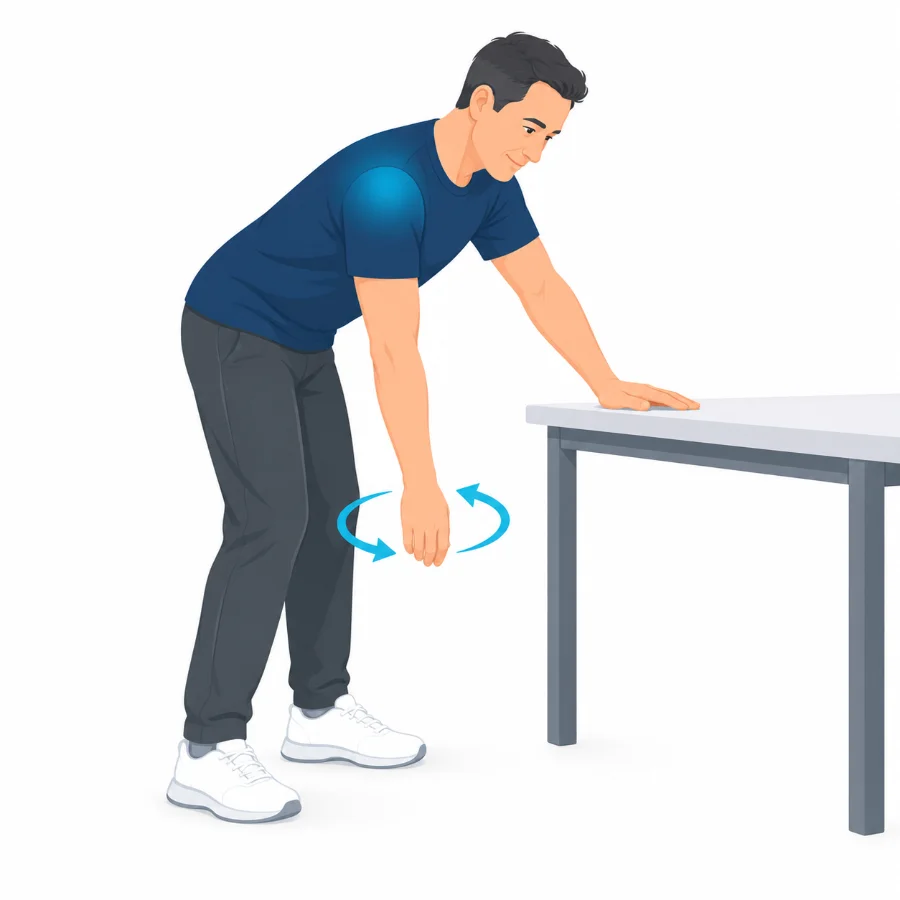
Pendulum swings
Lean on a bench and let the sore arm hang. Rock your body so the arm swings in small, relaxed circles.
30 seconds, a few times a day
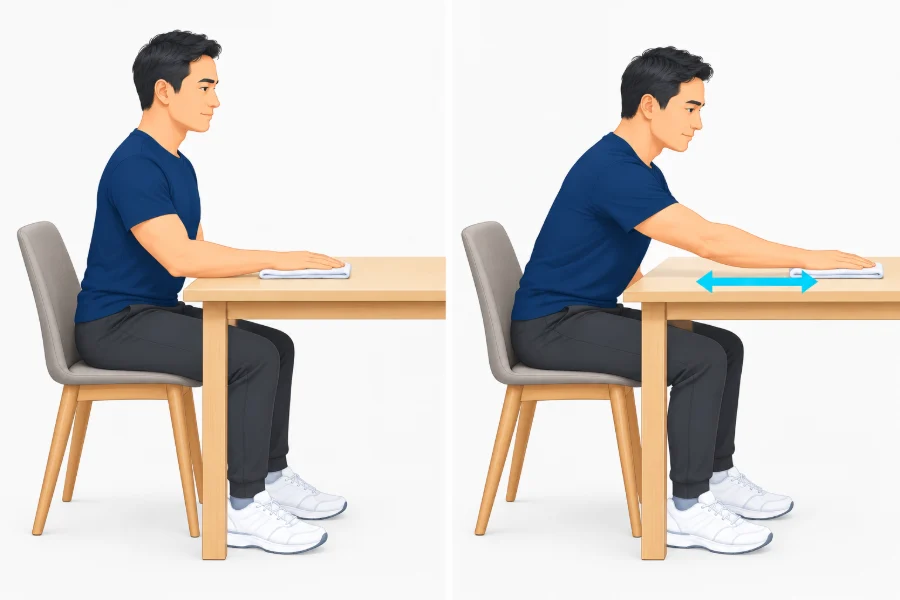
Table slides
Sit beside a table with your hand on a small towel. Slowly slide the hand forward as far as is comfortable, then back.
10 slow slides, twice a day
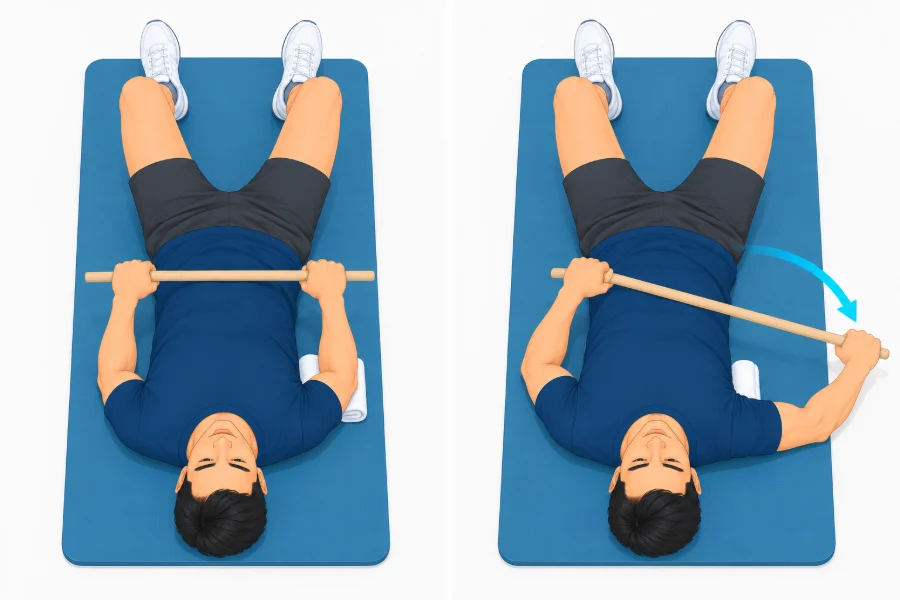
Stick-assisted outward rotation
Lie on your back with the elbow tucked in. Hold a stick in both hands and use the good arm to gently push the sore hand outward.
10 gentle repeats, hold 5 seconds
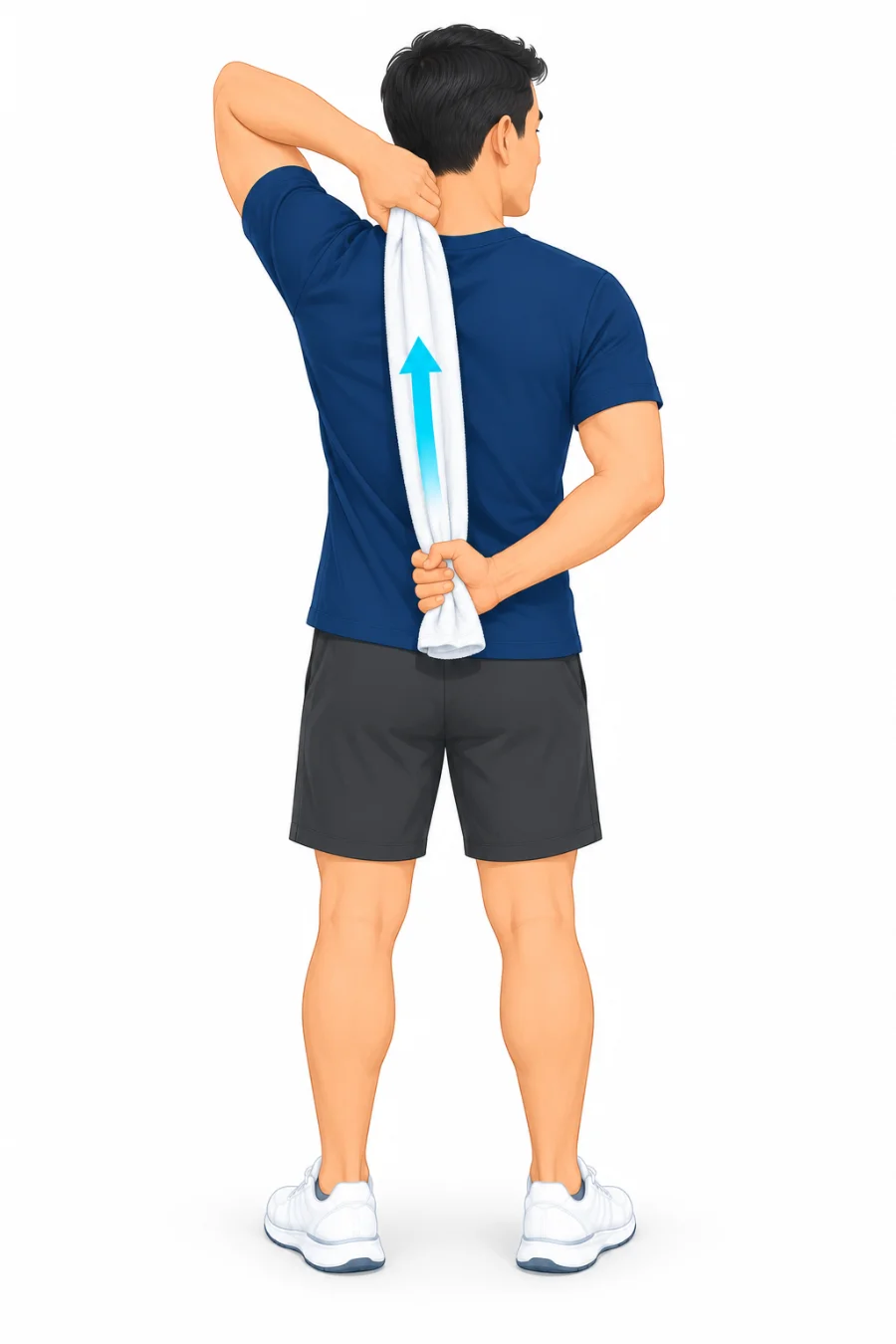
Towel stretch behind the back
Hold a towel over your good shoulder with the sore hand behind your back. Gently pull the towel up with the good hand.
5 to 10 gentle repeats
Other treatment options
Injections and hydrodilatation
A corticosteroid injection into the shoulder joint may reduce pain, particularly early on, and help you take part in exercise. Hydrodilatation is an image-guided procedure that uses fluid to gently stretch the tight capsule, and may suit selected patients.
When surgery is needed
Most frozen shoulders improve without surgery. Manipulation under anaesthetic or arthroscopic capsular release may be considered when severe pain and stiffness remain disabling after an adequate period of treatment and progress has stopped. Prof Phong Tran performs these procedures, and his website explains the options and recovery.
Common questions
How long can frozen shoulder last?
Recovery varies and can take many months, although pain and movement usually improve gradually.
Should I force the shoulder to stretch?
No. Strong stretching can make the pain worse. Movement should be progressed within a tolerable range.
Can an injection help?
An injection may reduce pain in the earlier stage and make it easier to keep up with exercise.
What is hydrodilatation?
It is an image-guided procedure that uses fluid to gently expand the tight joint capsule.
When is an operation considered?
It may be discussed for persistent severe stiffness after an appropriate trial of non-operative care.
Book an assessment
An assessment can confirm frozen shoulder and match treatment to the stage of pain and stiffness. Physiotherapy with A/Prof Amir Takla and Imogen Clark, myotherapy with Joanne VanDer Haar, and specialist review with Prof Phong Tran, all at 166 Gipps Street, East Melbourne. Please bring details of when your symptoms began and any treatment already tried. Read about physiotherapy for frozen shoulder.