
AC joint arthritis
AC joint arthritis affects the small joint at the top of the shoulder where the collarbone meets the shoulder blade. It may cause pain right on top of the shoulder when reaching across your body, lifting weights or lying on that side. Treatment usually starts with activity changes, physiotherapy and pain relief.
At the Specialist Orthopaedic Surgery Clinic in East Melbourne, orthopaedic review, physiotherapy and myotherapy work together to confirm whether the AC joint is the source of your pain before treatment is planned.

What is AC joint arthritis?
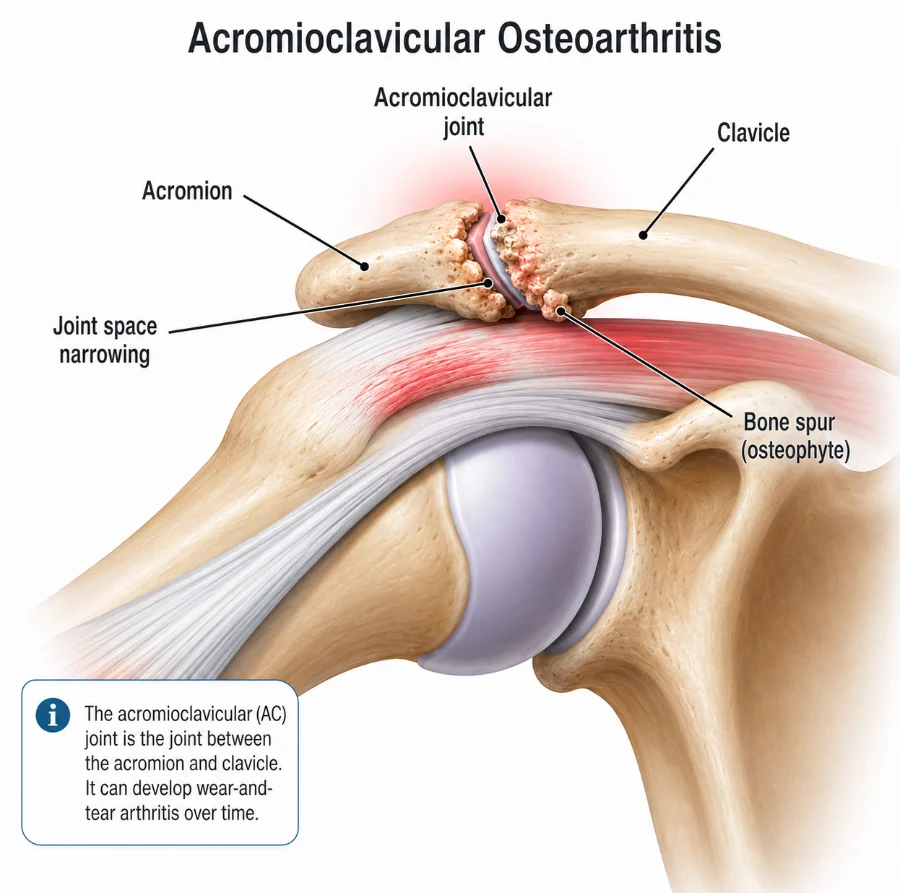
The acromioclavicular joint, or AC joint, is the small joint at the top of the shoulder where the collarbone meets part of the shoulder blade. It helps the shoulder blade move as the arm lifts.
In AC joint arthritis the cartilage in this joint thins and the joint surfaces change. Pain is usually felt directly on top of the shoulder. Arthritis in this joint is common on X-ray and does not always cause pain, so the examination guides treatment.
Does this sound like you?
Arrange an assessment if pain on top of the shoulder persists, disturbs sleep, limits lifting or gym work, or has not improved with activity changes and rehabilitation.
How it is diagnosed
Diagnosis is usually based on tenderness directly over the AC joint and pain when the arm is brought across the body or used for pressing. The rest of the shoulder and the neck are examined to rule out other causes of pain.
An image-guided injection of local anaesthetic into the joint may occasionally help confirm that it is the main pain source. MRI is rarely needed unless another shoulder problem is suspected. Injections are not given at the clinic. If one is recommended, your GP can arrange it, usually through a radiology practice.
Treatment and recovery
Treatment depends on how clearly the pain comes from the AC joint and how much it affects lifting, sleep or sport. Most people start with activity changes, physiotherapy and pain relief.
First steps
Offload the joint
Heavy pressing, push-ups, bench press and firm cross-body reaching are reduced for a while, while everyday movement continues.
Physiotherapy
Build support
Exercises keep the shoulder moving and strengthen the rotator cuff and shoulder blade muscles so daily and sporting tasks are easier. Myotherapy may ease nearby neck and shoulder muscles.
If pain limits progress
Settle the joint
Pain relief can be reviewed with your GP or pharmacist. An image-guided injection may give temporary relief and help confirm the pain source.
Building up
Return to lifting
Pressing and lifting are reintroduced gradually. Strength testing may help when returning to heavy lifting or sport.
Exercises you may be given
Your physiotherapist will choose the right ones and the right level for you.
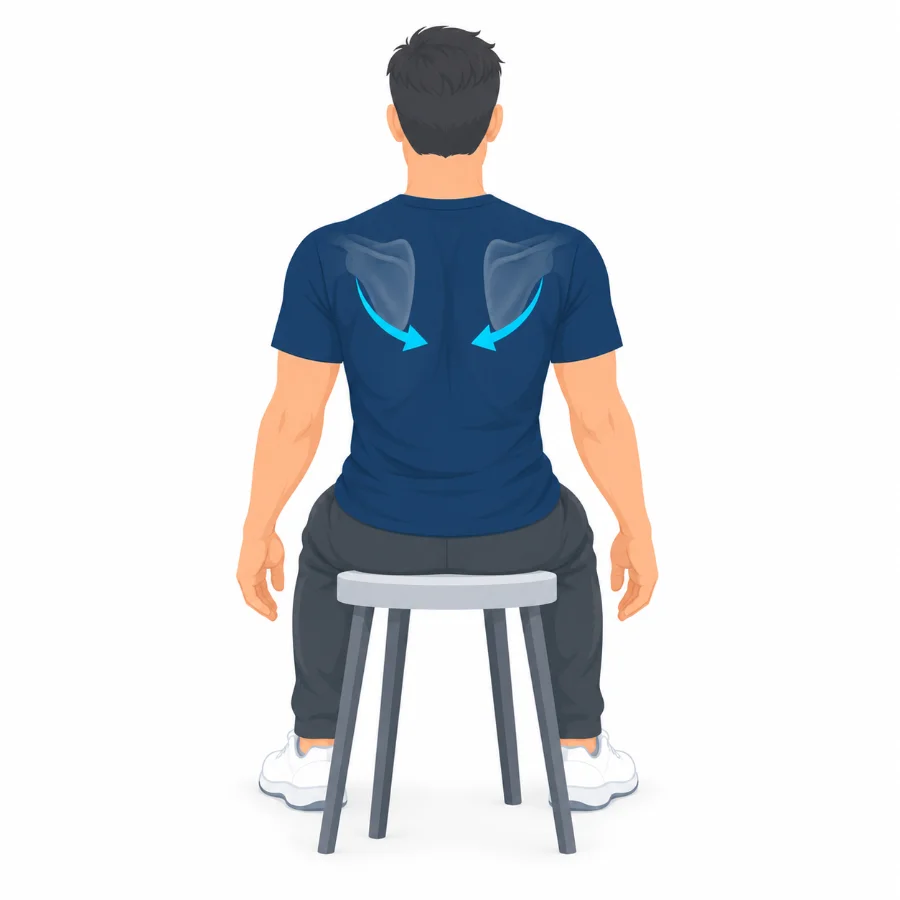
Shoulder blade squeeze
Sit tall and gently draw your shoulder blades back and down. Hold, then relax without shrugging.
10 holds of 5 seconds
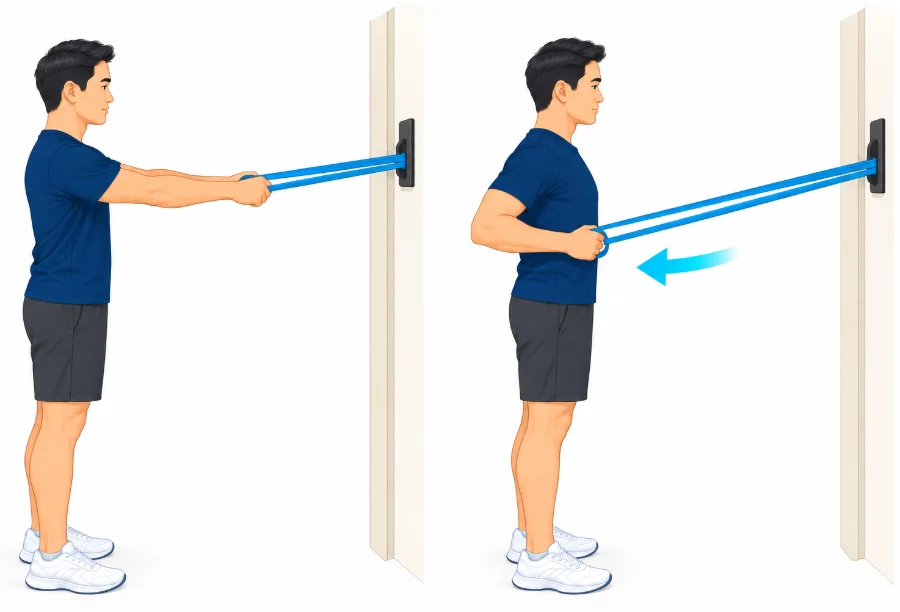
Resistance band row
Hold a light band anchored in front of you at chest height. Pull your elbows back close to your sides, squeeze the shoulder blades, then return slowly.
2 to 3 sets of 10
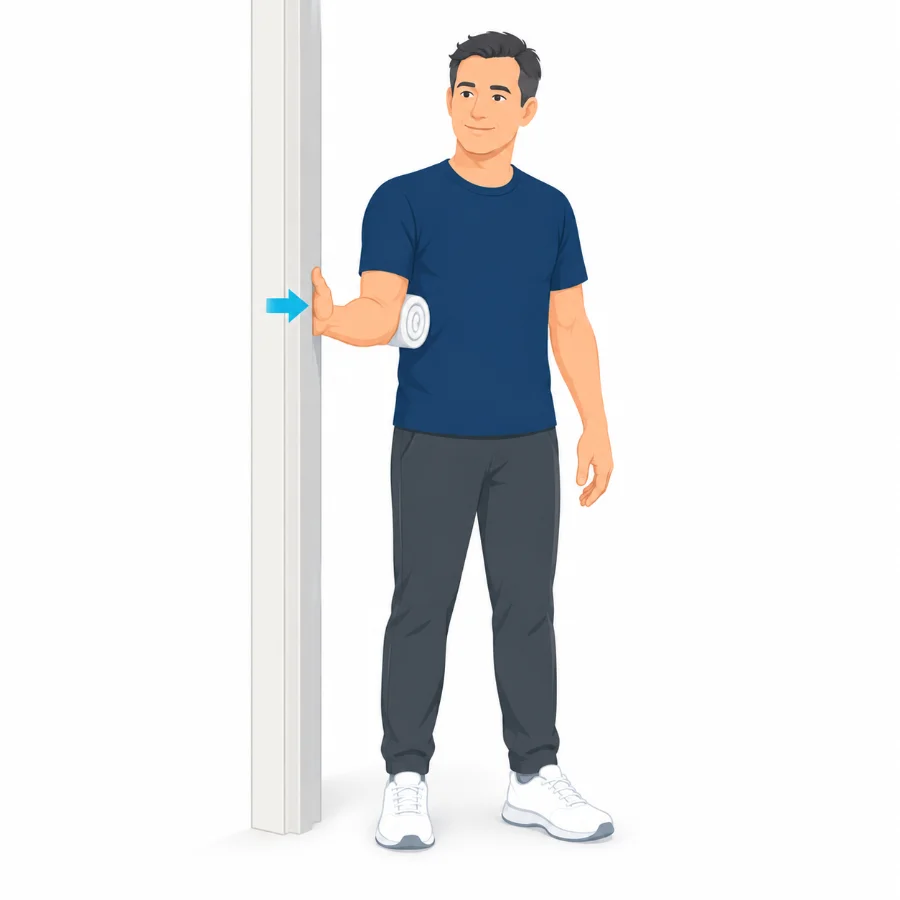
Outward press against a wall
Stand side-on to a wall with your elbow bent and tucked in. Press the back of your hand gently into the wall without moving.
5 holds of 20 to 30 seconds
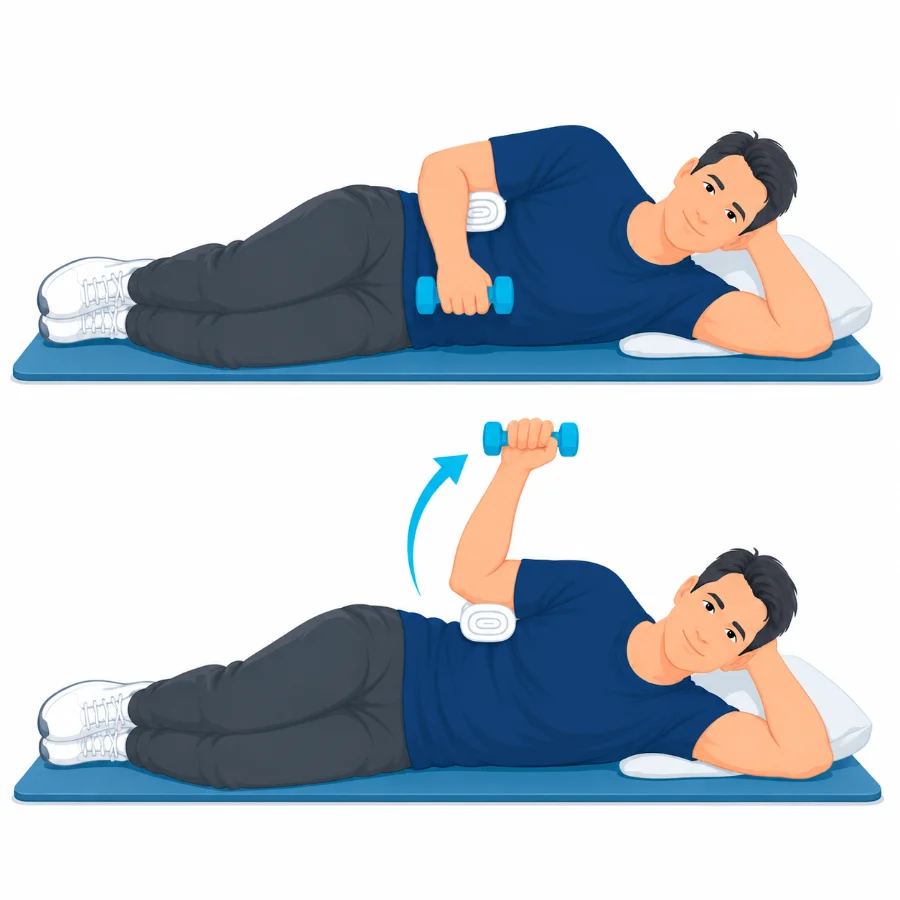
Side-lying rotation
Lie on your good side with a small towel under the elbow. Slowly turn the forearm up with a light weight, then lower it.
2 to 3 sets of 10, slow
Other treatment options
Injections and medicines
Pain relief should be reviewed with your GP or pharmacist. An image-guided corticosteroid injection into the AC joint may give temporary relief and can help confirm that this small joint is the main source of pain.
When surgery is needed
Arthroscopic AC joint excision may be considered when pain remains clearly localised to the joint and keeps limiting sleep, lifting, work or sport despite suitable non-operative care. A small amount of bone is removed from the end of the collarbone. Arthritis on an X-ray without matching symptoms is not a reason for surgery. Prof Phong Tran performs arthroscopic AC joint excision, and his website explains the options and recovery.
Common questions
Can AC joint arthritis show on an X-ray without pain?
Yes. These changes are common and do not always cause symptoms. Pain should be clearly felt at the joint.
Which activities usually aggravate the AC joint?
Reaching across the body, pressing, push-ups, bench press and sleeping on the affected side often increase pain.
Can an injection confirm where the pain comes from?
An image-guided local anaesthetic injection can give temporary relief and may help confirm that the AC joint is involved.
Can I keep going to the gym?
Usually yes, with changes. Pressing and cross-body exercises are reduced for a while and rebuilt gradually.
When is surgery considered?
Surgery may be discussed when persistent pain is clearly localised to the AC joint despite suitable non-operative care.
Book an assessment
An assessment can confirm whether the AC joint is the source of your pain and plan treatment around your work and sport. Physiotherapy with A/Prof Amir Takla and Imogen Clark, myotherapy with Joanne VanDer Haar, and specialist review with Prof Phong Tran, all at 166 Gipps Street, East Melbourne. Please bring any previous X-rays or scan reports and details of treatment already tried.