
Shoulder arthritis (osteoarthritis)
Shoulder osteoarthritis happens when the smooth cartilage lining the shoulder joint wears and the joint no longer moves freely. It can cause a deep ache, stiffness and grinding, and make reaching, dressing and sleeping harder. Many people manage well for years with the right exercise, pain relief and activity changes.
At the Specialist Orthopaedic Surgery Clinic in East Melbourne, orthopaedic assessment, physiotherapy and myotherapy all happen in the same rooms, so your plan can be matched to your pain, movement and goals.

What is shoulder arthritis?
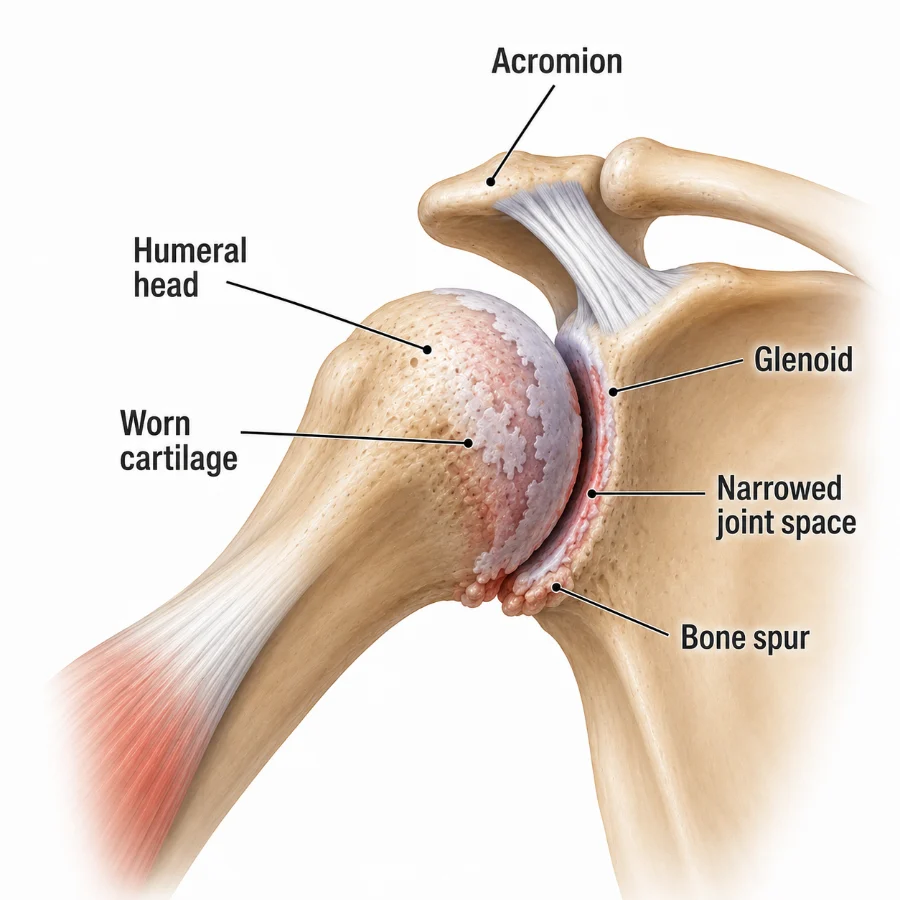
The main shoulder joint is a ball and socket. The top of the upper arm bone sits against a shallow socket on the shoulder blade, and smooth cartilage covers both surfaces so the arm can move freely.
In osteoarthritis this cartilage gradually wears, the joint space narrows and bone spurs can form around the edges. Movement becomes painful and more limited. It is not simply a part of ageing, and the amount of arthritis on an X-ray does not always match how the shoulder feels.
Does this sound like you?
Arrange an assessment if pain or stiffness is becoming more frequent, is affecting sleep, dressing or lifting, or has not improved with a suitable exercise program. Review is also worthwhile if you are relying more on pain medicines or steadily losing movement.
How it is diagnosed
Diagnosis starts with the pattern of pain, stiffness and loss of function. Movement is checked both when you move the arm and when the clinician moves it, and strength, the neck and nearby joints are examined.
CT may be used later to look at bone shape in detail if shoulder replacement is being planned. MRI or ultrasound is usually only needed when a rotator cuff problem may also be adding to the symptoms.
Treatment and recovery
Treatment aims to ease pain and keep enough movement for the things you want to do. It cannot reverse arthritis, but it often makes a large difference to comfort and function.
First steps
Understand and adapt
Learning about the condition and adjusting how you reach, lift and sleep, without avoiding all use of the shoulder.
Physiotherapy
Keep it moving
Gentle mobility with rotator cuff and shoulder blade strengthening. Myotherapy can ease nearby muscles alongside exercise.
If pain limits progress
Settle flare ups
Pain relief reviewed with your GP or pharmacist. An image-guided injection may give temporary relief so you can keep exercising. Injections are not given at the clinic. If one is recommended, your GP can arrange it, usually through a radiology practice.
If symptoms stay severe
Review the plan
Strength and movement testing can track progress. Shoulder replacement may be discussed if pain and loss of function remain severe.
Exercises you may be given
Your physiotherapist will choose the right ones and the right level for you.
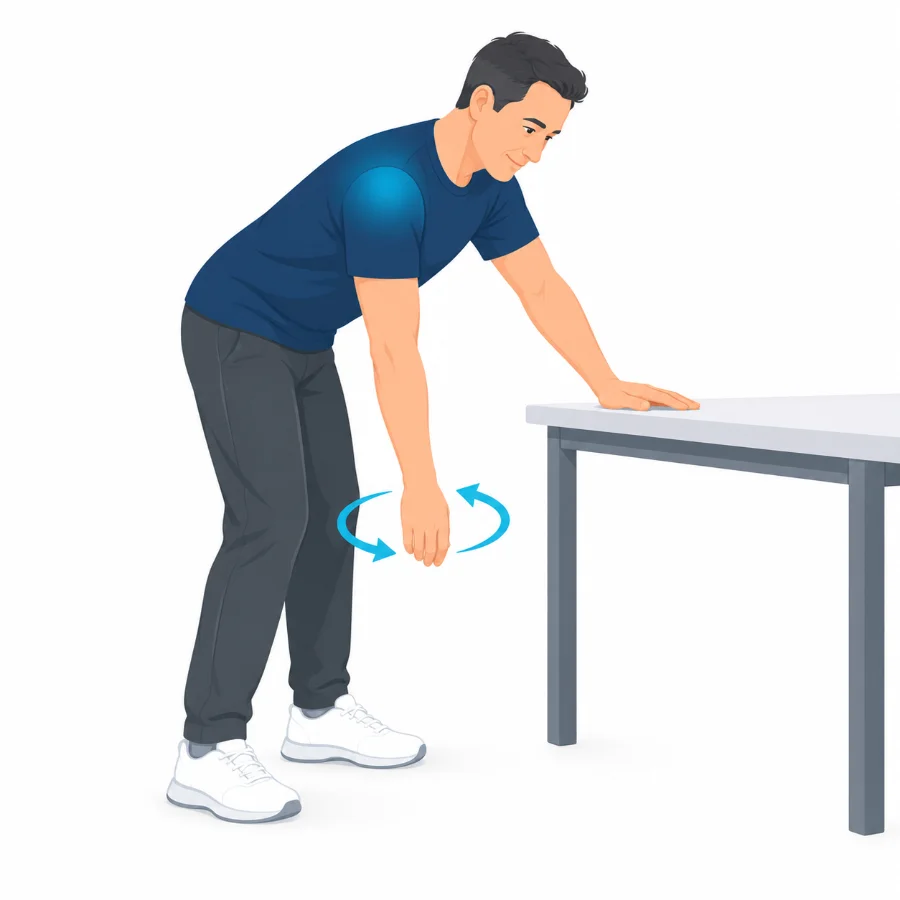
Pendulum swings
Lean on a bench and let the sore arm hang. Rock your body so the arm swings in small, relaxed circles.
30 seconds, a few times a day
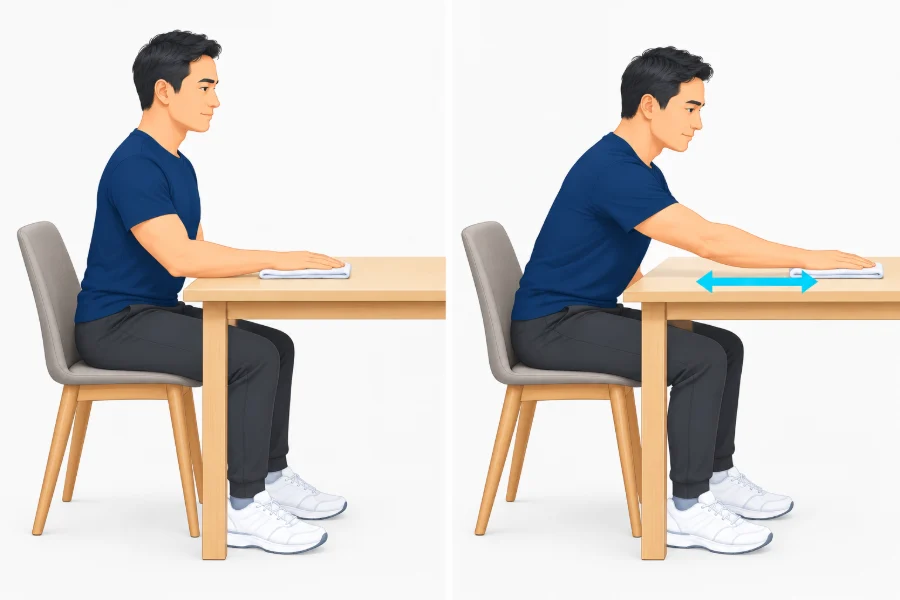
Table slides
Sit beside a table with your hand on a small towel. Slowly slide the hand forward as far as is comfortable, then back.
10 slow slides, twice a day
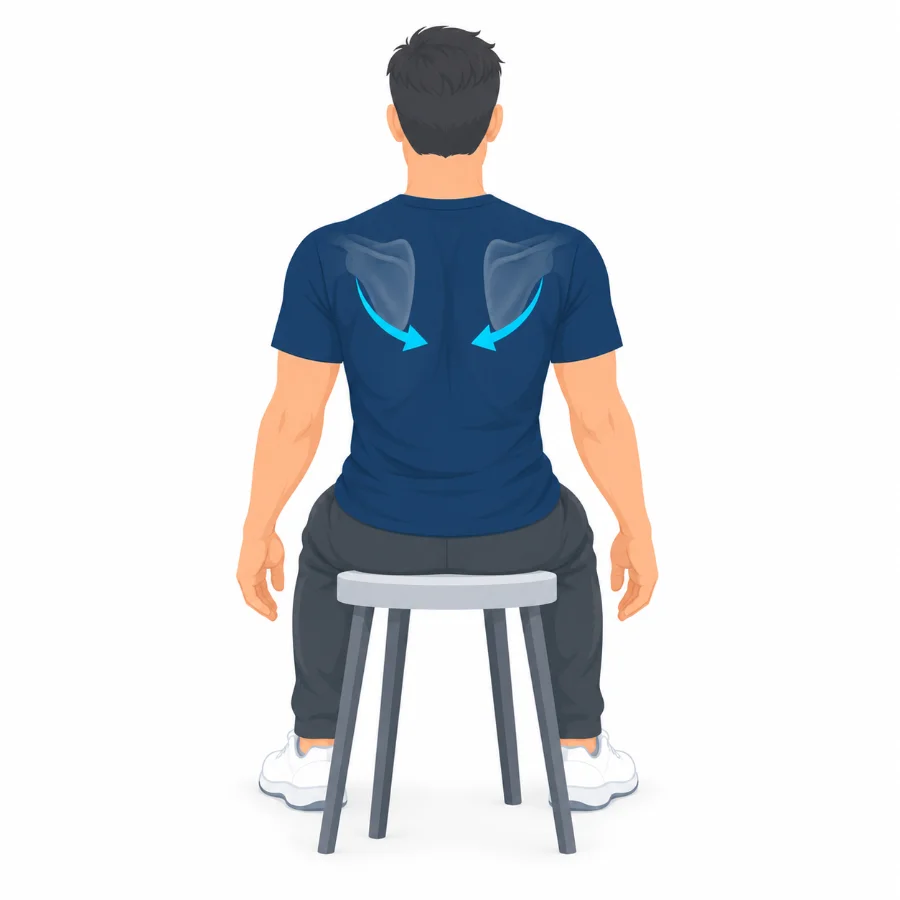
Shoulder blade squeeze
Sit tall and gently draw your shoulder blades back and down. Hold, then relax without shrugging.
10 repeats, hold 5 seconds
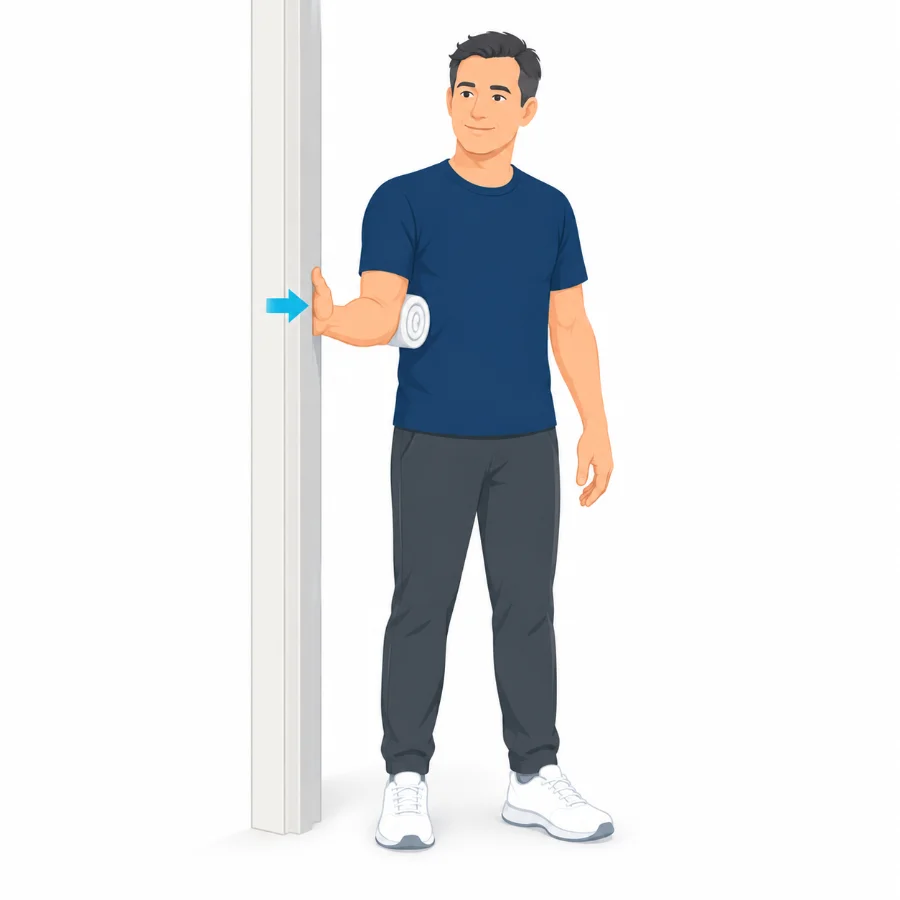
Gentle outward press
Stand side-on to a wall with your elbow bent and tucked in. Press the back of your hand gently into the wall without moving the arm.
5 to 10 presses, hold 5 seconds
Other treatment options
Medicines and injections
Pain relief should be reviewed with your GP or pharmacist, taking your other health conditions and medicines into account. An image-guided corticosteroid injection may give temporary relief and help you stay active, but it does not restore cartilage.
When surgery is needed
Shoulder replacement may be considered when pain, stiffness and loss of function remain severe despite suitable non-operative care. The type of replacement depends on the rotator cuff, bone shape and your goals. Prof Phong Tran performs shoulder replacement, and his website explains the options and recovery.
Common questions
Can shoulder arthritis improve without surgery?
Yes. Exercise, activity changes, pain relief and a selected injection can improve comfort and function for many people.
Do I need an MRI?
Usually not. An X-ray normally shows the arthritis. MRI or ultrasound is added when a rotator cuff problem may also be involved.
Can an injection cure shoulder arthritis?
No. An injection may give temporary relief but does not restore worn cartilage.
Will exercise make the arthritis worse?
Suitable exercise does not speed up arthritis. It helps keep movement and strength, and the program is adjusted to your symptoms.
When is shoulder replacement considered?
It may be discussed when pain, stiffness and night pain remain severe despite suitable non-operative treatment.
Book an assessment
An assessment can confirm the diagnosis and set out treatment that suits your goals. Physiotherapy with A/Prof Amir Takla and Imogen Clark, myotherapy with Joanne VanDer Haar, and specialist review with Prof Phong Tran, all at 166 Gipps Street, East Melbourne. Please bring any recent shoulder X-rays, scan reports and a list of your current medicines.