SLAP lesion
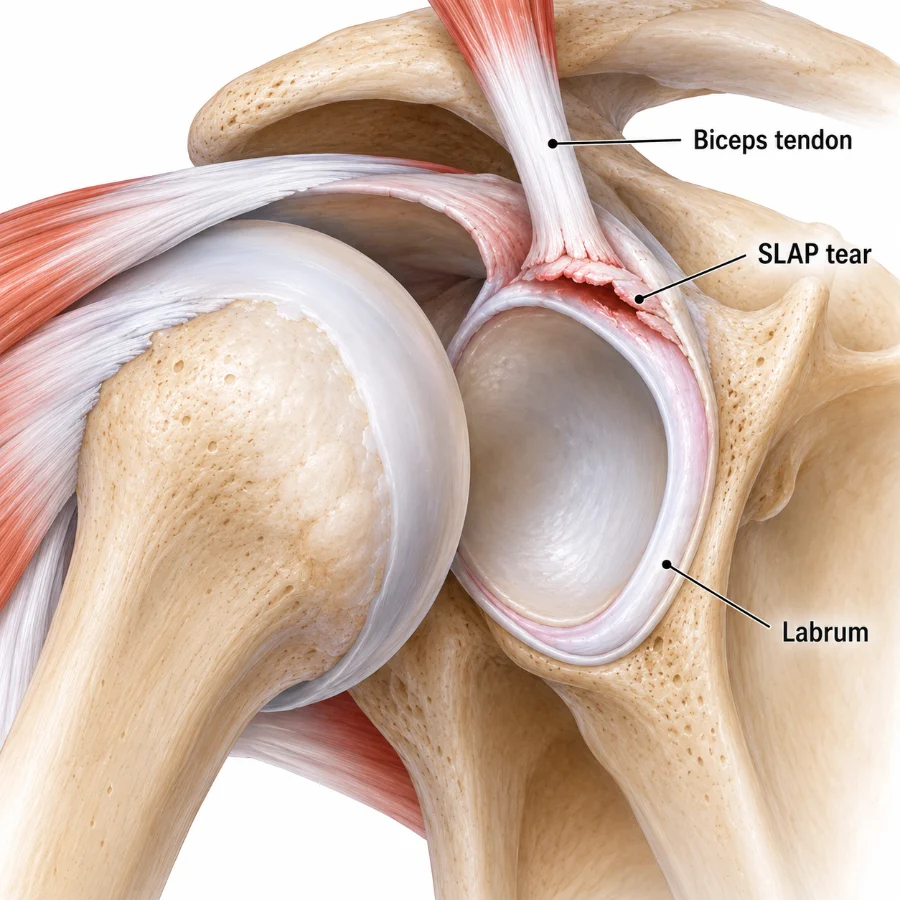
A SLAP lesion is a tear of the top part of the labrum, the rim of cartilage around the shoulder socket, where the biceps tendon attaches. It may follow a fall, a sudden pull on the arm or repeated throwing, and can cause deep pain, clicking or catching. Many people improve with physiotherapy and activity changes.
At the Specialist Orthopaedic Surgery Clinic in East Melbourne, orthopaedic assessment, physiotherapy, myotherapy and strength testing all take place in the same rooms, so your plan can reflect both the tear and the demands of your sport or work.
What is a SLAP lesion?
The labrum is a ring of strong cartilage around the edge of the shallow shoulder socket. It deepens the socket and gives an anchor point for ligaments and for one of the biceps tendons, which attaches at the very top of the socket.
SLAP stands for superior labrum, anterior to posterior. It describes a tear at the top of the labrum that runs from front to back, where the biceps tendon joins. Some tears follow an injury, while others develop slowly with overhead sport or with age. Labral changes are common on scans in people with no pain, so treatment is based on the whole clinical picture.
Does this sound like you?
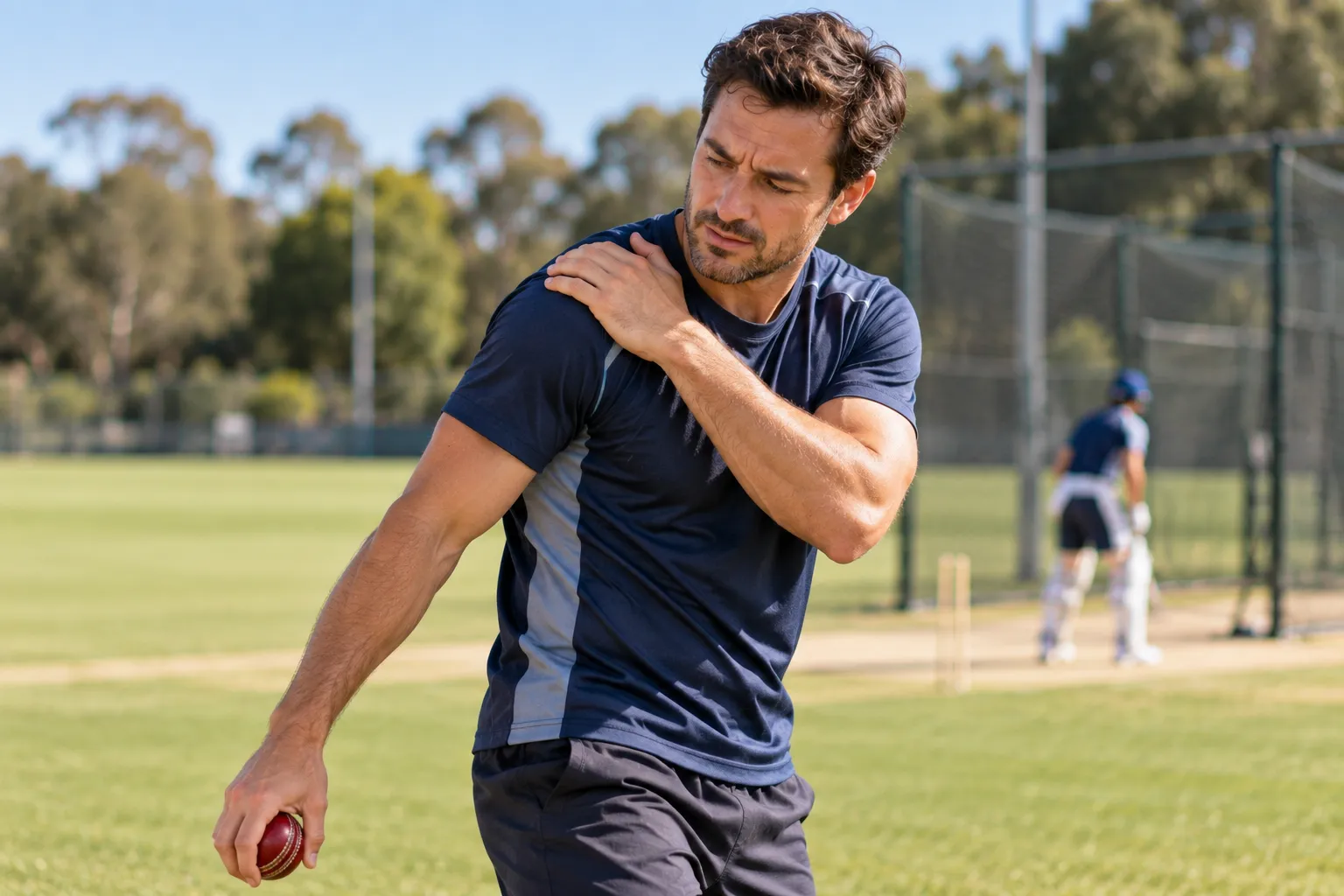
Arrange an assessment if deep shoulder pain, painful clicking or catching persists and limits work, sport or sleep. Earlier review is sensible after a forceful injury or if the shoulder feels unreliable.
How it is diagnosed
Diagnosis starts with how the pain began, where it is felt and whether there is clicking, catching or a feeling of instability. Shoulder movement and strength are checked, along with tests that place gentle, controlled stress on the labrum and biceps. The neck and rotator cuff are also examined.
An X-ray helps rule out arthritis, fracture or bone loss. MRI can show the labrum and nearby tissues, and an MR arthrogram may give more detail in selected cases. Scan findings are always matched with your symptoms, because labral changes can occur without pain.
Treatment and recovery
Treatment depends on the type of tear, whether the shoulder is unstable and the demands of your work or sport. Many people start with activity changes and physiotherapy to rebuild strength and control.
First weeks
Settle the pain
Movements that bring on pain or catching are reduced for a time while the shoulder keeps moving in a comfortable range. Short-term pain relief can be discussed with your GP or pharmacist.
Physiotherapy
Build control
Exercises strengthen the rotator cuff and shoulder blade muscles and improve control of the arm in different positions.
Building up
Return to load
Lifting, overhead work and throwing are reintroduced gradually. Strength testing and sport-specific drills can measure progress and guide return.
If progress stalls
Review the plan
If pain or catching remains limiting despite a structured program, an injection or a surgical opinion may be arranged. Injections are not given at the clinic. If one is recommended, your GP can arrange it, usually through a radiology practice.
Exercises you may be given
Your physiotherapist will choose the right ones and the right level for you.
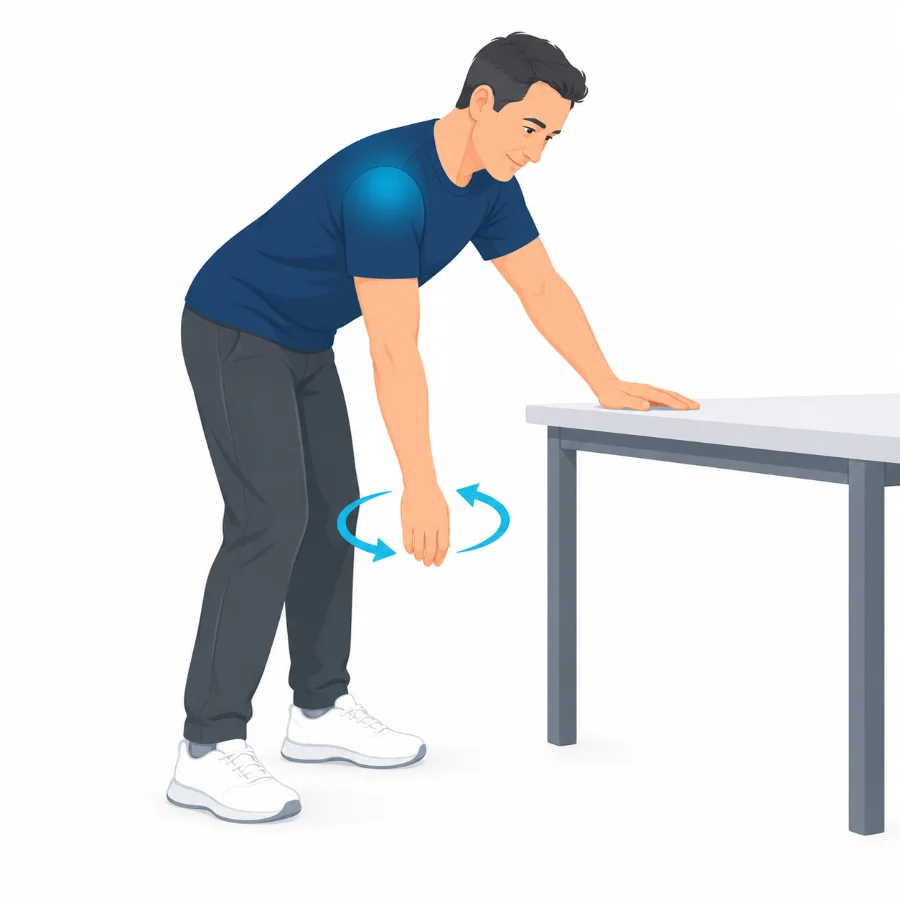
Pendulum swings
Lean on a bench and let the sore arm hang. Rock your body so the arm swings in small, relaxed circles.
30 seconds, a few times a day
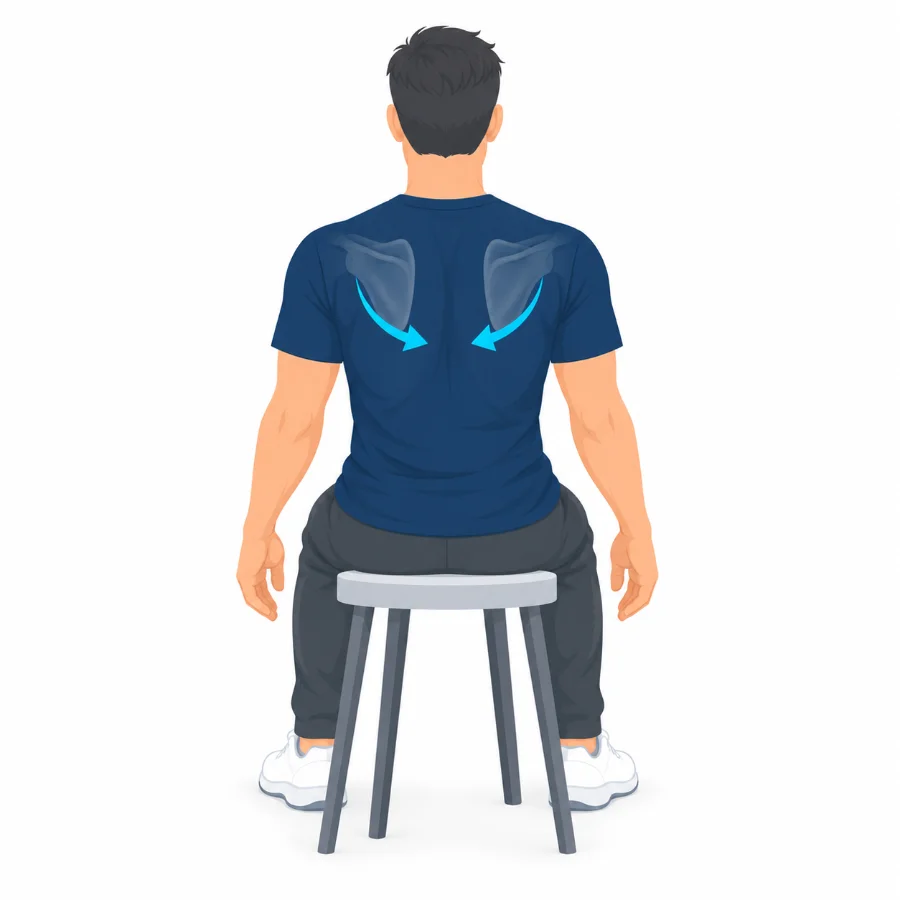
Shoulder blade squeeze
Sit tall. Draw your shoulder blades gently back and down, hold, then relax. Keep your neck soft.
10 holds of 5 seconds
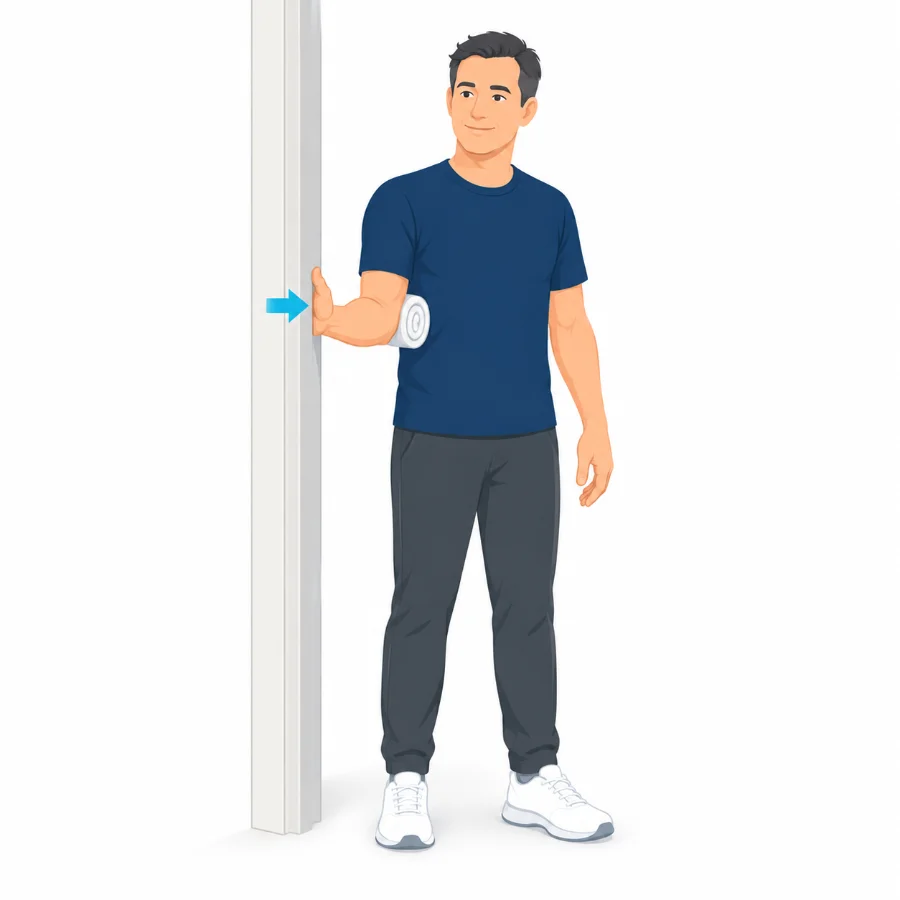
Outward press against a wall
Stand side-on to a wall with your elbow bent and tucked in. Press the back of your hand gently into the wall without moving. Hold, then relax.
5 holds of 20 to 30 seconds
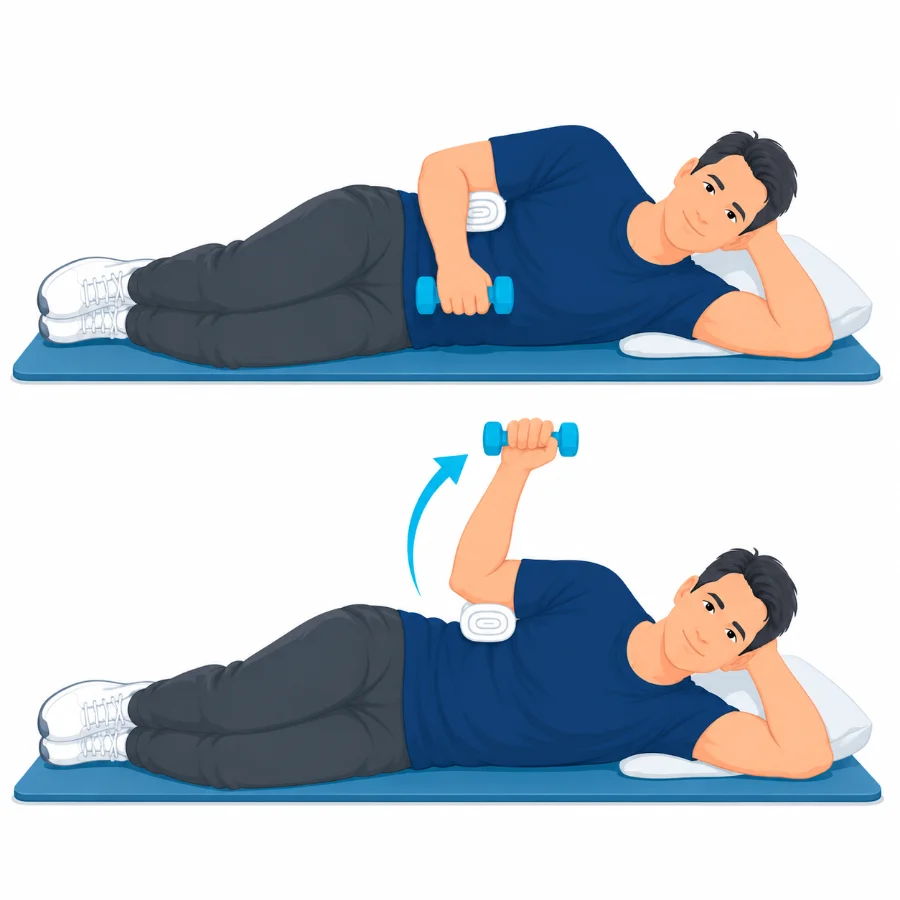
Side-lying rotation
Lie on your good side with a towel under the elbow. Slowly lift a light weight by turning the forearm up, then lower it.
2 to 3 sets of 10, slow
Other treatment options
Medicines and injections
Pain relief can be reviewed with your GP or pharmacist. An image-guided joint injection may give temporary relief and can sometimes help confirm that the pain is coming from inside the shoulder. It does not repair the labrum.
When surgery is needed
Arthroscopic SLAP repair, or a biceps tenodesis in selected cases, may be considered when pain, catching or instability remains limiting and clearly matches the tear despite a structured rehabilitation program. Age, sport, tissue quality and the biceps tendon all guide which procedure suits. Prof Phong Tran performs shoulder arthroscopy, and his website explains the options and recovery.
Common questions
Does every SLAP lesion cause pain?
No. Labral changes are often seen on MRI in people without symptoms, particularly with age. The scan must match your examination and symptoms.
Can a SLAP lesion improve without surgery?
Yes. Many people improve with activity changes and physiotherapy that rebuild strength and control.
Is it the same as a labral tear?
A SLAP lesion is one type of labral tear. It sits at the top of the socket where the biceps tendon attaches.
Can I keep playing sport?
Often you can stay active with some changes. Throwing and overhead load are usually reduced for a time and then built up again.
How long is recovery after surgery?
A sling is commonly used for several weeks after a repair. Return to lifting, throwing or overhead sport usually takes four to six months or longer.
Book an assessment
An assessment can show whether a SLAP lesion is the likely cause of your pain and which treatment may help. Physiotherapy with A/Prof Amir Takla and Imogen Clark, myotherapy with Joanne VanDer Haar, and specialist review with Prof Phong Tran, all at 166 Gipps Street, East Melbourne. Please bring any previous X-rays, MRI reports and details of rehabilitation already tried.