
Scapular dyskinesis
Scapular dyskinesis means the shoulder blade is not moving or sitting as it should while you use your arm. It can add to shoulder pain, fatigue and a feeling that the shoulder is working harder than it should. It is usually managed well with a targeted physiotherapy program.
At the Specialist Orthopaedic Surgery Clinic in East Melbourne, orthopaedic assessment, physiotherapy, myotherapy and strength testing happen under one roof, so the shoulder blade and the shoulder joint can be looked at together.
What is scapular dyskinesis?
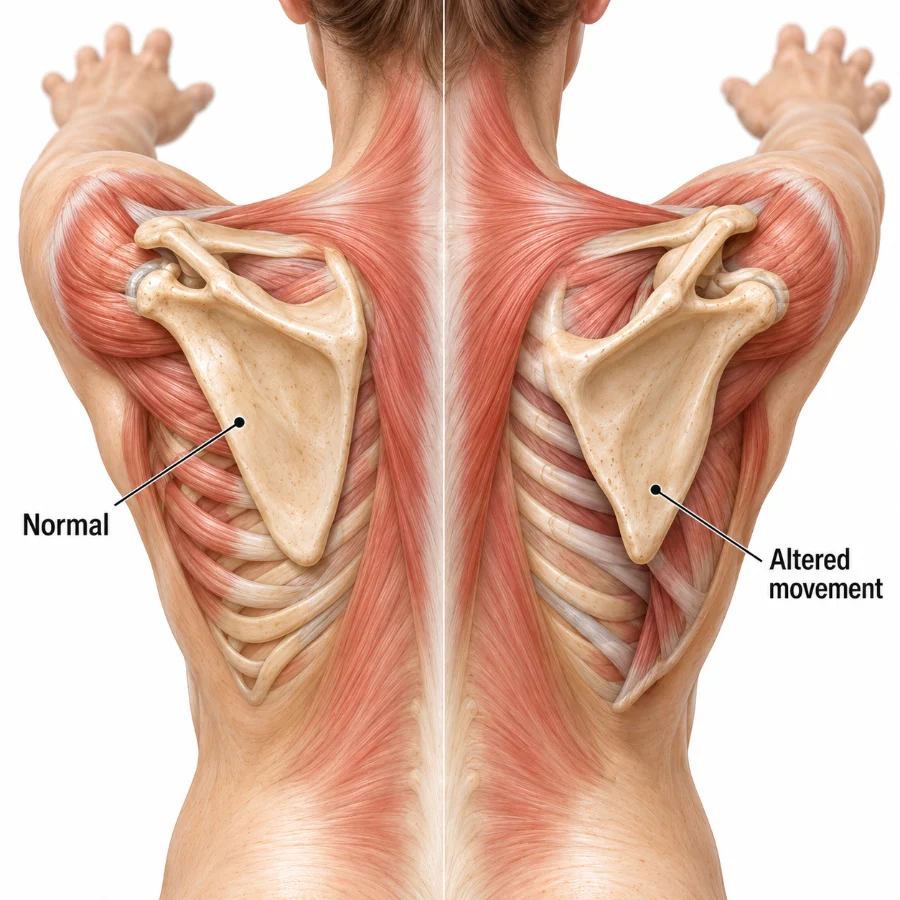
The shoulder blade, or scapula, is the flat triangular bone at the back of the shoulder. It glides and turns on the rib cage as you lift your arm, giving the ball of the shoulder a steady base to work from.
In scapular dyskinesis this movement is altered. The shoulder blade may tilt, lift early or stick out slightly from the ribs, often because the muscles that control it are weak, tired or tight. It is a pattern of movement more than a disease, and it often appears alongside other shoulder problems such as tendon pain or instability.
Does this sound like you?
Arrange an assessment if shoulder or shoulder blade pain persists, keeps returning with sport or work, or has not improved with a few weeks of sensible exercise.
How it is diagnosed
Diagnosis starts with your symptoms, your sport or work and any past injury. The clinician watches the shoulder blades from behind as you lift and lower your arms, often with and without a light weight, and compares both sides.
Simple tests that support or reposition the shoulder blade can show whether better control eases your pain. The neck, rotator cuff and shoulder stability are also checked, because dyskinesis often sits alongside another shoulder problem.
Treatment and recovery
Treatment aims to restore smooth shoulder blade control and treat any shoulder problem it is linked with. Most people improve with a staged exercise program and some changes to posture and training load.
First weeks
Settle and adjust
Painful overhead loads are reduced for a time while you keep the arm moving comfortably. Desk set-up and sustained postures are reviewed.
Physiotherapy
Retrain control
Gentle exercises teach the shoulder blade muscles to switch on and hold the blade in a good position.
Building up
Strengthen
Load is increased with bands and weights so control holds up during lifting, pushing and overhead work.
Returning to sport
Test and return
Strength testing and sport-specific drills can guide a safe return to throwing, swimming or the gym.
Exercises you may be given
Your physiotherapist will choose the right ones and the right level for you.
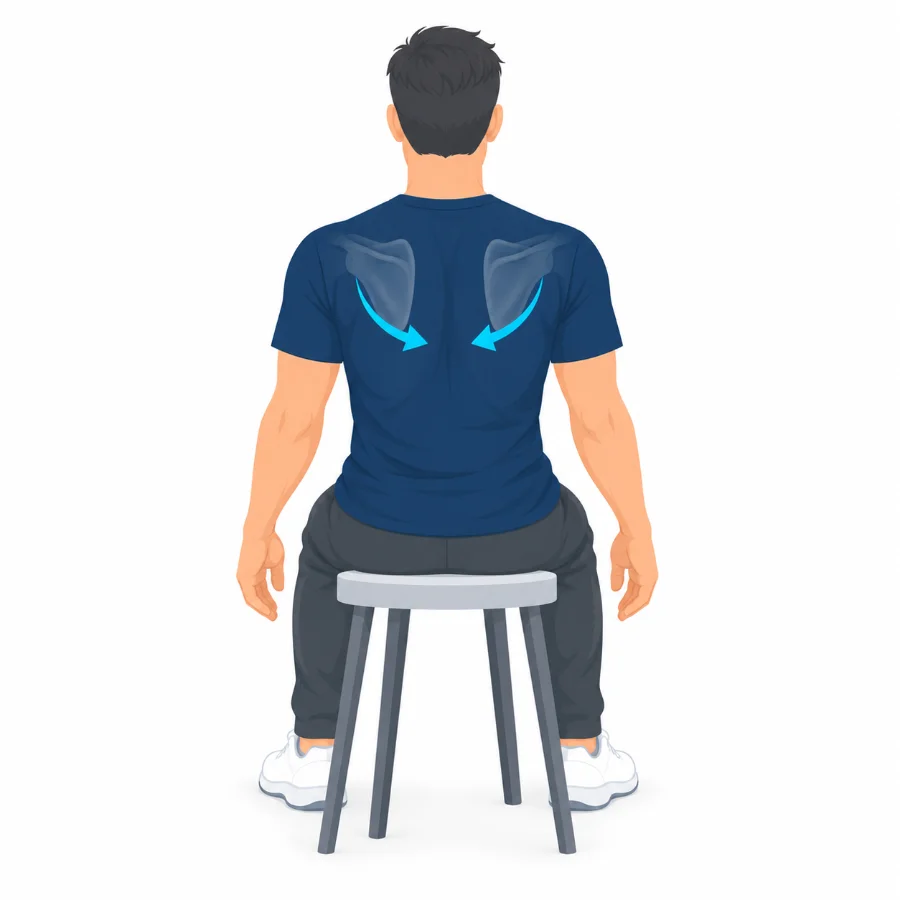
Shoulder blade squeeze
Sit tall. Gently draw your shoulder blades back and down, hold, then relax. Keep your neck soft and avoid shrugging.
10 holds of 5 seconds
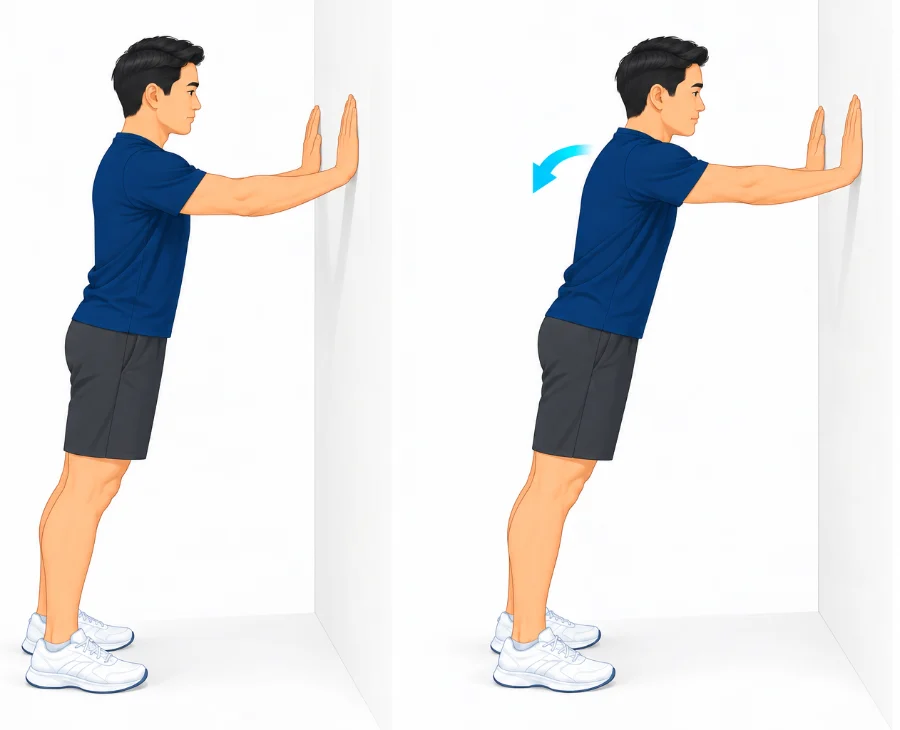
Wall push-up plus
Stand facing a wall with hands at shoulder height. Keep your elbows straight and push your upper back away from the wall so the shoulder blades glide forward, then slowly return.
2 sets of 10, slow
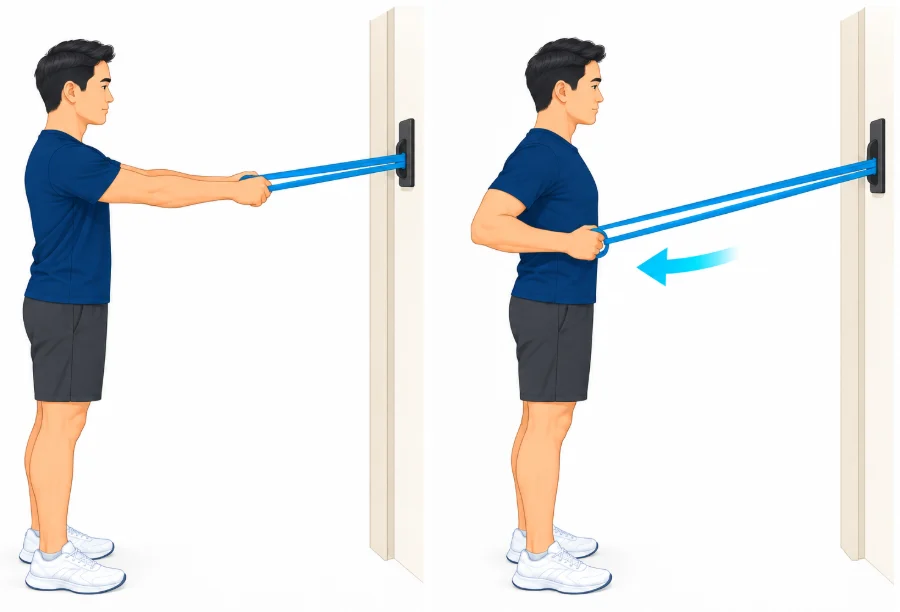
Band rows
Hold a light band anchored in front of you at chest height. Pull your elbows back beside your body, drawing the shoulder blades together, then return slowly.
2 to 3 sets of 10
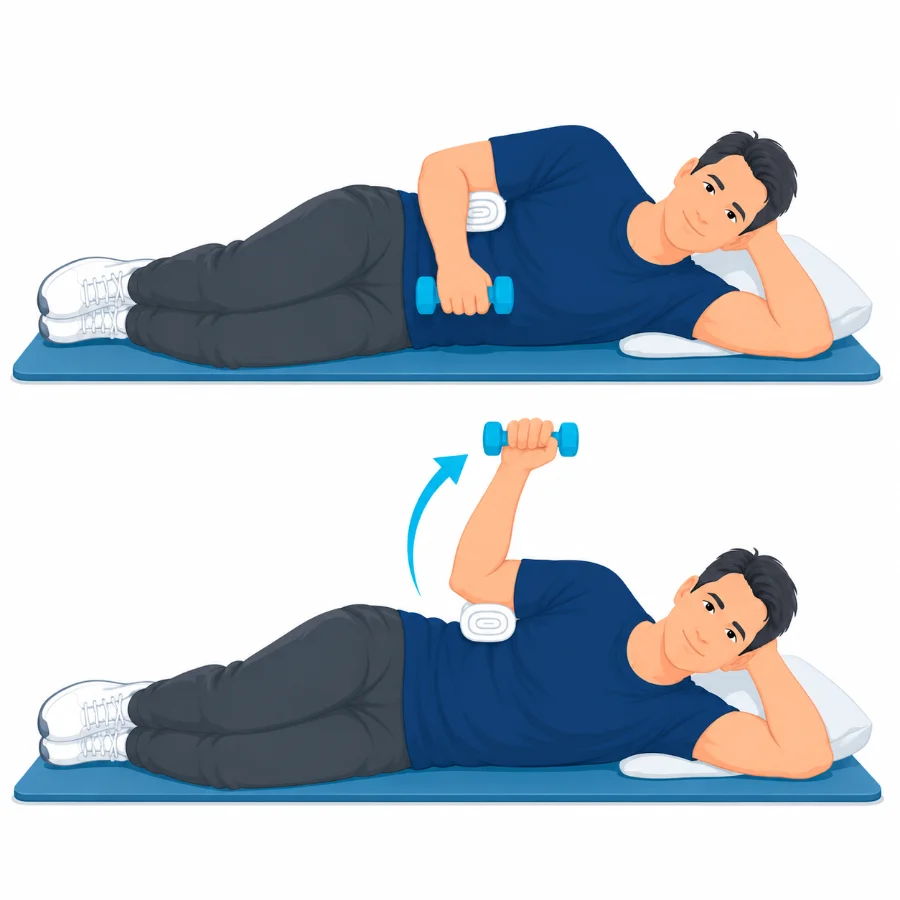
Side-lying rotation
Lie on your good side with a towel under the elbow. Slowly lift a light weight by turning the forearm up, then lower it. Keep the shoulder blade set back.
2 to 3 sets of 10, slow
Other treatment options
Myotherapy and taping
Myotherapy may ease tight muscles around the neck, chest and shoulder blade so that exercise feels easier. Taping can give short-term feedback about shoulder blade position. Both work best alongside an exercise program.
When surgery is needed
Surgery is rarely relevant, because it does not treat altered shoulder blade movement itself. An operation may be considered only for an underlying problem such as recurrent instability or a labral tear that remains limiting despite a structured rehabilitation program. Prof Phong Tran can review whether surgery is appropriate for you.
Common questions
Is scapular dyskinesis serious?
Usually not. It is a change in how the shoulder blade moves, and it often improves with targeted exercise.
Can it cause shoulder pain?
It can add to shoulder pain by changing how the joint and tendons are loaded, and it is often found alongside another shoulder problem.
Will I need a scan?
Usually not. It is diagnosed by watching the shoulder blade move. Imaging is only used if another problem is suspected.
How long does it take to improve?
This varies from person to person. Many people notice better control within several weeks of regular exercise, with strength building over the following months.
Does it ever need surgery?
Surgery does not treat dyskinesis itself. It is only considered for a separate problem such as instability or a labral tear.
Book an assessment
An assessment can check how your shoulder blade moves and set out an exercise plan that suits your sport or work. Physiotherapy with A/Prof Amir Takla and Imogen Clark, myotherapy with Joanne VanDer Haar, and specialist review with Prof Phong Tran, all at 166 Gipps Street, East Melbourne. Please bring any previous scan reports and details of exercises or treatment already tried.