Strength and movement testing in East Melbourne
Biomechanical profile assessment
Objective testing of your strength, balance, movement and body composition, so you and your physiotherapist can plan care from real measurements.
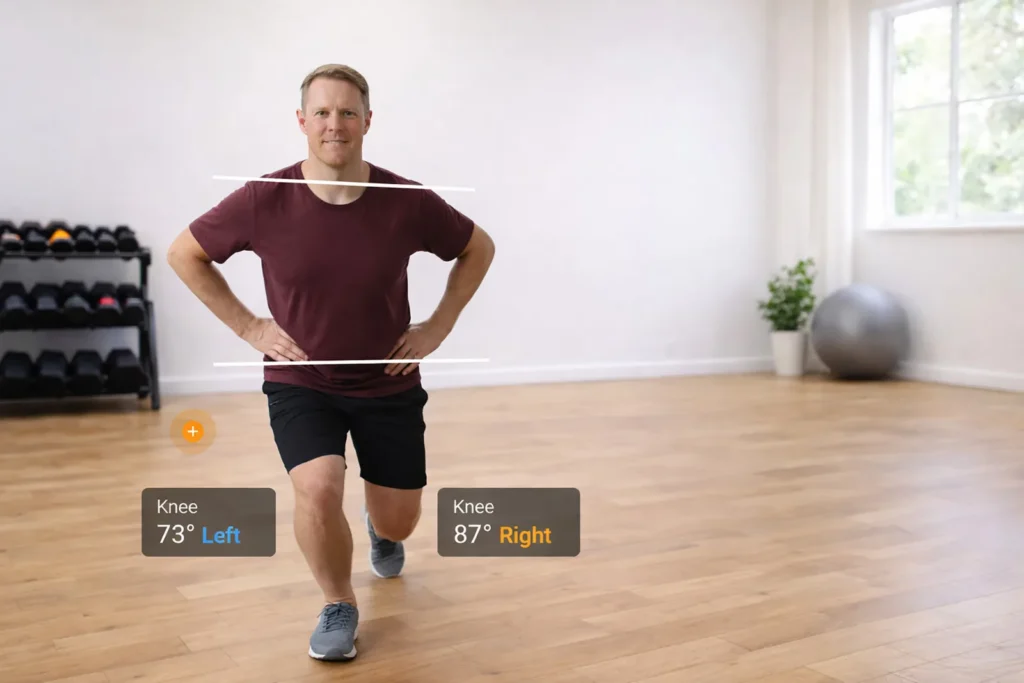
Takes 30 to 60 minutes. Suitable for people preparing for or recovering from surgery, and for people managing pain without surgery.
Who it is for and what you receive
Who it is for
- People preparing for orthopaedic surgery
- People recovering after surgery
- Ongoing knee, hip, shoulder or back pain
- Balance problems or a risk of falls
- Athletes planning a return to sport
Why do it
- A clear baseline for strength and movement
- Personal targets for prehab and rehabilitation
- Progress you can see in numbers
- Better decisions for you and your physiotherapist
What you receive
- A same-day summary with graphs
- Plain-English explanations
- An exercise plan matched to your results
- A report you can share with your GP, physiotherapist or surgeon
What is measured
The clinic uses VALD testing equipment and an InBody scanner. Every test is adapted to your comfort and safety, and a walking stick or frame is no problem.
- VALD ForceDecks, force plates that measure balance, left and right symmetry and power as you stand up from a chair
- VALD ForceFrame, strength of the thigh, hamstring and hip muscles in safe, comfortable positions
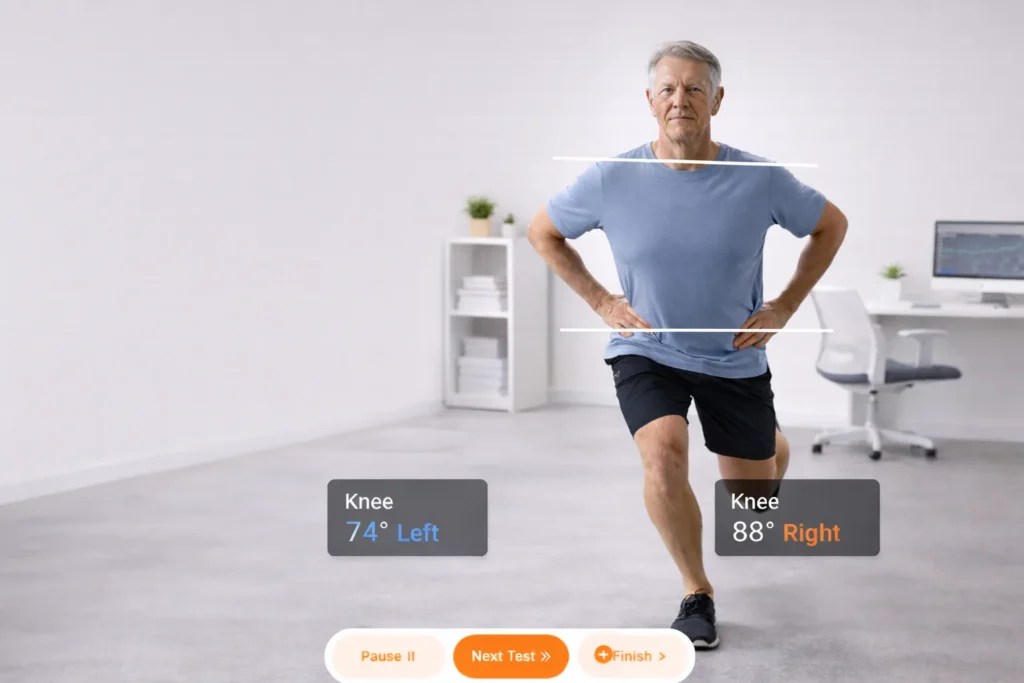
- VALD HumanTrak, a 3D movement scan of knee, hip and ankle alignment, range of movement and step-down control
- InBody, body composition including lean muscle in each limb and hydration, to guide nutrition and recovery
How it helps your care
Before and after an operation
- Hip, knee and shoulder joint replacement
- ACL reconstruction and meniscus repair
- Rotator cuff repair and shoulder stabilisation
- Other tendon repairs
Care without surgery
- Hip or knee osteoarthritis and kneecap pain
- Hip tendon pain and weak gluteal muscles
- Repeated ankle sprains and balance retraining
- Low back pain with loss of fitness
- Planning a return to running or work
How it helps your physiotherapy
- Sets clear strength and balance targets
- Shows which exercises give you the most benefit
- Picks up a difference between sides or a movement problem early
- Helps decide when to increase exercise and when to hold
- Keeps you motivated with measured progress
Compared with a standard assessment
| Standard assessment | Biomechanical profile |
|---|---|
| Manual testing and observation | Digital force and motion sensors |
| Progress judged by feel | Measured results with trend graphs |
| Limited detail on differences between sides | Exact left and right percentage differences |
| Occasional re-testing | Planned re-tests at set points in recovery |
| General advice | A program based on your test results |
See your results over time
The main tests are repeated at set points in your recovery so you can see your improvement measured. Targets are adapted to your condition and goals.
- Before treatment, a baseline for strength and balance, and any movement limits
- 2 weeks, early recovery with pain control, gentle movement and muscle activation
- 6 weeks, strength and balance improving and differences between sides reducing
- 12 weeks, targets met for daily life and confidence returning
- 6 months, strength close to target and confident balance for your usual activities
Fees and referrals
Private fees apply. Some parts may be claimable through private health extras or a GP care plan, so check with your insurer or GP. You receive an itemised receipt.
- Initial biomechanical profile, 30 to 60 minutes
- Optional re-test packages at recovery milestones
- Report and exercise plan included
Book an assessment
Send your details and the clinic will contact you to arrange a time, or call (03) 9928 6161.