AC joint dislocation
An AC joint dislocation, often called a shoulder separation, is an injury to the ligaments holding the collarbone to the shoulder blade. It usually happens after a fall or hit directly onto the point of the shoulder and can leave pain and a bump on top of the shoulder. Most milder injuries recover well with a short time in a sling followed by physiotherapy.
At the Specialist Orthopaedic Surgery Clinic in East Melbourne, orthopaedic assessment, physiotherapy and strength testing are in the same rooms, so the grade of injury can be checked and your recovery guided back to work and sport.
What is an AC joint dislocation?
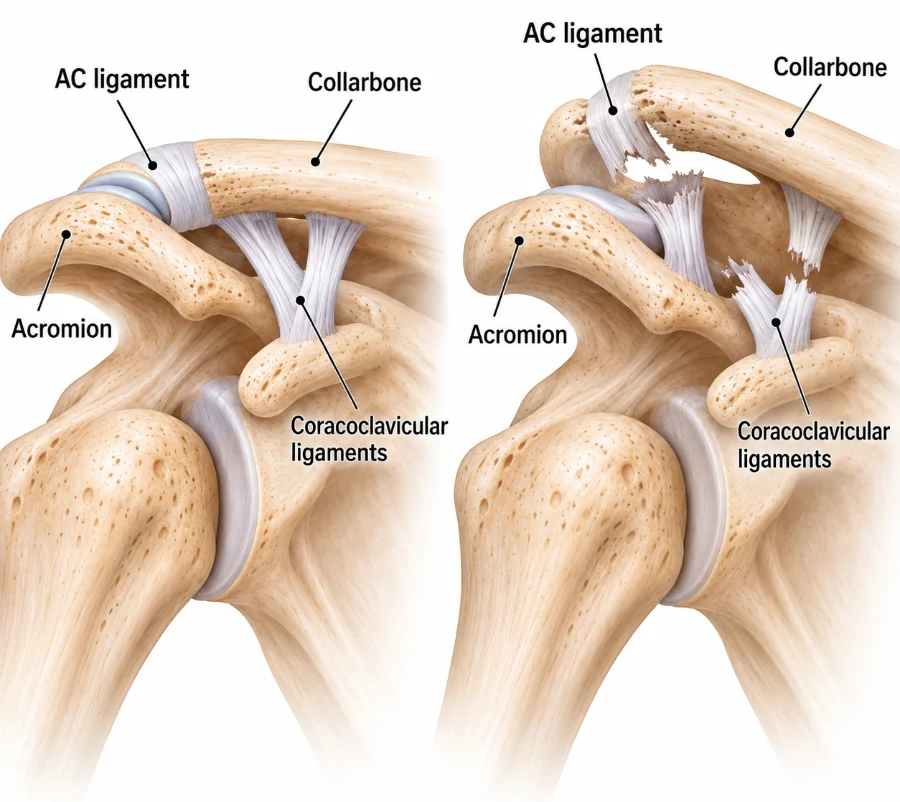
The acromioclavicular joint, or AC joint, is the small joint at the top of the shoulder where the collarbone meets the shoulder blade. Strong ligaments hold these bones together and keep the collarbone in line.
A fall onto the shoulder can stretch or tear these ligaments. In a mild injury the ligaments are only sprained. In more severe injuries they tear and the end of the collarbone sits higher, making a visible bump. Injuries are graded by how far the bones have moved apart.
Does this sound like you?
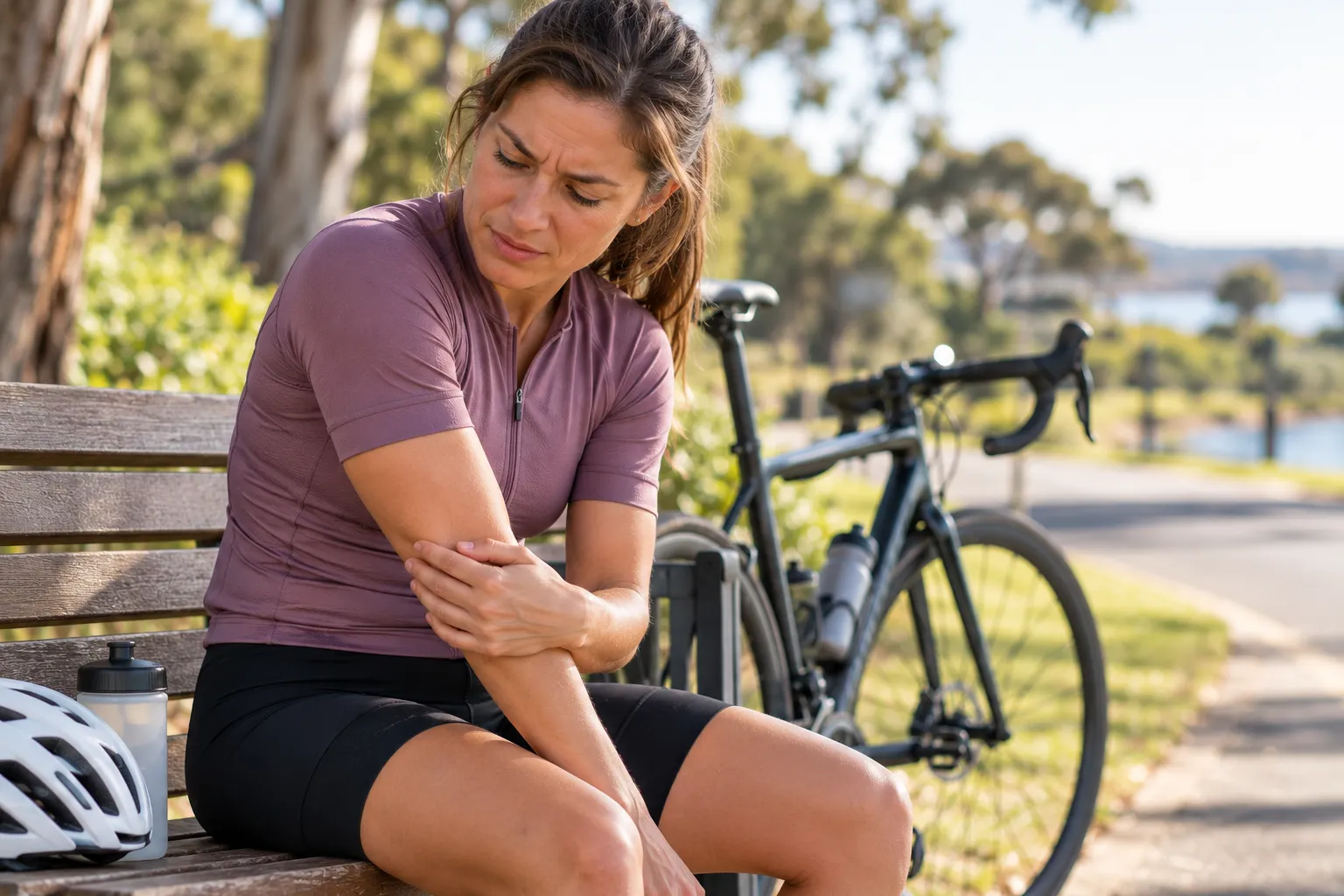
Arrange an assessment soon after a fall onto the shoulder if there is pain on top of the shoulder or a new bump, so the grade of injury can be checked early.
How it is diagnosed
Diagnosis starts with how the injury happened and an examination of the top of the shoulder, the collarbone and shoulder movement. The rotator cuff and neck are also checked, because a fall can injure more than one structure.
The grade of injury is based on how far the collarbone has moved and in which direction. Ultrasound or MRI is only needed if another injury, such as a rotator cuff tear, is suspected.
Treatment and recovery
Most low-grade AC joint injuries are managed without surgery. The aim is to settle pain, restore movement and rebuild strength so you can return to work and sport.
First days
Protect and settle
A sling may be worn briefly for comfort, with ice and pain relief discussed with your GP or pharmacist. Gentle movement of the elbow, wrist and hand continues.
Early physiotherapy
Restore movement
Once pain allows, the sling is left off and shoulder movement is regained with gentle exercises.
Strengthening
Build support
Rotator cuff and shoulder blade strength is rebuilt so the shoulder can handle lifting and overhead tasks again.
Return to sport
Load and review
Contact sport and heavy lifting return gradually. Strength testing can show when the shoulder is ready, and ongoing pain is reviewed.
Exercises you may be given
Your physiotherapist will choose the right ones and the right level for you.
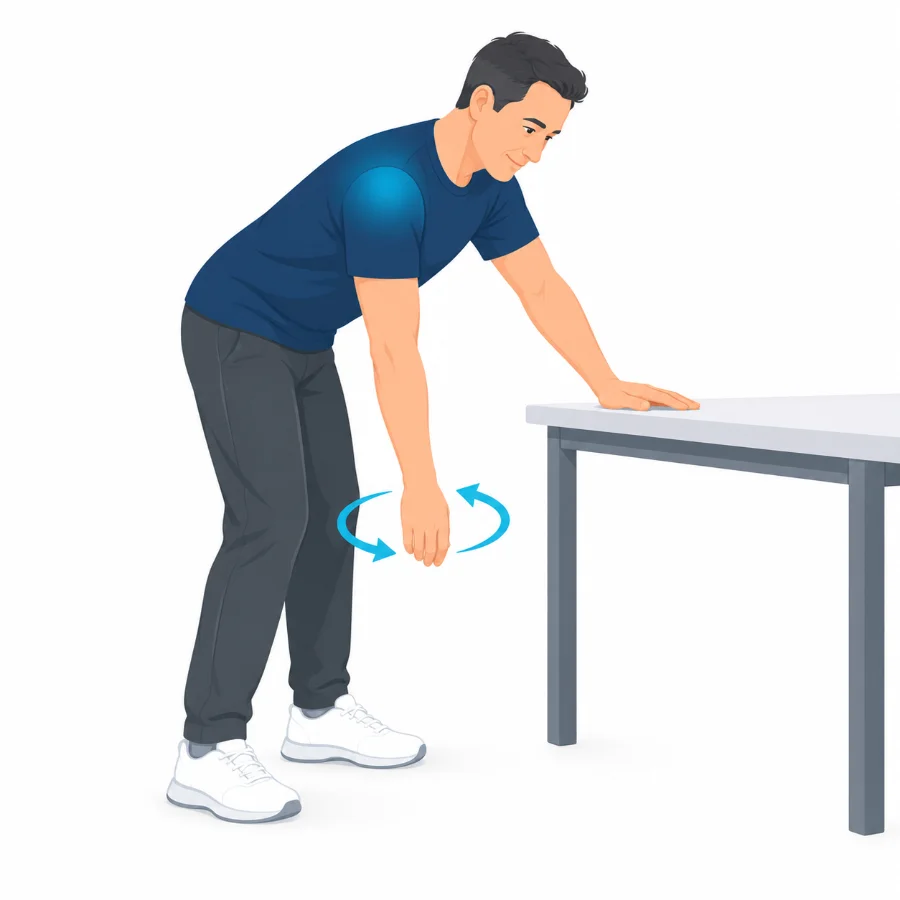
Pendulum swings
Lean on a bench and let the sore arm hang. Rock your body so the arm swings in small, relaxed circles.
30 seconds, a few times a day
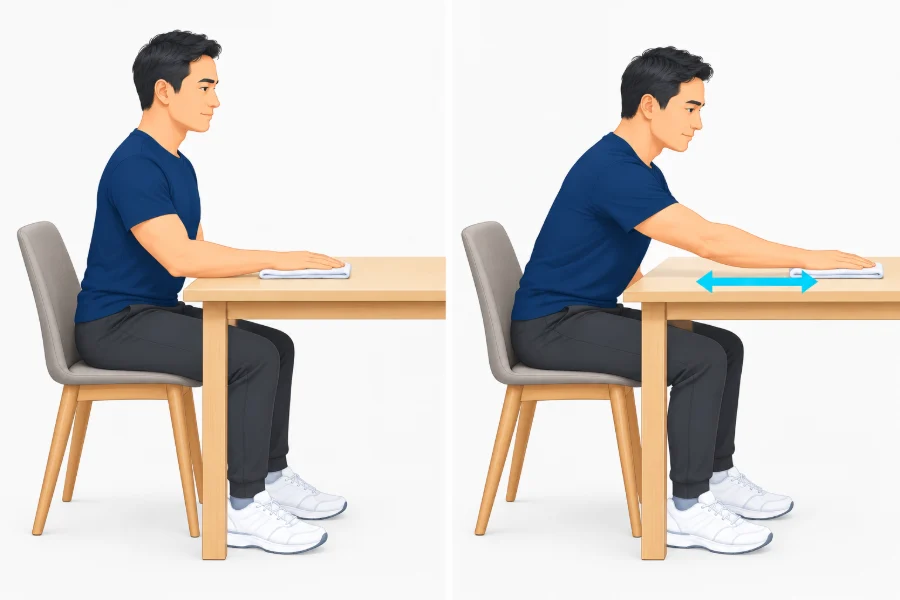
Table slides
Sit beside a table with your hand on a small towel. Slowly slide the hand forward as far as is comfortable, then back.
10 slow slides, twice a day
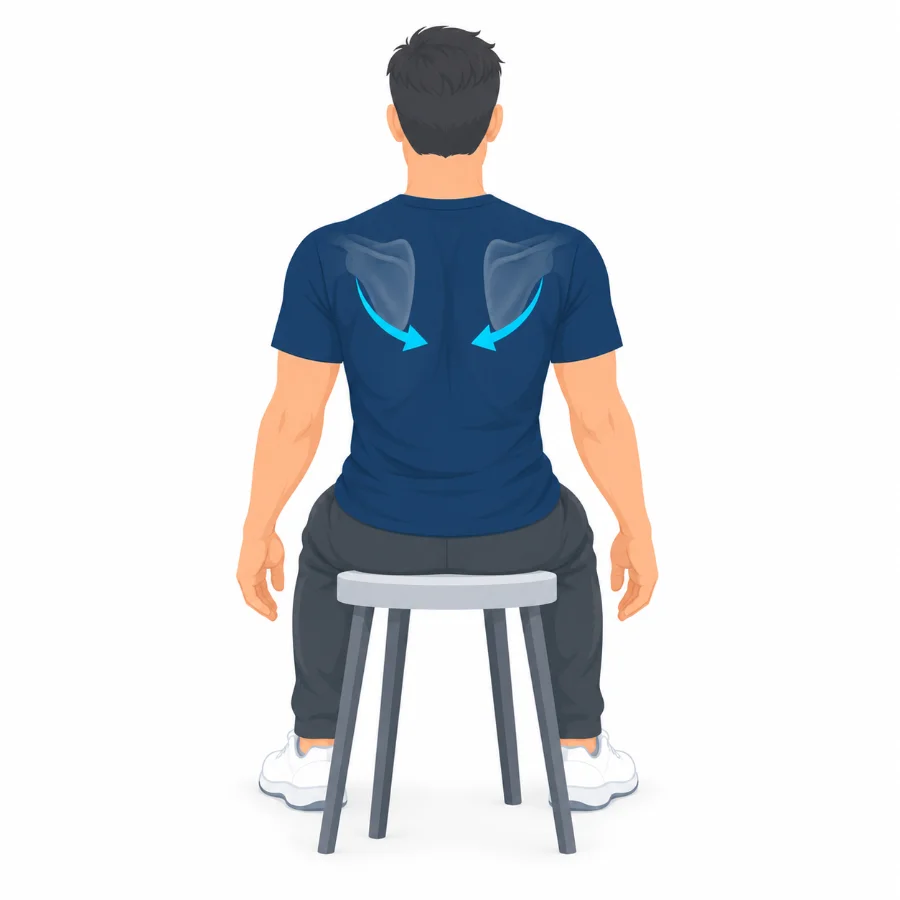
Shoulder blade squeeze
Sit tall and gently draw your shoulder blades back and down. Hold, then relax without shrugging.
10 holds of 5 seconds
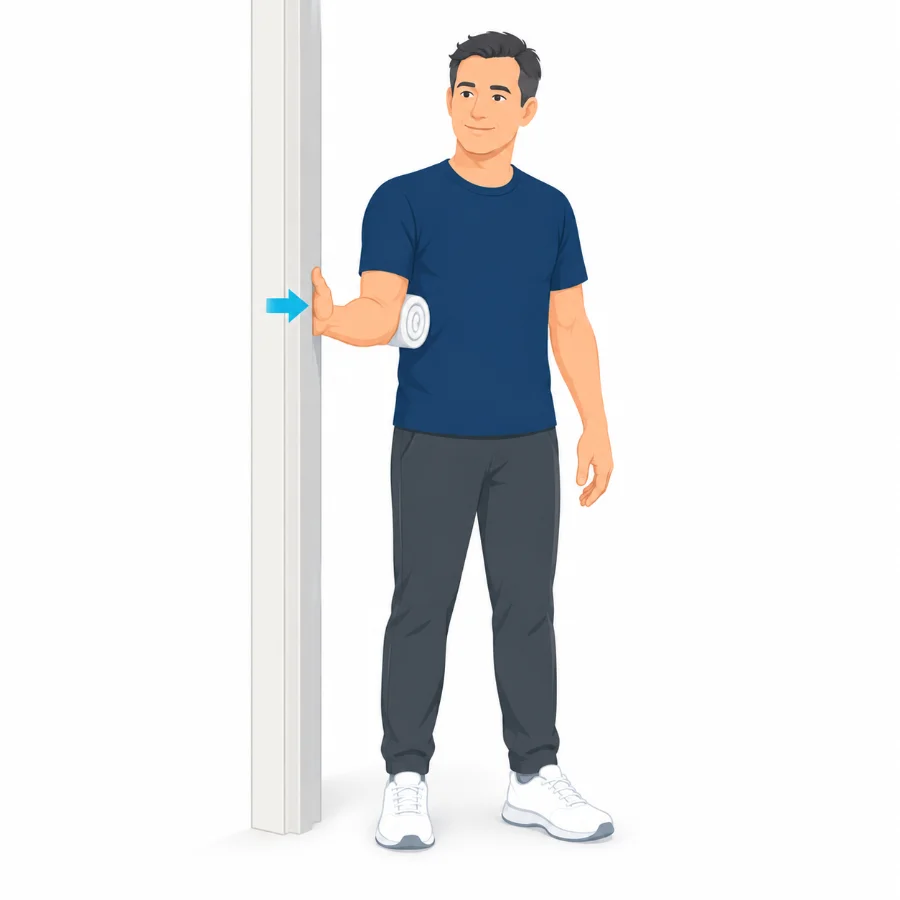
Outward press against a wall
Stand side-on to a wall with your elbow bent and tucked in. Press the back of your hand gently into the wall without moving.
5 holds of 20 to 30 seconds
Other treatment options
Pain relief and support
Short-term pain relief can be discussed with your GP or pharmacist. A sling is used only briefly for comfort, as long periods in a sling can make the shoulder stiff. A bump on top of the shoulder may remain but often causes little trouble.
When surgery is needed
Surgery to realign and stabilise the AC joint may be considered for higher-grade injuries where the collarbone is badly displaced, or when pain and weakness remain limiting despite a good rehabilitation program. Prof Phong Tran can review whether surgery is appropriate for you.
Common questions
Is an AC joint dislocation the same as a shoulder dislocation?
No. An AC joint injury affects the joint on top of the shoulder. A shoulder dislocation is when the ball comes out of the main socket.
Do most AC joint injuries need surgery?
No. Most low-grade injuries recover well with a sling for a short time and physiotherapy.
Will the bump go away?
A bump may remain after higher-grade injuries. It is often a cosmetic change and many people have good function.
How long should I wear a sling?
Usually only for a short time while pain settles. Your clinician will guide when to leave it off and start moving the shoulder.
When can I return to sport?
Return is guided by pain, movement and strength. Contact sport is reintroduced gradually once the shoulder is strong.
Book an assessment
An assessment can confirm the grade of injury and set out a plan to get you back to work and sport. Physiotherapy with A/Prof Amir Takla and Imogen Clark, myotherapy with Joanne VanDer Haar, and specialist review with Prof Phong Tran, all at 166 Gipps Street, East Melbourne. Please bring any X-rays taken after the injury and details of treatment so far.