
Shoulder dislocation and instability
A shoulder dislocation happens when the ball of the shoulder comes out of its socket, usually after a fall, collision or forceful movement. Afterwards some people feel the shoulder is loose, slipping or about to come out again. Physiotherapy to rebuild strength and control is the first step for many people.
At the Specialist Orthopaedic Surgery Clinic in East Melbourne, orthopaedic assessment, physiotherapy, myotherapy and strength testing are in the same rooms, so your recovery and return to work or sport can follow one agreed plan.
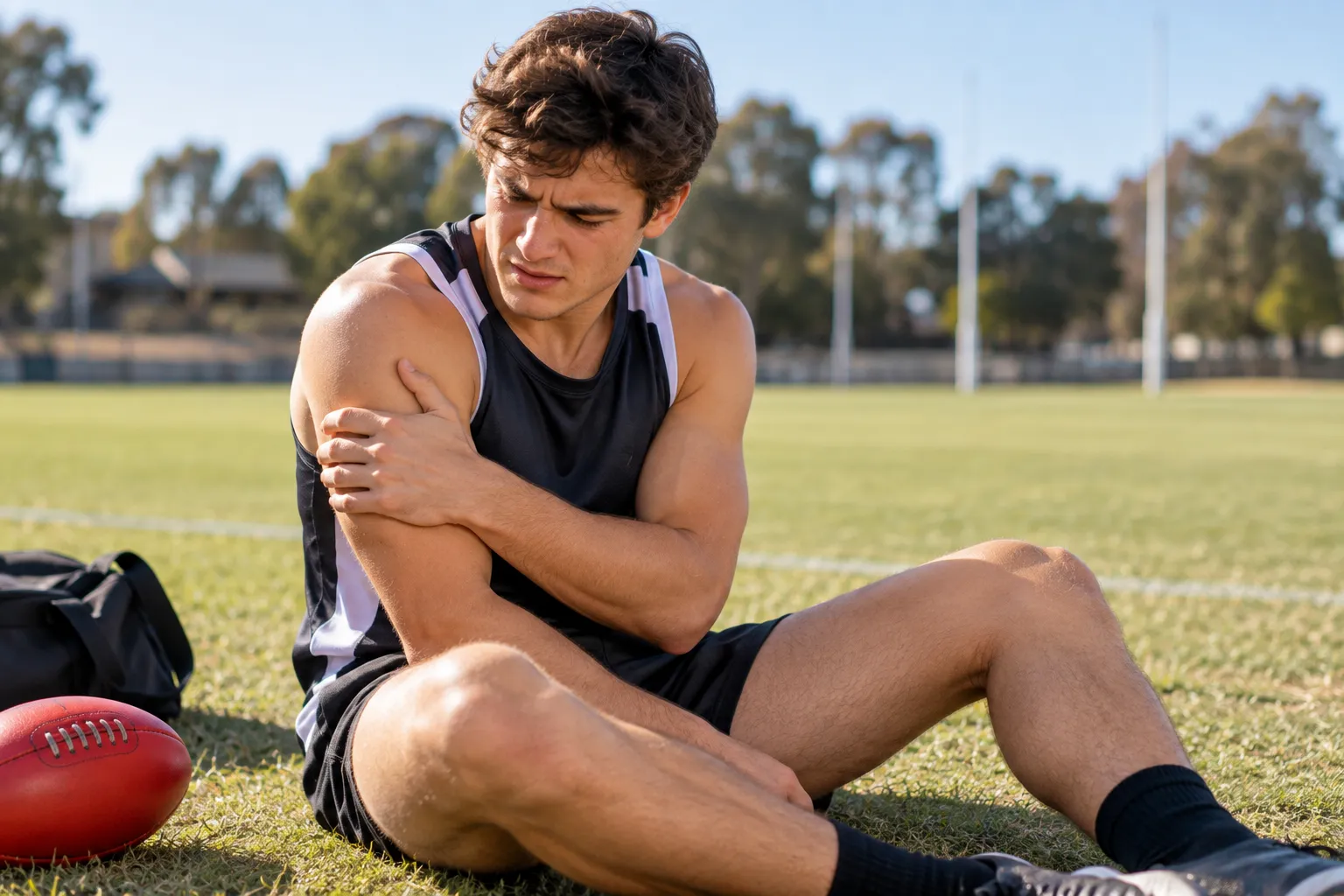
What is a shoulder dislocation?
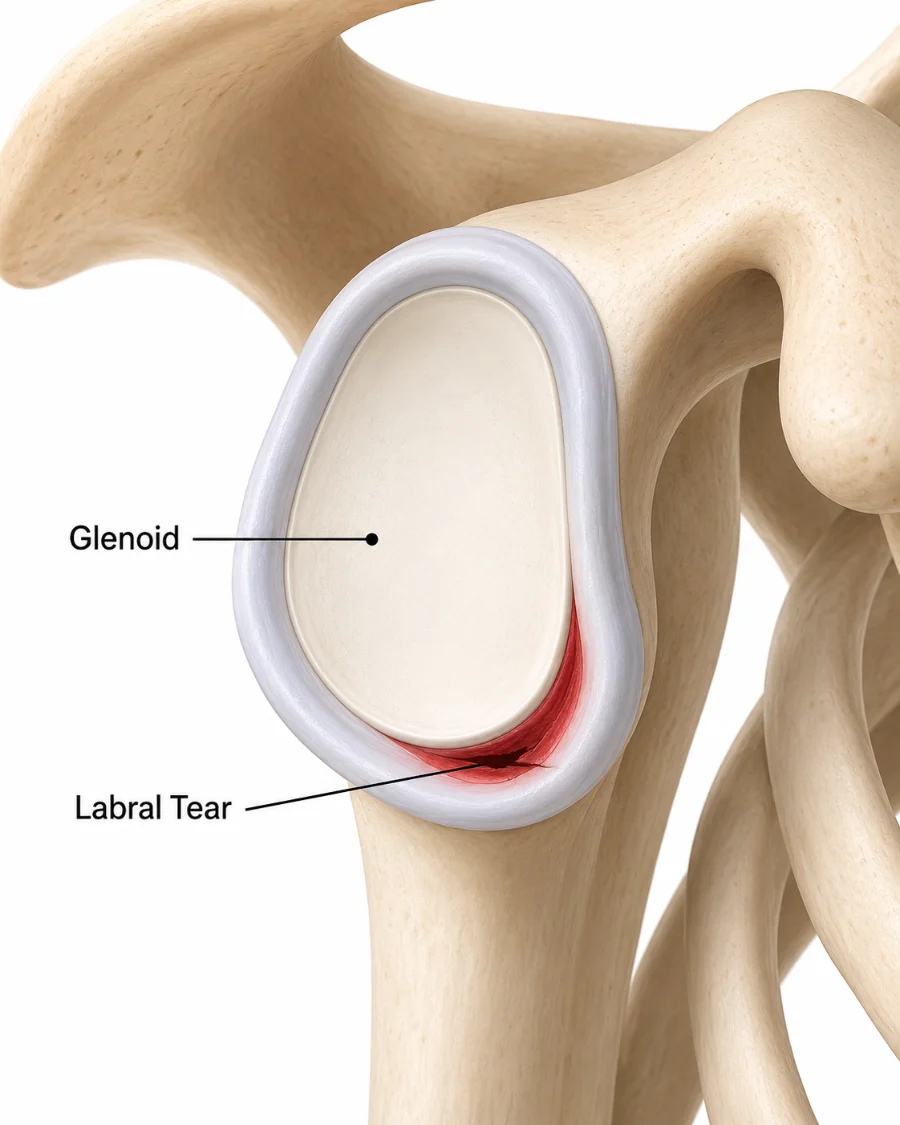
The shoulder has a large ball resting against a shallow socket. It is held in place by a rim of cartilage called the labrum, the joint capsule and ligaments, and the rotator cuff and surrounding muscles.
A subluxation is a partial slip, while a dislocation means the ball comes fully out of the socket. The labrum and ligaments can be stretched or torn during the injury, and some people then have repeated episodes of the shoulder giving way. This is called shoulder instability.
Does this sound like you?
Arrange an early assessment after a first shoulder dislocation, even if it has gone back in by itself. Review is also advised if the shoulder keeps slipping, feels unreliable or stops you returning to work or sport.
How it is diagnosed
Diagnosis covers how the first dislocation happened, how many further episodes there have been and which positions feel unsafe. Movement, joint flexibility, apprehension, strength and nerve function are all checked.
MRI, sometimes with contrast in the joint, can show the labrum, ligaments and cartilage. CT may be used when bone loss needs to be measured in detail before stabilisation surgery.
Treatment and recovery
After a dislocation is put back in place, treatment focuses on settling pain, then restoring movement, strength and confidence. Physiotherapy may be all that is needed after a first episode, especially if the shoulder feels stable for normal activities.
First weeks
Protect and settle
A sling may be worn for a short time for comfort, followed by early, comfortable movement. Short-term pain relief can be discussed with your GP or pharmacist.
Physiotherapy
Build control
Exercises rebuild rotator cuff and shoulder blade strength, awareness of joint position and confidence with reaching and lifting.
Building up
Return to activity
Throwing, contact sport and positions that feel unsafe are reintroduced gradually. Strength and movement testing can guide a safer return.
If it keeps slipping
Review the plan
Repeated slipping or ongoing apprehension despite good rehabilitation should prompt a surgical opinion.
Exercises you may be given
Your physiotherapist will choose the right ones and the right level for you.
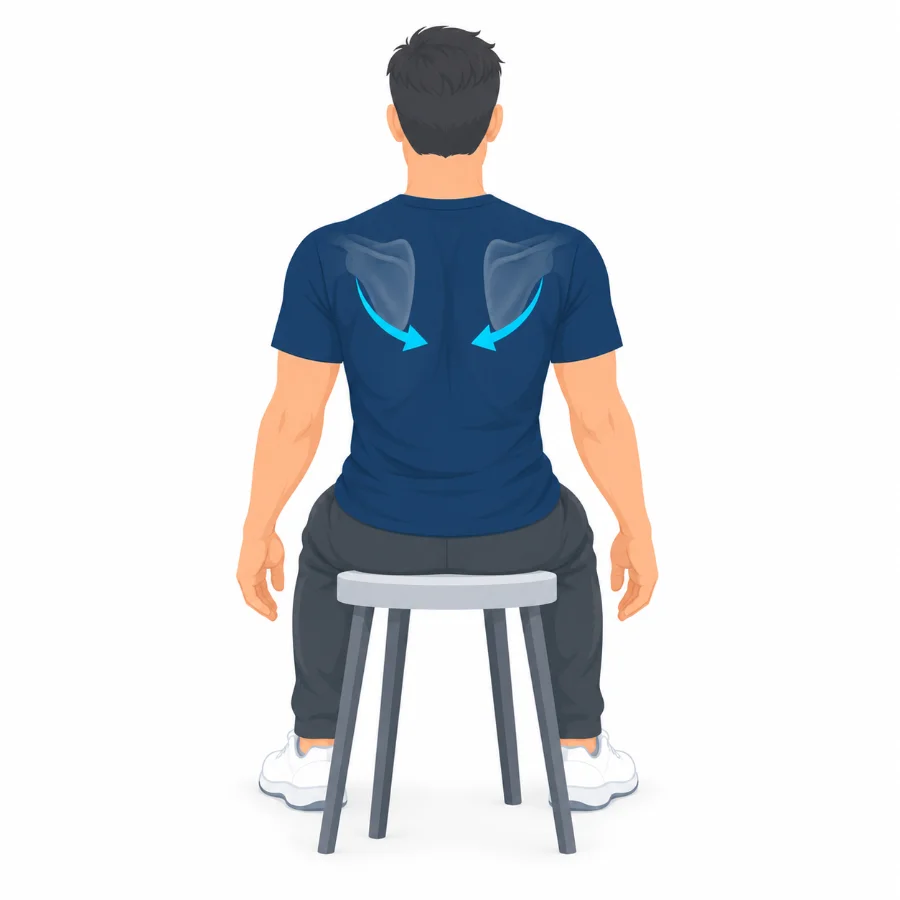
Shoulder blade squeeze
Sit tall and gently draw your shoulder blades back and down. Hold, then relax without shrugging.
10 holds of 5 seconds
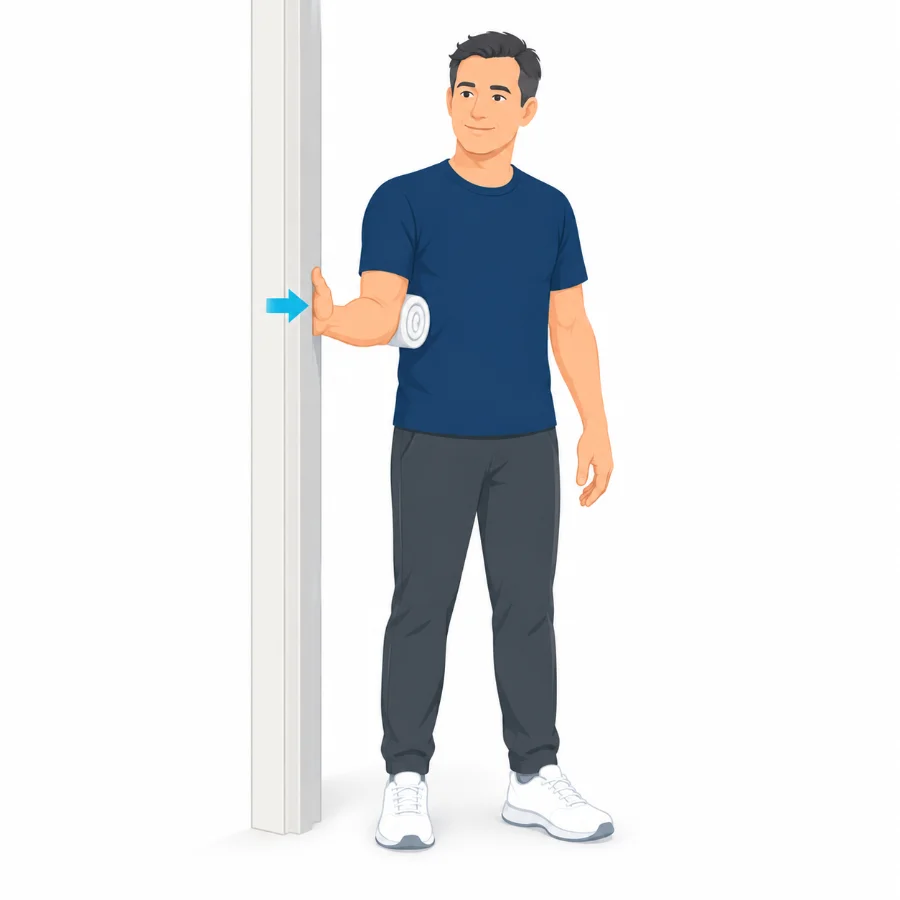
Outward press against a wall
Stand side-on to a wall with your elbow bent and tucked in. Press the back of your hand gently into the wall without moving.
5 holds of 20 to 30 seconds
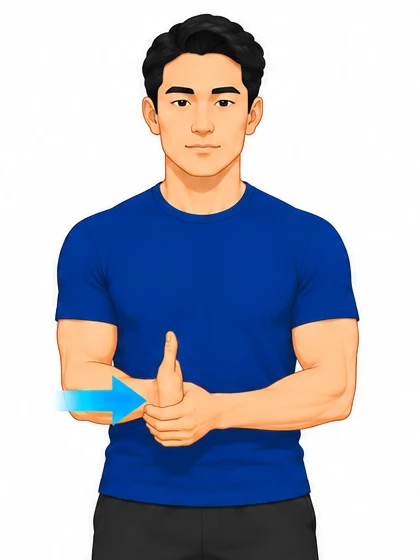
Inward press against your other hand
Stand tall with the sore elbow bent and tucked in. Hold that hand with your other hand and press it gently inward towards your stomach without moving. Hold, then relax.
5 holds of 20 to 30 seconds
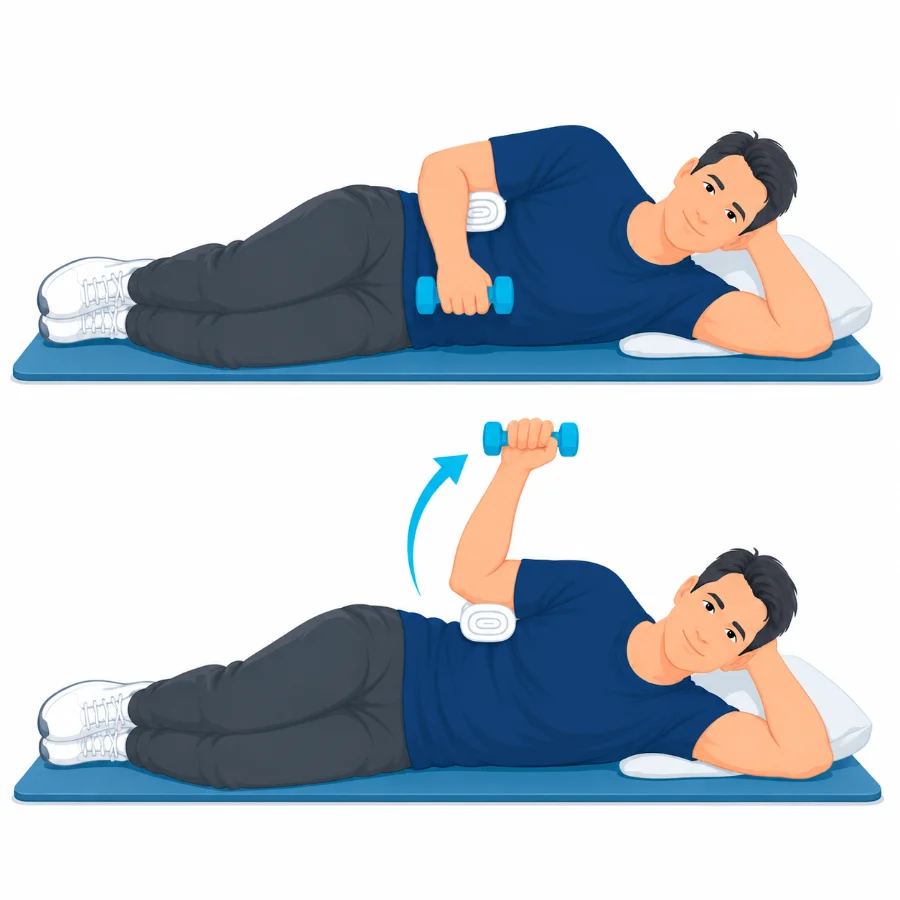
Side-lying rotation
Lie on your good side with a small towel under the elbow. Slowly turn the forearm up with a light weight, then lower it.
2 to 3 sets of 10, slow
Other treatment options
Pain relief and support
Short-term pain relief can be discussed with your GP or pharmacist. Injections are not a routine treatment for instability. A brace may be discussed for some sports. Injections are not given at the clinic. If one is recommended, your GP can arrange it, usually through a radiology practice.
When surgery is needed
Arthroscopic stabilisation may be considered after repeated dislocations or ongoing apprehension despite rehabilitation. Earlier surgery may be discussed for younger people returning to contact or overhead sport, or when there is substantial labral or bone damage. Prof Phong Tran performs arthroscopic stabilisation, and his website explains the options and recovery.
Common questions
Does a first dislocation need surgery?
Not always. Many people are managed with physiotherapy after a first dislocation. Earlier surgery may be discussed for younger people in contact or overhead sport.
Why does the shoulder keep slipping?
The labrum and ligaments that guide the joint can be stretched or torn during a dislocation, which may leave the shoulder less stable.
Can physiotherapy help an unstable shoulder?
Yes. It can improve strength, control and confidence, and for many people this is enough to return to normal activity.
Do I need an MRI?
An X-ray is needed after a dislocation. MRI is useful when the labrum or ligaments need checking, and CT when bone loss needs measuring.
When can I return to sport?
Return is guided by strength, movement and confidence, and higher-risk sport is reintroduced gradually.
Book an assessment
An assessment can review your injury, check the stability of the shoulder and set out a plan for work and sport. Physiotherapy with A/Prof Amir Takla and Imogen Clark, myotherapy with Joanne VanDer Haar, and specialist review with Prof Phong Tran, all at 166 Gipps Street, East Melbourne. Please bring any previous X-rays, MRI reports and details of rehabilitation so far. Read about physiotherapy after a dislocation.