
Ligamentum teres tears
The ligamentum teres is a small ligament inside the hip joint that runs from the ball to the socket. A tear may cause deep groin pain, clicking or a feeling that the hip is unstable. It often occurs alongside other hip problems, and many people start with physiotherapy to improve hip control.
At the Specialist Orthopaedic Surgery Clinic in East Melbourne, orthopaedic assessment, physiotherapy, myotherapy and strength testing are offered side by side, so your hip can be assessed and rehabilitated as one plan.

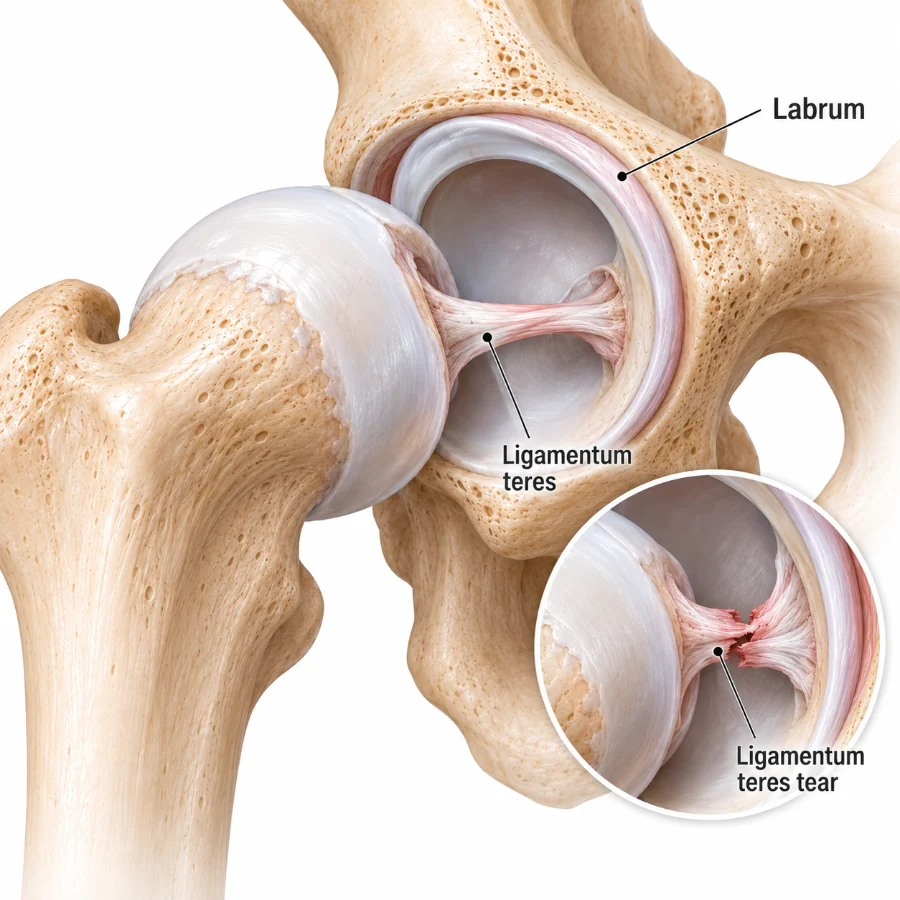
What is a ligamentum teres tear?
The ligamentum teres is a short, rounded ligament that connects the centre of the ball of the hip to the base of the socket. It is thought to help steady the hip, especially in deep bending and turning positions, and it may also help with the sense of where the hip is.
The ligament can be partly or completely torn after a twisting injury, a fall or a dislocation, or it may wear gradually. Tears are often found with other problems such as a labral tear, hip impingement, hip dysplasia or general joint looseness.
Does this sound like you?
Arrange an assessment if deep groin pain, clicking or a feeling of instability continues, limits work or sport, or has not improved with a period of rehabilitation.
How it is diagnosed
Diagnosis starts with how the pain began and the positions that bring it on. Hip movement, strength and stability are examined, and other causes of groin pain, including the labrum, nearby tendons and the lower back, are checked.
A standard MRI does not always show this ligament well. An MRI arthrogram, where contrast is placed into the joint first, gives a clearer view of the ligament, the labrum and the cartilage.
Treatment and recovery
Treatment depends on the size of the tear, any other hip problems and how much the symptoms affect you. Most people start with physiotherapy focused on hip strength and control.
First weeks
Settle the hip
Deep bending and twisting positions that bring on pain are reduced for a time while you stay active. Short-term pain relief can be discussed with your GP.
Physiotherapy
Build control
Exercises strengthen the deep hip muscles, buttocks and trunk so the hip feels steadier. Myotherapy may ease tight muscles alongside exercise.
Building up
Return to activity
Balance and load are progressed gradually for work and sport. Strength testing can measure progress and side-to-side differences.
If progress stalls
Review the plan
If pain or instability remains limiting despite a structured program, further imaging or a surgical opinion may be arranged.
Exercises you may be given
Your physiotherapist will choose the right ones and the right level for you.
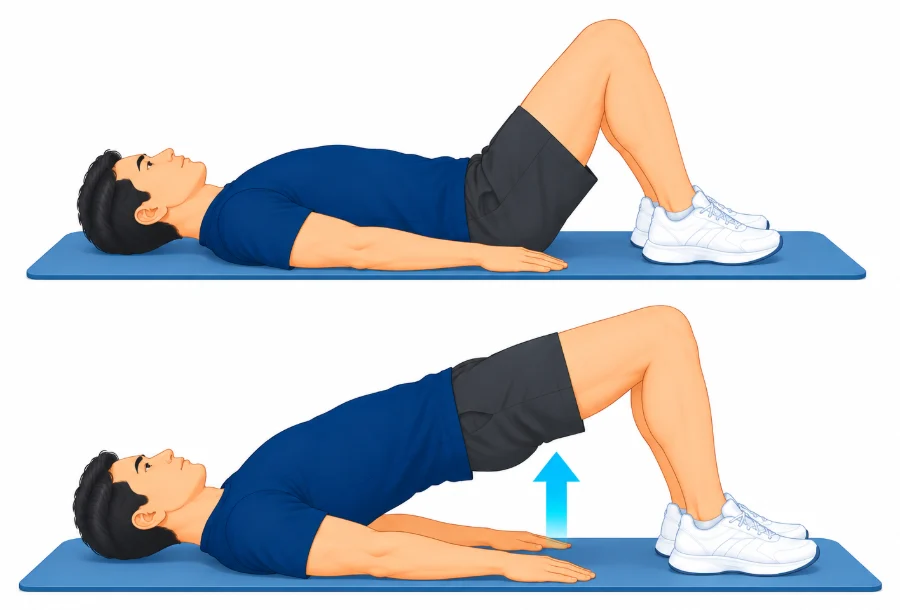
Bridge
Lie on your back with knees bent and feet flat. Squeeze your buttocks and lift your hips until your body is in a straight line, then lower slowly.
2 to 3 sets of 10
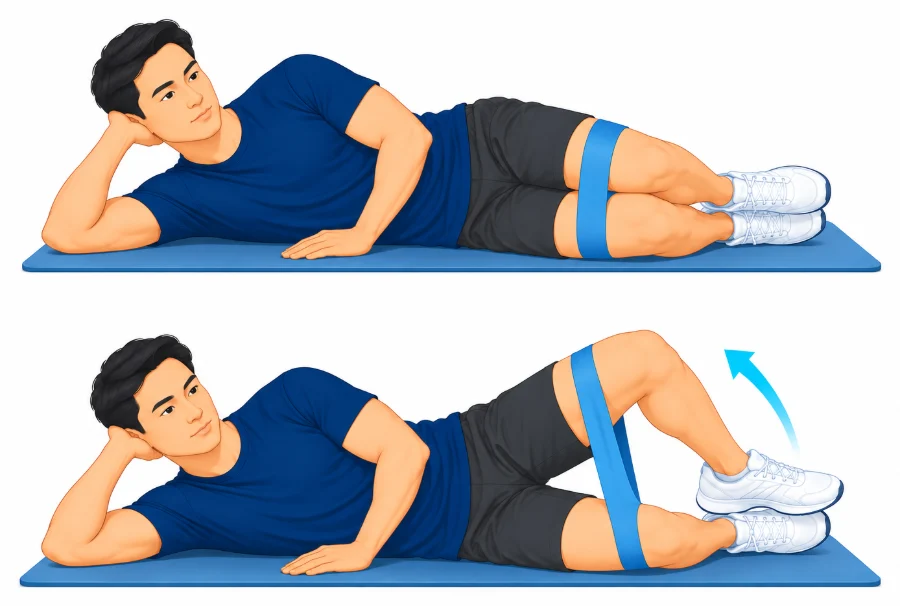
Clam
Lie on your good side with hips and knees bent. Keep your feet together and lift the top knee without rolling your pelvis back, then lower.
2 to 3 sets of 10 to 15
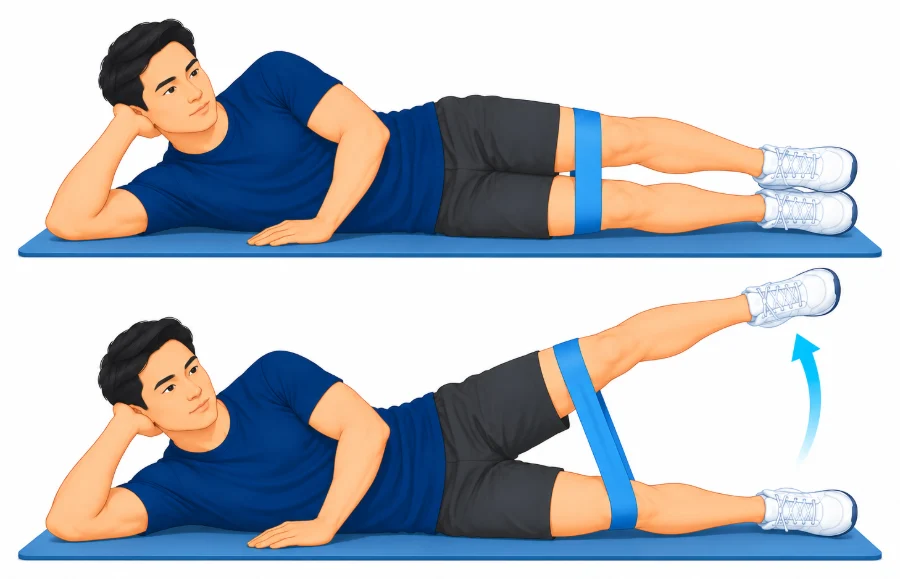
Side-lying leg lift
Lie on your good side with the lower knee bent. Keep the top leg straight and slightly behind you, lift it a short way, then lower slowly.
2 to 3 sets of 10
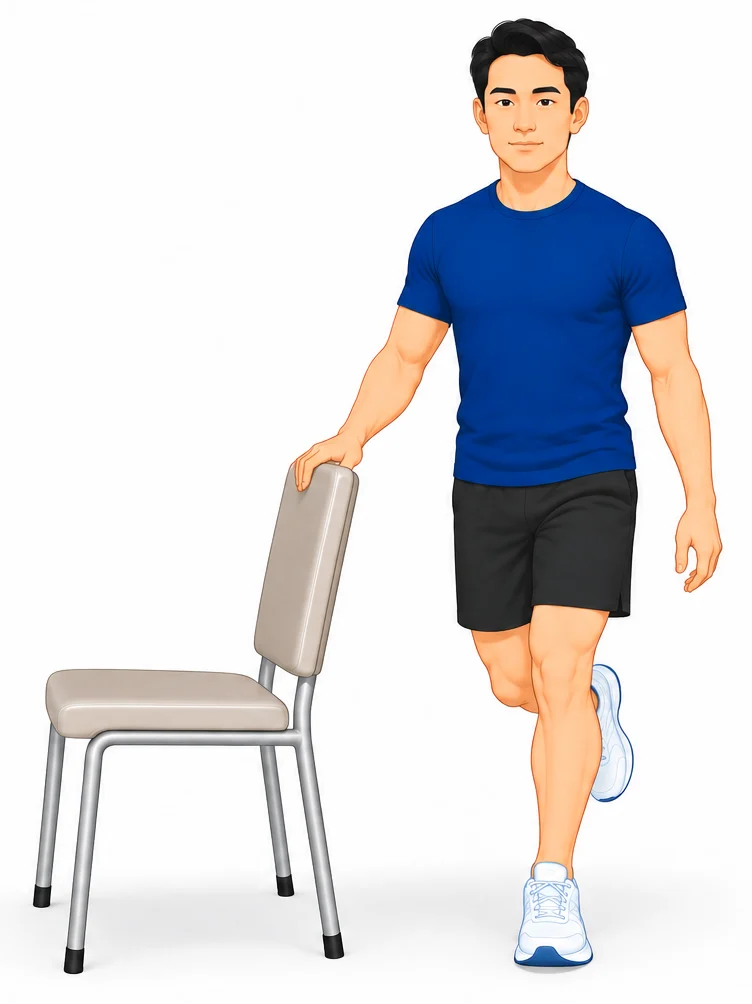
Single-leg balance
Stand tall on the sore leg near a bench for support. Keep your pelvis level and your knee soft, and hold your balance.
3 to 5 holds of 30 seconds
Other treatment options
Injections
An image-guided hip joint injection may give temporary relief and can help show whether pain is coming from inside the joint. It does not repair the ligament. Injections are not given at the clinic. If one is recommended, your GP can arrange it, usually through a radiology practice.
When surgery is needed
Hip arthroscopy may be considered when pain, catching or instability remains limiting despite a structured rehabilitation program and the ligament tear is thought to be a source of symptoms. Other problems such as a labral tear or impingement are usually treated at the same time. Prof Phong Tran performs hip arthroscopy, and his website explains the options and recovery.
Common questions
What does the ligamentum teres do?
It connects the ball of the hip to the socket and is thought to help steady the hip in deep bending and turning positions.
Can a ligamentum teres tear heal by itself?
A torn ligament may not heal fully, but pain and hip control often improve with a structured physiotherapy program.
Why did my first MRI not show the tear?
This small ligament can be hard to see on a standard MRI. An MRI arthrogram usually gives a clearer view.
Is a ligamentum teres tear linked with other hip problems?
Often, yes. It is commonly found with a labral tear, hip impingement, hip dysplasia or general joint looseness, and these are assessed at the same time.
When is surgery considered?
Surgery may be discussed when symptoms remain limiting despite rehabilitation and the examination and imaging point to a treatable problem inside the hip.
Book an assessment
An assessment can clarify the cause of your deep hip pain and set out a plan that suits your goals. Physiotherapy with A/Prof Amir Takla and Imogen Clark, myotherapy with Joanne VanDer Haar, and specialist review with Prof Phong Tran, all at 166 Gipps Street, East Melbourne. Please bring any previous hip X-rays or MRI reports and details of treatment already tried.