
Osteoarthritis of the hip
Hip osteoarthritis is a common cause of pain, stiffness and reduced movement in the hip. It can make walking, stairs, putting on shoes and sleeping more difficult. Many people manage well for years with education, exercise, physiotherapy and suitable pain relief.
At the Specialist Orthopaedic Surgery Clinic in East Melbourne, orthopaedic assessment, physiotherapy, myotherapy and strength testing all happen under one roof, so your plan can be matched to your walking, your pain and your goals.

What is hip osteoarthritis?
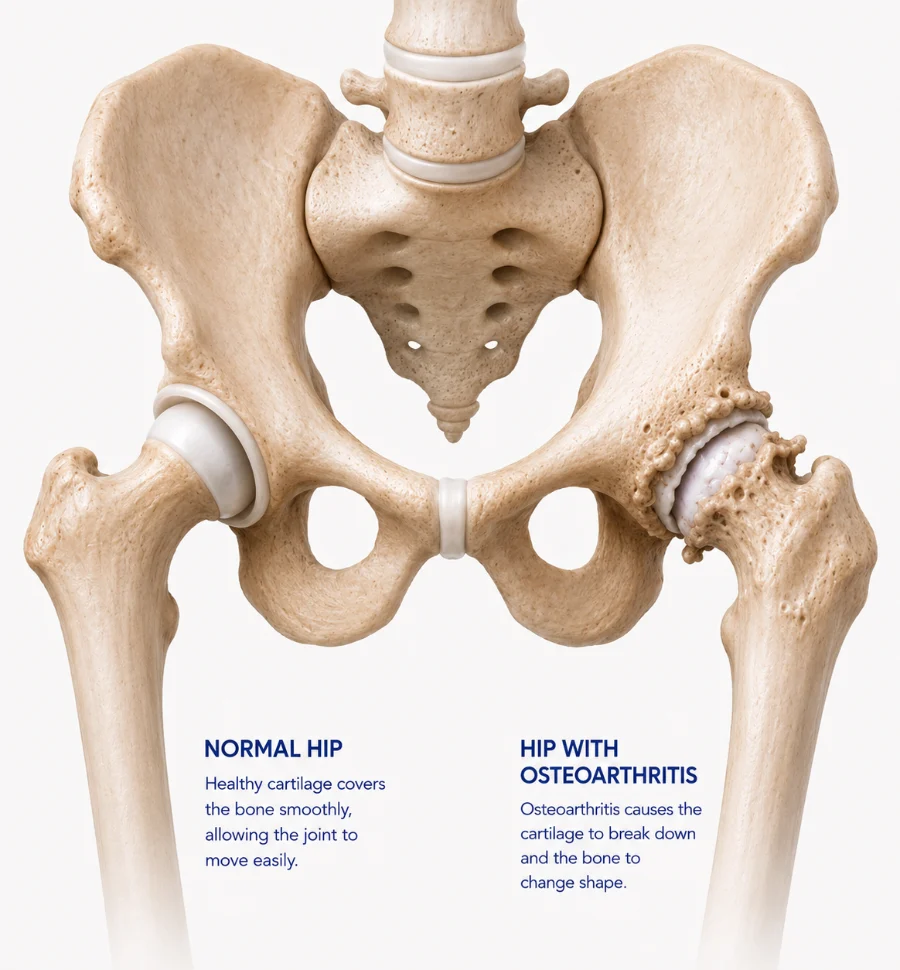
The hip is a ball and socket joint. The rounded top of the thigh bone sits in a socket in the pelvis, and smooth cartilage lets the two surfaces glide with very little friction.
In osteoarthritis the cartilage gradually thins, the bone surface becomes less smooth and the joint can become stiff or inflamed. These changes develop differently in each person, and the amount of arthritis on an X-ray does not always match how the hip feels.
Does this sound like you?
Arrange an assessment if hip pain or stiffness is becoming more frequent, limiting your walking or daily activities, disturbing sleep, or not improving with sensible activity changes and exercise. Review is also worthwhile if you are relying more on pain medicines.
How it is diagnosed
Diagnosis starts with where the pain is felt, how long it has been present and how it affects walking, sleep and everyday tasks. Your walking, hip movement and strength are examined, and the lower back is checked as another possible source of pain.
MRI is not routinely needed. It may be used when the diagnosis is uncertain or another problem is suspected, and scan findings are always matched with your symptoms and examination.
Treatment and recovery
Treatment aims to ease pain, keep you walking and protect the activities that are important to you. These steps cannot reverse arthritis, but they often make a large difference to comfort and function.
First steps
Understand and pace
Learning about the condition and pacing activity so you stay active while easing tasks that repeatedly flare the hip.
Physiotherapy
Strengthen and move
Hip and leg strengthening, mobility work and a gradual walking plan. Myotherapy may ease nearby muscles alongside exercise.
If pain limits progress
Settle flare ups
Pain relief reviewed with your GP or pharmacist. A walking stick or an image-guided injection may help you keep exercising. Injections are not given at the clinic. If one is recommended, your GP can arrange it, usually through a radiology practice.
If symptoms stay severe
Review the plan
Strength and walking tests can track progress. Hip replacement may be discussed if pain and loss of function remain severe.
Exercises you may be given
Your physiotherapist will choose the right ones and the right level for you.
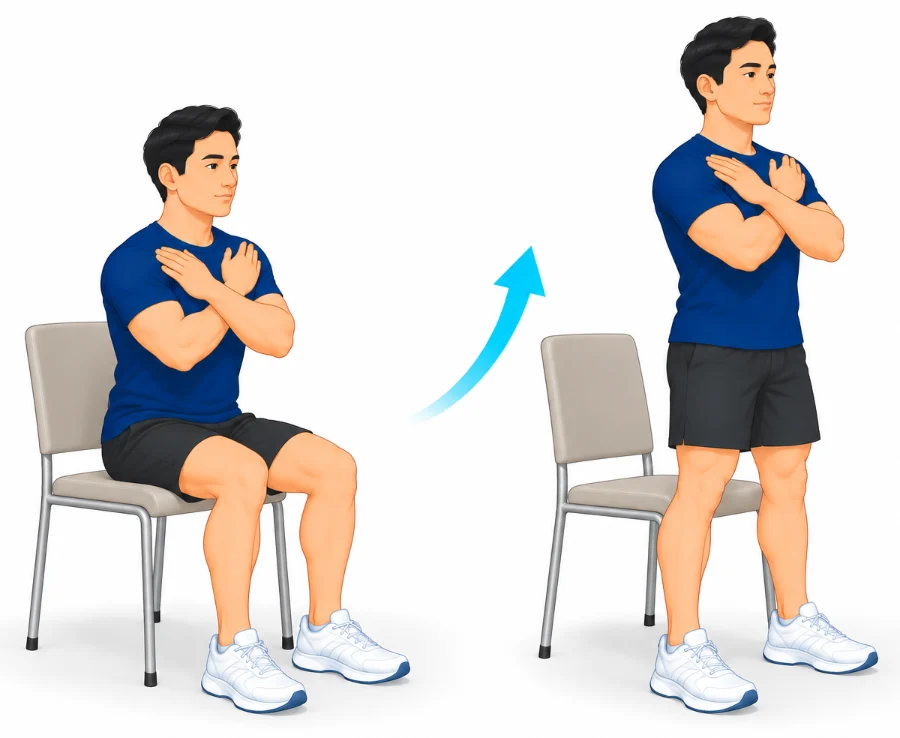
Sit to stand
Sit on a firm chair with feet flat. Lean forward slightly and stand up using your legs, then sit down slowly. Use your hands at first if needed.
2 to 3 sets of 10
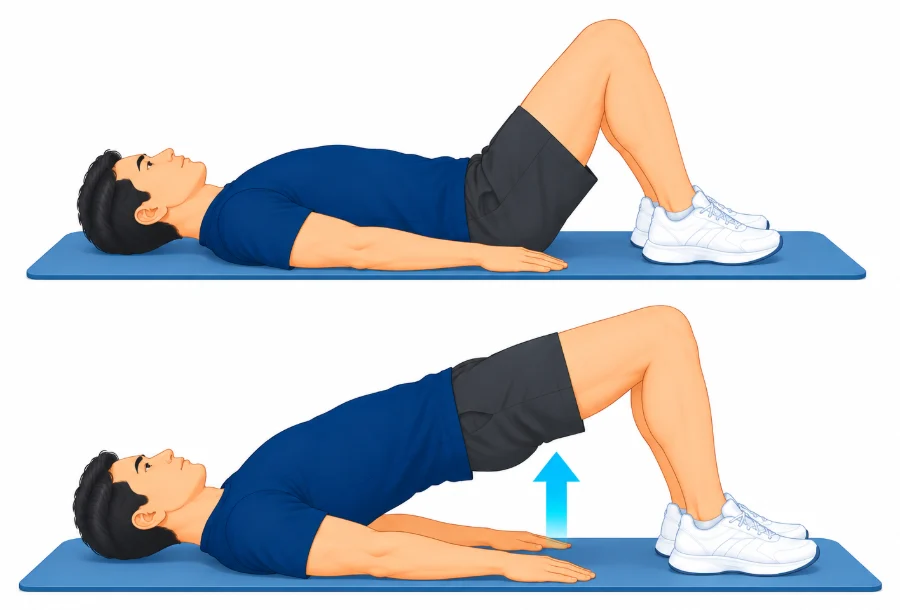
Bridge
Lie on your back with knees bent and feet flat. Squeeze your buttocks and lift your hips, then lower slowly.
2 to 3 sets of 10
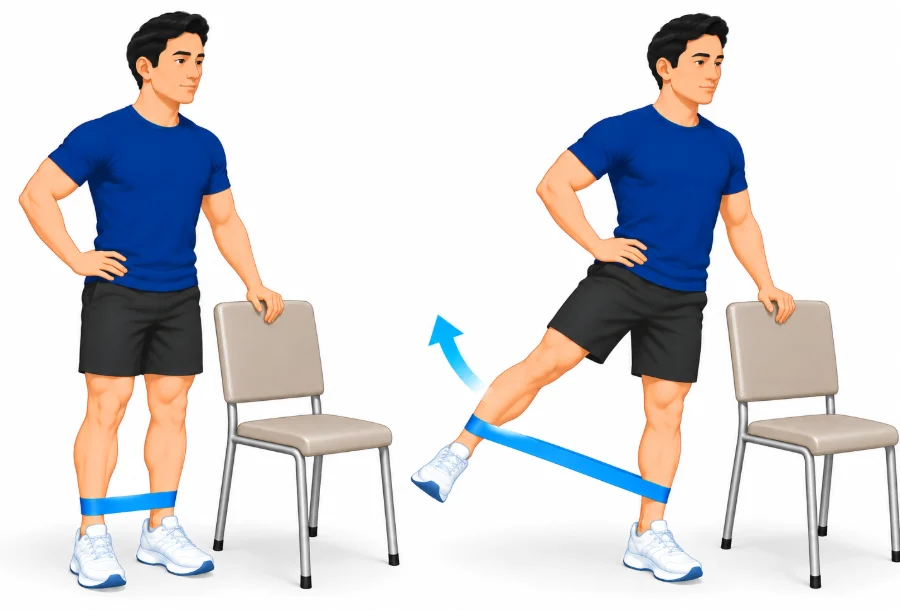
Standing side leg raise
Stand tall holding the back of a chair. Keep your body upright and lift the sore leg out to the side a short way, then lower slowly. A light band around the ankles can be added later.
2 to 3 sets of 10
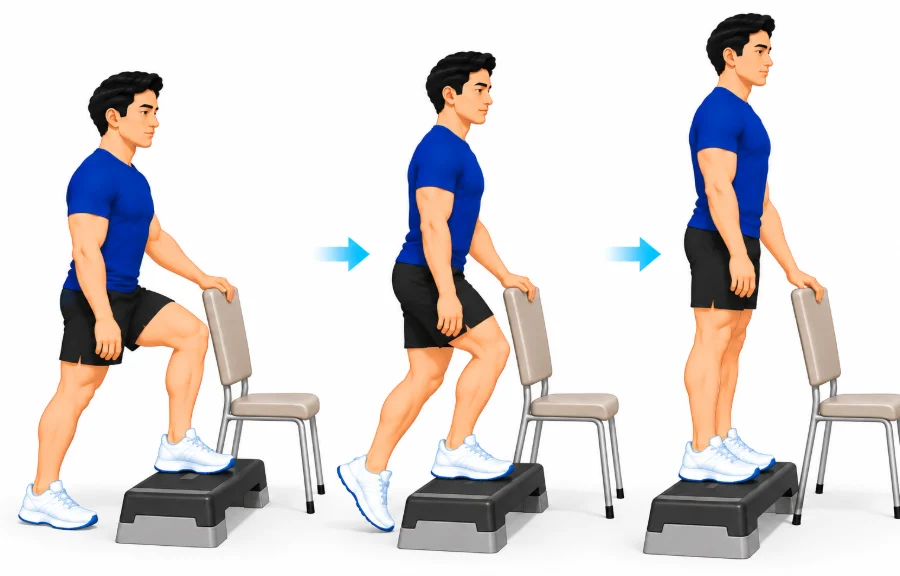
Step-ups
Hold a rail and step up onto a low step with the sore leg, straighten fully, then step down slowly with control.
2 sets of 10
Other treatment options
Medicines and injections
Pain relief should be reviewed with your GP or pharmacist, taking your other health conditions and medicines into account. An image-guided corticosteroid injection may give temporary relief and help you stay active, but it does not reverse arthritis and repeated injections are not routinely recommended.
When surgery is needed
Hip replacement may be considered when pain and stiffness substantially affect walking, sleep or independence despite suitable non-operative care. The X-ray appearance alone is not a reason for surgery. Prof Phong Tran performs anterior hip replacement, and his website explains the options and recovery.
Common questions
Can hip osteoarthritis improve without surgery?
Yes. Many people manage symptoms with education, exercise, physiotherapy, activity changes, weight management where relevant and suitable pain relief.
Do I need an MRI?
Usually not. Standing X-rays and an examination normally give the information needed. MRI may help when the diagnosis is uncertain.
Are hip injections a permanent treatment?
No. A corticosteroid injection may give temporary relief for some people, but it does not reverse arthritis.
Will exercise wear out my hip faster?
Suitable exercise does not speed up arthritis. It helps keep strength, movement and walking tolerance, and the program is adjusted to your symptoms.
When is hip replacement considered?
It may be discussed when pain, stiffness and reduced walking or sleep substantially affect quality of life despite suitable non-operative treatment.
Book an assessment
An assessment can clarify the cause of your hip pain and set out treatment that fits your goals. Physiotherapy with A/Prof Amir Takla and Imogen Clark, myotherapy with Joanne VanDer Haar, and specialist review with Prof Phong Tran, all at 166 Gipps Street, East Melbourne. Please bring any recent hip X-rays, scan reports and a list of your current medicines. Read about physiotherapy for hip osteoarthritis.