Simple balance tests you can do at home
Balance tends to fade slowly, so it is easy to miss. You might hold the rail more on stairs, or feel unsteady putting on your socks. A few simple self-checks at home can show how your balance and leg strength are going, and whether it is time to get some help.
These checks are for interest and tracking only. They do not tell you your risk of falling. That needs a proper assessment.
Before you start, set up safely
- Stand next to a kitchen bench or a sturdy table. It should be close enough to grab straight away. Do not use a chair on wheels or a towel rail.
- Have someone with you. Ask a family member or friend to stand close by while you try each check.
- Clear the floor. Move rugs, cords and clutter out of the way. Wear firm shoes or go barefoot on a non-slip floor.
- Keep it short. Stop if you feel dizzy, short of breath or unwell.
- Skip the checks if you have fallen recently, feel dizzy on standing, or have had recent surgery and have not been cleared by your surgeon or physiotherapist. Book an assessment instead.
Check one, the single leg stand
Stand side on to the bench with one hand resting lightly on it. Lift one foot a little off the floor. When you feel steady, take your hand just off the bench but keep it hovering close. Have your helper time how long you can stay on one leg before you need to touch the bench or put your foot down. Then try the other leg.
Look at how the two sides compare, and whether you wobble a lot or grab for the bench early.
Check two, the heel to toe stand
This is also called tandem stance. Hold the bench and place one foot directly in front of the other, so the heel of the front foot touches the toes of the back foot. Let go of the bench if you feel safe, with your hand hovering close. Your helper times how long you can hold the position. Swap feet and try again.
Check three, sit to stand
Use a firm chair without wheels, with its back against a wall so it cannot slide. Sit with your arms crossed over your chest and your feet flat on the floor. Stand up fully, then sit back down. Your helper keeps a tally of how many times you can do this in 30 seconds, or times how long it takes to do five.
Note whether you need to use your arms, rock to get up, or drop heavily into the chair. A version of this test is a reliable way to measure leg strength in older adults living at home.1
What do the results mean?
There is no single number at home that tells you whether you will fall. A large review of falls tests found that no single test could predict falls accurately on its own.2 Falls have many causes, such as strength, balance, eyesight, medicines, blood pressure, feet and the home around you.
Your results are most useful for tracking change. Repeat the checks every month or two in the same way and see whether they are steady, better or worse. They also give your physiotherapist a starting point. A physiotherapist compares your results with typical values for people of your age and looks at them alongside your history and other tests.
It is worth booking an assessment if any check felt hard or unsafe, one side was much weaker than the other, your results are getting worse, or you have already had a fall or a near miss.
Balance can improve
The good news is that balance responds to practice. The main Cochrane review of exercise in older people living at home found that exercise reduced the number of falls by about a quarter. Balance and functional exercises had the clearest benefit. Programs that also included strength training probably helped too.3
A physiotherapist can turn these checks into exercises that get harder as you improve, so you train your balance safely at home.
How SOS Clinic can help
The physiotherapists at SOS Clinic in East Melbourne assess balance, strength and walking, ask about past falls and set up a home program that suits you.
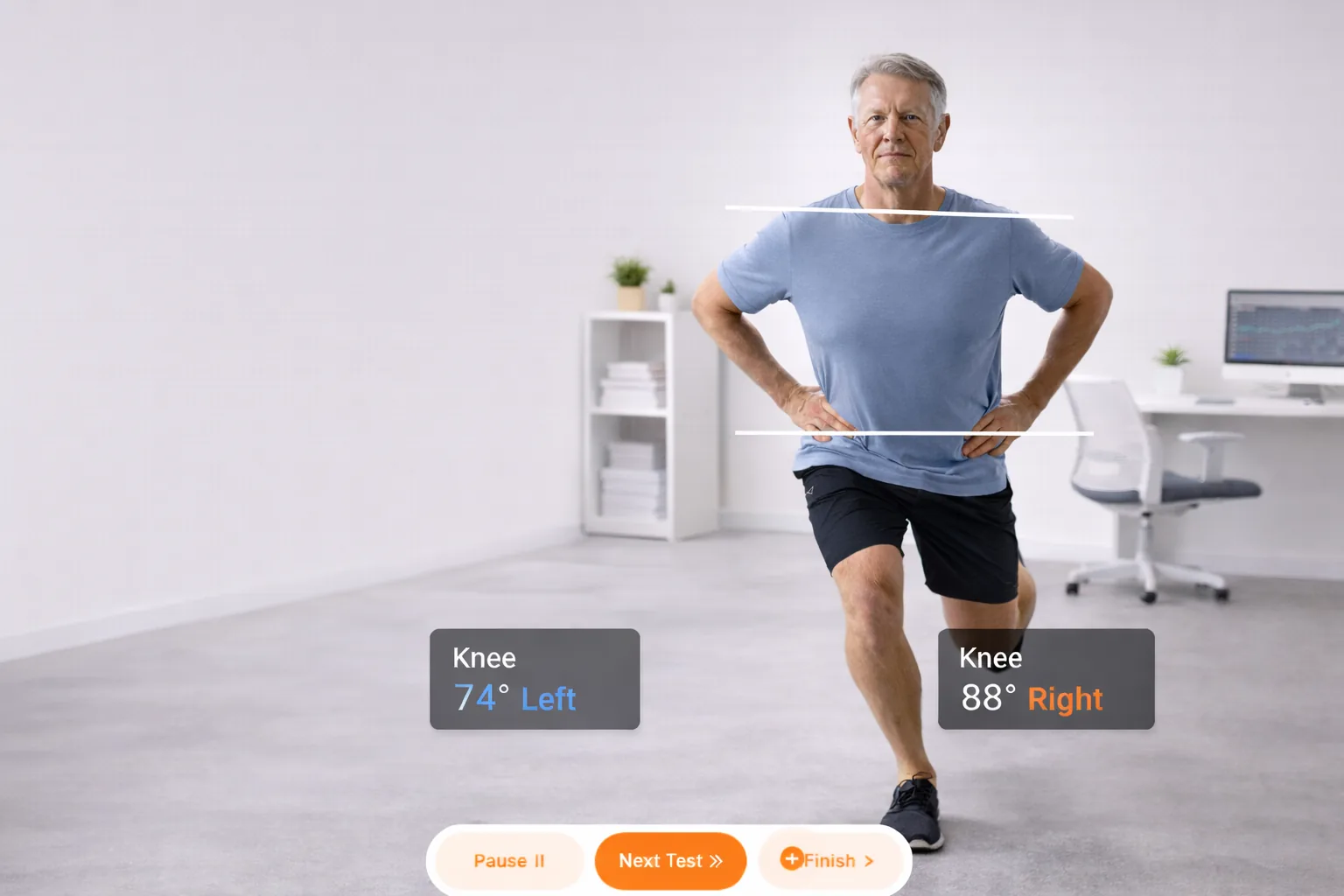
A biomechanical profile assessment can measure balance and leg strength in more detail. ForceDecks force plates show how steady you are and how you share weight between your legs. The ForceFrame strength frame measures the strength of key muscles, and the HumanTrak 3D motion camera looks at how you move. Repeat tests show your progress.
When to get help sooner
See a doctor promptly if you have a fall and hit your head, cannot get up without help, or have new hip or groin pain after a fall. The same applies if you have repeated falls, dizziness when you stand, blackouts, or new numbness or weakness in your legs. Sudden weakness on one side of the body, a drooping face, slurred speech or sudden loss of balance needs an ambulance straight away, so call triple zero. During opening hours, contact the clinic. After hours and on weekends, go to your nearest emergency department.
Book a physiotherapy balance assessment at SOS Clinic
Frequently asked questions
How often should I repeat the checks?
Every month or two is plenty. Do them the same way each time, at a similar time of day, so the results can be compared.
Is there a normal time for standing on one leg?
Typical results vary with age and health. A physiotherapist can compare your results with typical values and explain what they mean for you.
Can I do these checks after a hip or knee replacement?
Only once your surgeon or physiotherapist says it is safe. Follow your surgeon’s advice about any limits after surgery.
What if I could not do one of the checks?
That is useful information in itself. Stop trying that check on your own and book an assessment so you can train it safely with help.
Do I need a referral to see a physiotherapist?
No. You can book directly. If you have a GP management plan, Medicare may cover part of the cost of a limited number of visits.
References
- Jones CJ, Rikli RE, Beam WC. A 30-s chair-stand test as a measure of lower body strength in community-residing older adults. Res Q Exerc Sport. 1999;70(2):113-9.
- Lusardi MM, Fritz S, Middleton A, Allison L, Wingood M, Phillips E, Criss M, Verma S, Osborne J, Chui KK. Determining risk of falls in community dwelling older adults: a systematic review and meta-analysis using posttest probability. J Geriatr Phys Ther. 2017;40(1):1-36.
- Sherrington C, Fairhall NJ, Wallbank GK, Tiedemann A, Michaleff ZA, Howard K, Clemson L, Hopewell S, Lamb SE. Exercise for preventing falls in older people living in the community. Cochrane Database Syst Rev. 2019;1(1):CD012424.