
Knee physiotherapy in East Melbourne
Knee physiotherapy
Assessment and exercise-based care for knee pain and injury, and for recovery after knee surgery, in the same rooms as the orthopaedic surgeon.
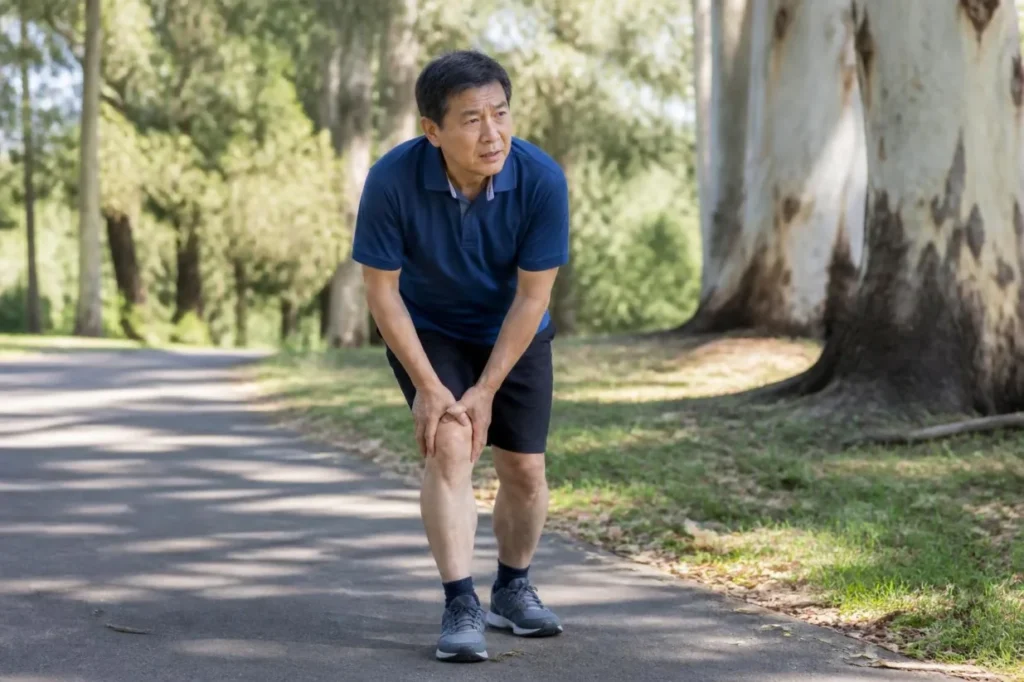
How physiotherapy helps a painful knee
Most knee problems improve with a well-planned exercise program and sensible changes to activity. Physiotherapy aims to settle pain and swelling, restore movement and rebuild the strength and control your knee needs for walking, stairs, work and sport.
Your physiotherapist works alongside Professor Phong Tran, orthopaedic surgeon. If your knee is not improving as expected, imaging or a surgical opinion can be arranged without starting again somewhere else.
Who we help
- Runners, field and court athletes and gym users with knee pain or injury
- People with knee osteoarthritis who want to avoid or delay surgery, or prepare for it
- Patients recovering from knee replacement, ACL reconstruction or meniscus surgery
- Teenagers with growth-related knee pain such as Osgood-Schlatter disease
- People returning to physical work after a knee injury
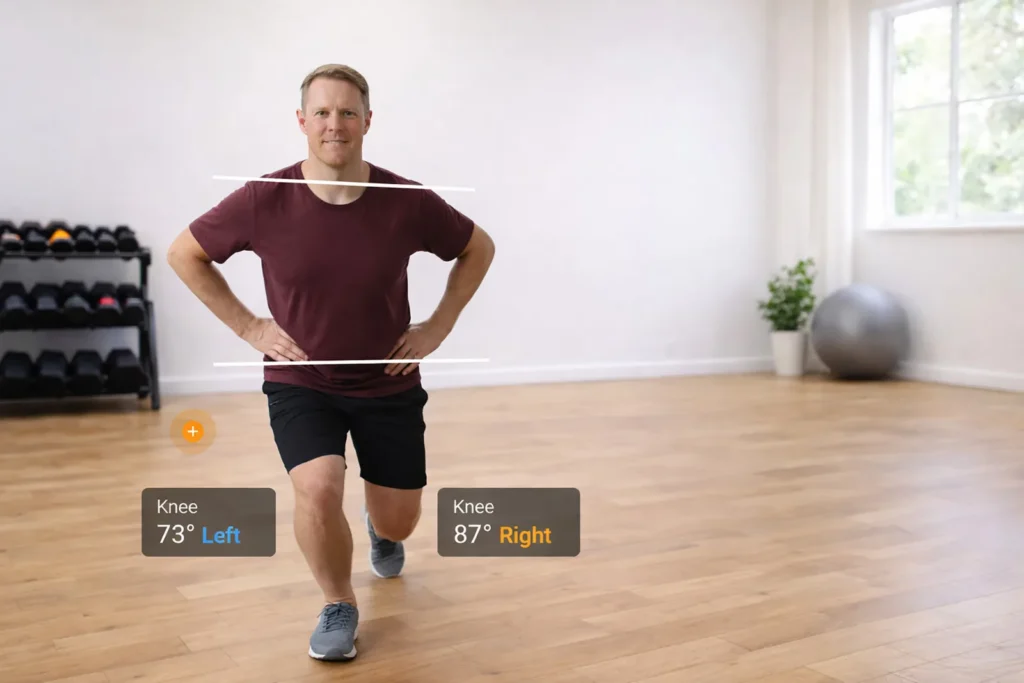
Knee conditions we treat
Choose a condition to read about its causes, treatment and recovery.

Meniscus tear
Pain along the joint line, swelling, and sometimes catching or locking when you twist or squat.

Knee osteoarthritis
Aching, stiffness and swelling, often worse on stairs, after sitting or at the end of the day.

ACL injury
A twisting injury with a pop, rapid swelling and a knee that feels unstable when changing direction.

Patellofemoral arthritis
Pain at the front of the knee behind the kneecap, especially with stairs, squatting and kneeling.

Baker’s cyst
A swelling or tight feeling at the back of the knee, often linked to another problem inside the joint.
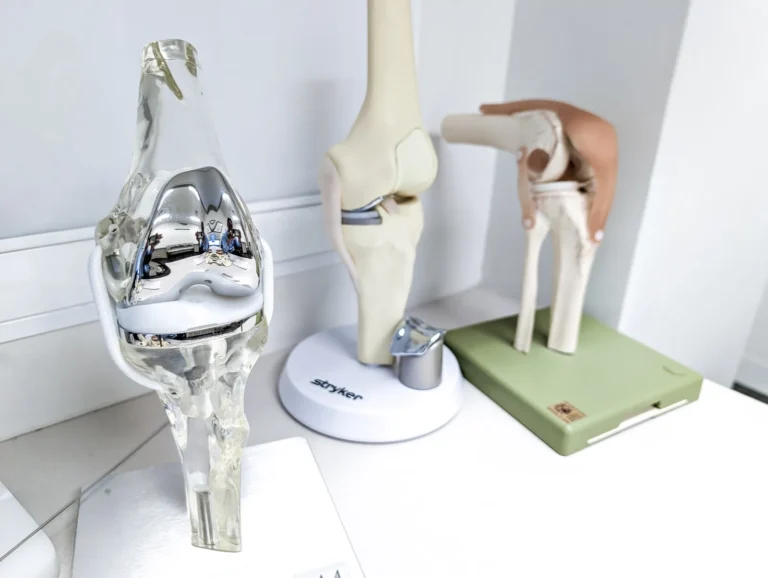
Recovery after knee surgery
A guided program after knee replacement, arthroscopy or ACL reconstruction, whoever performed your operation.
Other knee conditions
- Patellofemoral pain (runner’s knee), pain around the kneecap with running, stairs and sitting
- Patellar and quadriceps tendinopathy, pain just above or below the kneecap with jumping and squatting
- Iliotibial band and outer knee pain, common in runners and cyclists
- Kneecap instability, the kneecap slipping out of place or feeling as if it might
- PCL, MCL and LCL ligament injuries
- Osgood-Schlatter disease, a tender lump below the kneecap in active teenagers
How your knee is assessed
Every program starts with a face-to-face assessment. The diagnosis is explained in plain language and you agree on goals and a timeline together.
- Your history, the activities that aggravate your pain and the demands of your work or sport
- Walking, squatting, stairs and, for athletes, running, hopping and landing
- Strength of the thigh, hip and calf muscles, and single-leg control
- Range of movement, swelling and ligament stability
- A review of any X-rays, ultrasound or MRI you bring, with further imaging arranged only if it will change your treatment
- Simple baseline measures so progress can be tracked over time
How knee pain is treated
- Exercise therapy tailored to your condition, building strength, control and movement in stages
- Load management, adjusting training, walking or running so symptoms settle while you stay active
- Technique coaching for squatting, landing, running and sport-specific movements
- Pain relief and education, including short-term changes to activity and hands-on treatment where it helps
- Recovery habits such as sleep, weight management and general fitness
Exercises your program may include
Every program is tailored to you. These are common early knee exercises. Check with your physiotherapist before starting any of them.
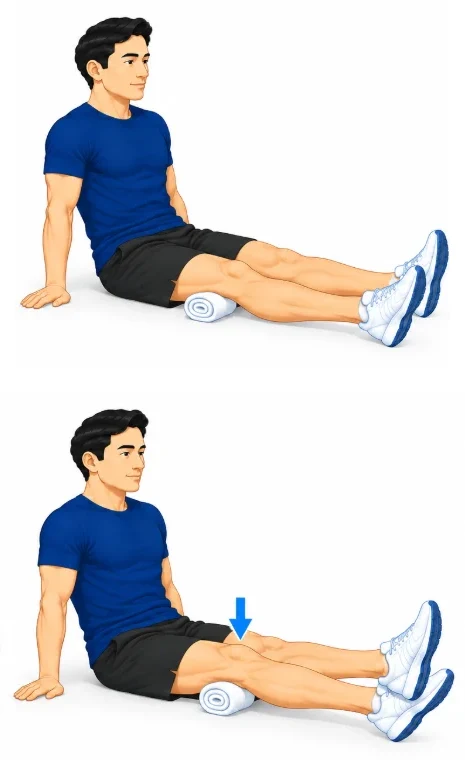
Quadriceps tightening
Wakes up the thigh muscle and helps the knee straighten fully, often the first exercise after injury or surgery.
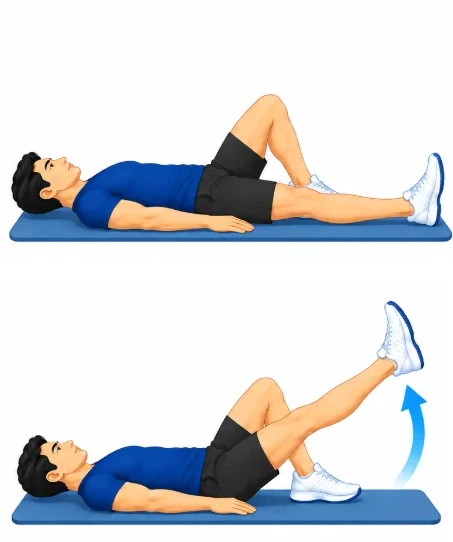
Straight leg raise
Builds thigh strength without bending the knee, useful when the joint is sore or swollen.
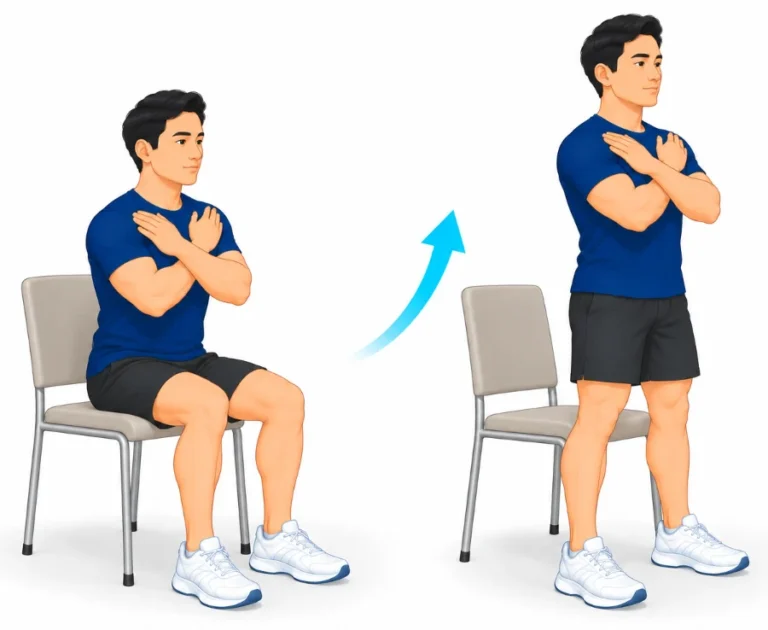
Sit to stand
Practises a movement you use every day and builds strength for chairs, cars and stairs.
Physiotherapy after knee surgery
Your physiotherapist follows your surgeon’s instructions and any precautions, especially in the first few weeks. Because the physiotherapists and Professor Tran work together, your progress is shared and the program can be adjusted quickly.
After knee replacement
- Days 0 to 14, swelling and pain control, walking practice, getting the knee straight and switching on the thigh muscle
- Weeks 2 to 6, more bend, an exercise bike, everyday strength and balance
- Weeks 6 to 12, stairs, endurance and a return to driving or desk work as advised
- Months 3 to 6, hills, uneven ground and low-impact sport
Read more about knee replacement.
After ACL reconstruction
- Weeks 0 to 6, swelling control, full straightening, walking well and early thigh strength
- Weeks 6 to 12, progressive strength and balance, with a bike or rowing machine as tolerated
- Months 3 to 6, running, hopping and agility drills
- From around 9 months, change of direction, contact training and return-to-sport testing
After meniscus surgery or knee arthroscopy
- Protecting a meniscus repair with any brace or weight-bearing limits your surgeon sets
- Restoring movement and thigh strength
- A gradual return to squatting, running and sport
Read more about knee arthroscopy (keyhole surgery).
Knee physiotherapy questions
Do I need a scan before starting?
Not always. Many knee conditions can be diagnosed from your history and examination. Imaging is arranged when it will change your treatment or to rule out a specific problem.
Will I have to stop all activity?
Usually not. The type and amount of activity is adjusted so you can keep moving while symptoms settle.
How often will I need physiotherapy?
Typically every one to three weeks at first, then less often as you become confident progressing your program on your own.
When is surgery considered?
When pain and function stay limited despite a good trial of physiotherapy, or when imaging shows a problem unlikely to improve without surgery. In that case your physiotherapist can arrange review with Professor Tran.