
Physiotherapy and rehabilitation in East Melbourne
Physiotherapy for hip bursitis and gluteal tendon pain
SOS Clinic provides physiotherapy for pain on the outside of the hip in East Melbourne. Treatment combines advice on positions that squeeze the tendons with a progressive strengthening program.

What causes pain on the outside of the hip?
Pain over the bony point on the side of the hip is often called hip bursitis or trochanteric bursitis. In most people the main source is the gluteal tendons, which attach the buttock muscles to the side of the hip. This is called gluteal tendinopathy. The umbrella term for pain in this area is greater trochanteric pain syndrome.
It is most common in women over 40. Pain is usually worse when lying on the sore side, climbing stairs, standing on one leg or sitting with the legs crossed. Read more about hip bursitis.
Can physiotherapy help?
Yes. In a large Australian trial, education combined with a structured exercise program gave better results at eight weeks than a corticosteroid injection or a wait-and-see approach.
What happens at the first appointment?
Your physiotherapist asks when the pain started, what makes it worse and how it affects sleep and walking. They check hip strength, how you stand and balance on one leg, and look at any scans you bring. You leave with an explanation of the problem, advice on positions to change and a starting set of exercises.
What might my program include?
- Advice on positions that squeeze the tendons, such as crossing the legs, hanging on one hip when standing and lying on the sore side
- Early strengthening using holds that load the tendons without compressing them
- Progressive strengthening for the buttock and thigh muscles
- A gradual return to walking, stairs, running or sport
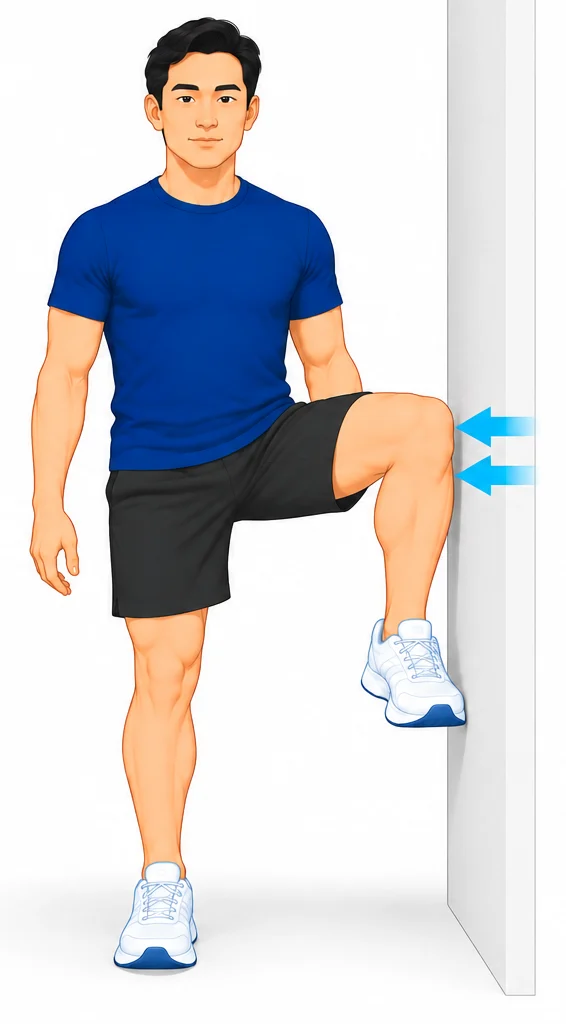
How long does it take?
Most people see improvement over eight to twelve weeks of regular exercise. Pain that has been present for a long time may take longer to settle.
What about injections?
A corticosteroid injection may give short-term relief, but the pain often returns. Injections are not given at the clinic. If one is recommended, your GP can arrange it, usually through a radiology practice.
When is surgery considered?
Surgery is rarely needed. When pain and weakness continue despite a full rehabilitation program, Professor Phong Tran can review whether an operation would help. Options include repair of a torn gluteal tendon, keyhole removal of the bursa (bursectomy) and release of the iliotibial band (ITB). His website explains surgery for hip bursitis.
Hip physiotherapy at SOS Clinic
Associate Professor Amir Takla and Imogen Clark are the physiotherapists at SOS Clinic. They work in the same rooms as Professor Phong Tran at 166 Gipps Street, East Melbourne, so care can move between physiotherapy and a surgical opinion without starting again.
More on hip physiotherapy
- Hip physiotherapy
- Physiotherapy for FAI
- Physiotherapy for hip osteoarthritis
- Rehabilitation after hip arthroscopy
Evidence and further reading
Mellor R, Bennell K, Grimaldi A, Nicolson P, Kasza J, Hodges P, Wajswelner H, Vicenzino B. Education plus exercise versus corticosteroid injection use versus a wait and see approach on global outcome and pain from gluteal tendinopathy: prospective, single blinded, randomised clinical trial. BMJ. 2018;361:k1662.
Arrange physiotherapy at SOS Clinic
Visit Specialist Orthopaedic Surgery Clinic at St Francis Building, Ground Floor, 166 Gipps Street, East Melbourne VIC 3002. Bring any relevant scans and a list of the activities you would like to return to.
Book an appointment or call (03) 9928 6161.
This information is general. Follow the advice and precautions provided by your own surgeon and physiotherapist.