
Hip bursitis (greater trochanteric pain syndrome)
Greater trochanteric pain syndrome, often called hip bursitis, is a common cause of pain on the outside of the hip. It usually involves the gluteal tendons and sometimes a nearby bursa, and can make lying on that side, walking, stairs and standing uncomfortable. Most people improve with activity changes, physiotherapy and a gradual strengthening program.
At the Specialist Orthopaedic Surgery Clinic in East Melbourne, orthopaedic assessment, physiotherapy, myotherapy and strength testing are available in one place, so outer hip pain can be assessed properly and treated step by step.
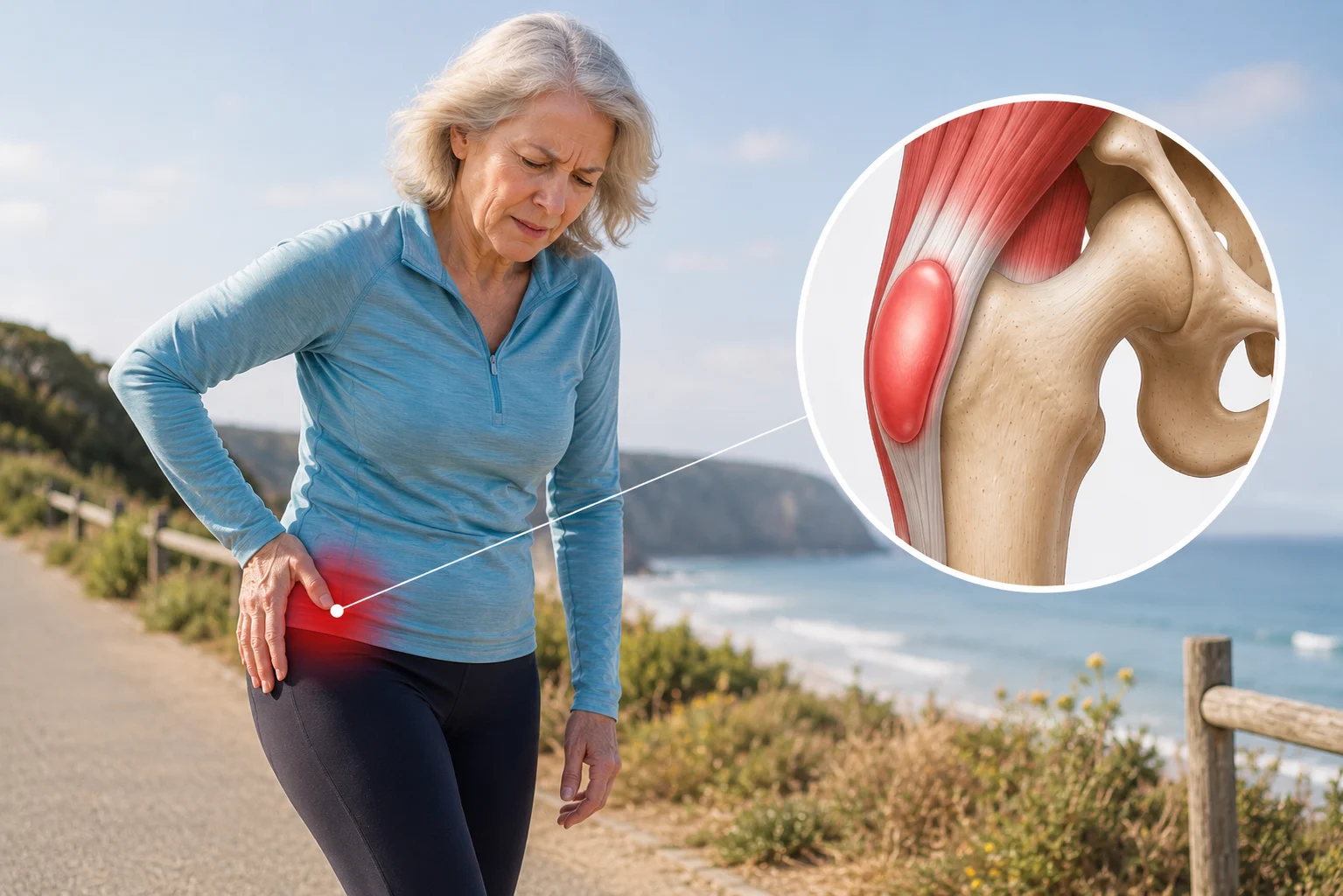
What is greater trochanteric pain syndrome?
The greater trochanter is the bony point you can feel on the outside of the hip, at the top of the thigh bone. Several gluteal tendons attach here. They steady the pelvis and control the hip when you walk or stand on one leg.
Pain usually comes from irritation or reduced capacity of these tendons, known as gluteal tendinopathy, sometimes with an inflamed bursa nearby. The condition is broader than bursitis alone, which is why treatment focuses on the tendons as well as settling pain.
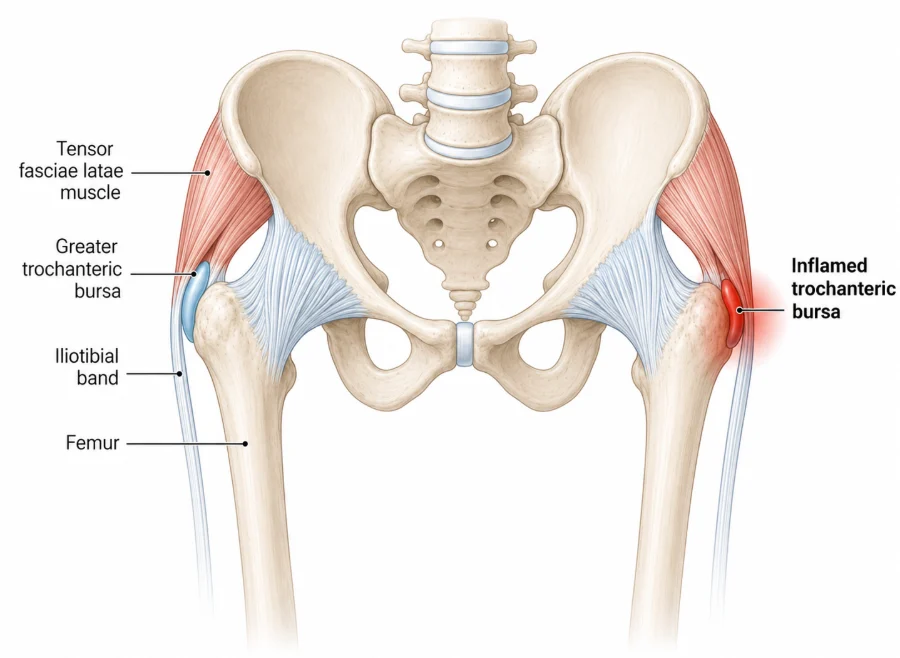
Does this sound like you?
Arrange an assessment if outer hip pain is affecting sleep, walking, stairs or exercise, keeps returning, or has not improved with load changes and strengthening. Review is also sensible if you develop clear weakness or a limp.
How it is diagnosed
Diagnosis is usually based on where the pain is, tenderness over the outer hip and pain with walking, stairs or lying on that side. Hip strength, balance and walking pattern are checked.
Other possible sources of pain, including the hip joint and lower back, are also examined. Imaging is not always needed. Ultrasound or MRI may be arranged if symptoms persist, the diagnosis is unclear or a larger tendon tear is suspected.
Treatment and recovery
Treatment aims to reduce the compression that irritates the tendons and then gradually rebuild their strength. Complete rest is rarely needed.
First weeks
Ease compression
Avoid lying on the sore side, crossing your legs or standing with the hip pushed out. Hills, stairs and long walks may be reduced for a time.
Physiotherapy
Start strengthening
Gentle holding exercises for the gluteal muscles often ease pain and begin to build tendon capacity.
Building up
Load progressively
Strength, balance and walking are built up gradually. Strength testing can compare sides and track progress.
If progress stalls
Review the plan
If pain remains limiting despite a structured program, an injection, shockwave therapy or further imaging may be considered. Injections are not given at the clinic. If one is recommended, your GP can arrange it, usually through a radiology practice.
Exercises you may be given
Your physiotherapist will choose the right ones and the right level for you.
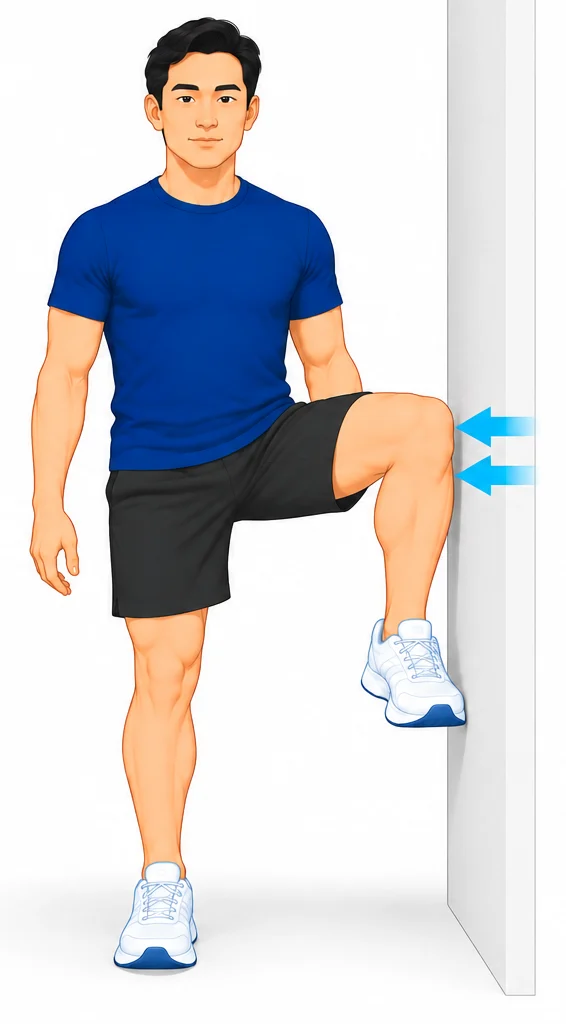
Standing hip press
Stand side-on to a wall with the sore hip away from it. Bend the knee nearest the wall and gently press that knee into the wall. Hold steady without moving.
5 holds of 30 to 45 seconds
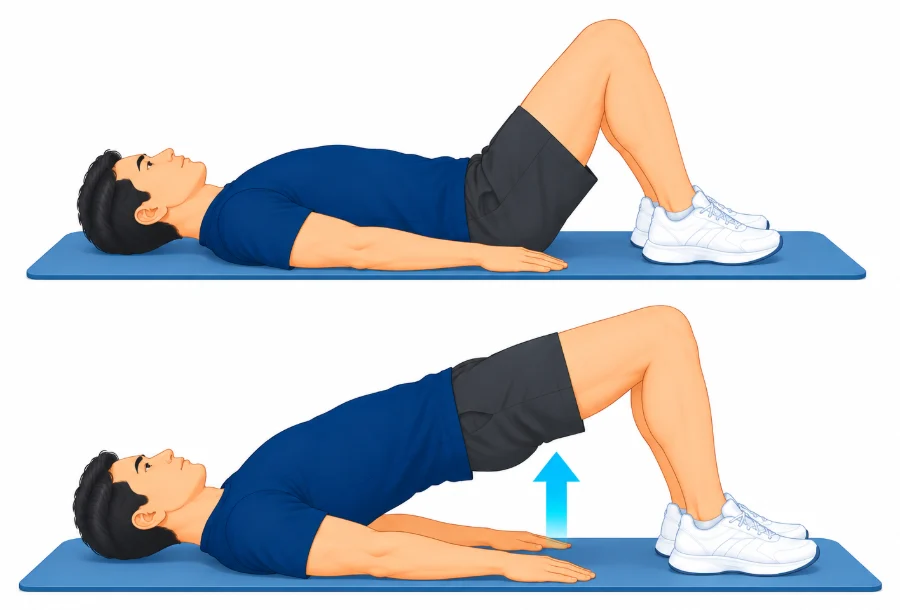
Bridge
Lie on your back with knees bent and feet flat. Squeeze your buttocks and lift your hips until your body forms a straight line, then lower slowly.
2 to 3 sets of 10
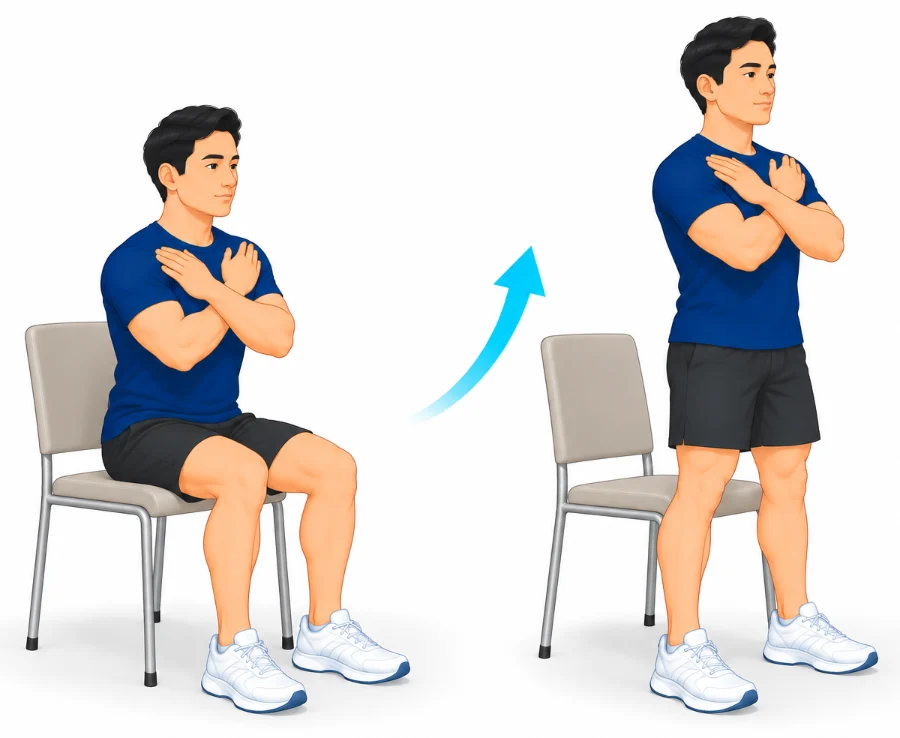
Sit to stand
Sit on a firm chair with feet hip width apart. Stand up without using your hands, keeping your knees in line with your toes, then sit down slowly.
2 to 3 sets of 10
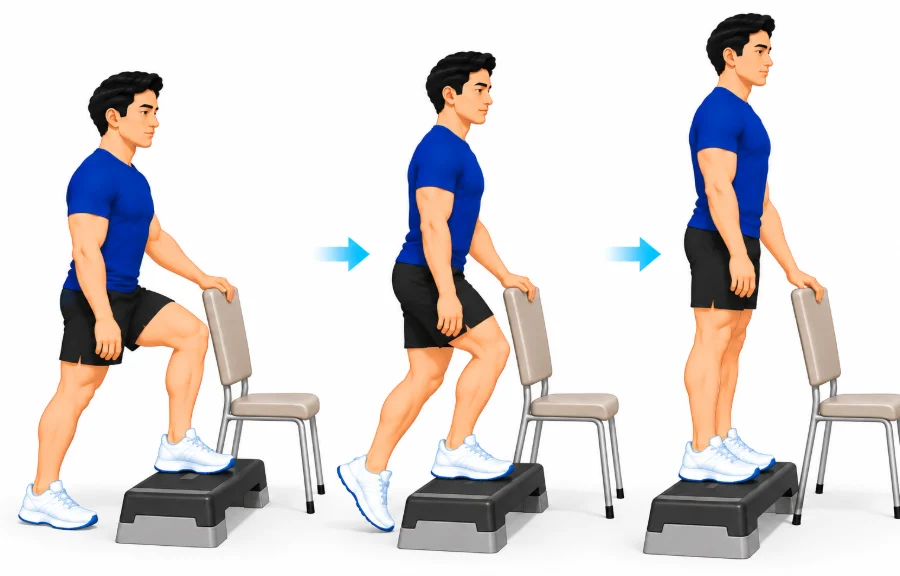
Step-ups
Step up onto a low step with the sore leg, keeping your pelvis level and your knee over your foot. Step down slowly with the other leg.
2 sets of 10, low step
Other treatment options
Injections and shockwave
Pain relief can be discussed with your GP or pharmacist. A carefully placed corticosteroid injection may give short-term relief when pain is stopping useful exercise, but symptoms may return if tendon strength is not rebuilt. Shockwave therapy may be considered in persistent cases.
When surgery is needed
Surgery is rarely needed. When disabling pain and weakness continue despite a prolonged, well-supervised rehabilitation program, Prof Phong Tran can review whether an operation would help. Options include repair of a substantial gluteal tendon tear confirmed on imaging, keyhole removal of the bursa (bursectomy) and release of the iliotibial band (ITB). His website explains surgery for hip bursitis.
Common questions
Is this the same as hip bursitis?
Not always. The gluteal tendons are often the main source of outer hip pain, and the nearby bursa may also be irritated. Treatment focuses on tendon load and strength.
Should I stop walking or exercising?
Complete rest is rarely needed. Hills, stairs and side-lying may need adjusting for a time, followed by gradual strengthening and return to activity.
Why does lying on my side hurt?
Side-lying presses the gluteal tendons against the bone on the outside of the hip. Changing position or using pillows can ease this while you rehabilitate.
Are cortisone injections helpful?
An injection may give short-term relief for some people, particularly when pain stops rehabilitation. It does not rebuild tendon strength, so exercise stays important.
Should I stretch the outside of my hip?
Stretches that pull the leg across the body can squeeze the tendons and often aggravate pain. Your physiotherapist can advise which exercises suit you.
Book an assessment
An assessment can confirm the cause of your outer hip pain and set out a progressive treatment plan. Physiotherapy with A/Prof Amir Takla and Imogen Clark, myotherapy with Joanne VanDer Haar, and specialist review with Prof Phong Tran, all at 166 Gipps Street, East Melbourne. Please bring any previous scan reports and details of exercise or treatment already tried. Read about physiotherapy for hip bursitis and gluteal tendon pain.