Isometric exercise for painful joints
When a tendon or joint is sore, moving it through a full exercise can hurt. Isometric exercise offers another way in. You push or pull against something that does not move, and hold the effort steady for a short time.
Isometric holds have become popular for easing pain. Some people find they help a lot. The research is more mixed than many online sources suggest, so it helps to know what has and has not been shown.
What is an isometric exercise?
In an isometric exercise, the muscle works hard but the joint stays still. Pushing your leg against a strap without bending the knee is one example. A wall sit is another. Pressing your arm out against a wall is a third.
Because the joint does not move, these exercises are often easier to tolerate when movement is painful. They can also be dialled up or down simply by changing how hard you push.
What is exercise-induced hypoalgesia?
This is the medical name for the drop in pain sensitivity that many people feel during or after exercise. The body has its own pain-easing systems, and exercise can switch them on for a while.
In people with long-term muscle and joint pain, this effect is less predictable. A review of studies that tested pain sensitivity before and after a single bout of exercise found that isometric exercise did not reliably reduce pain sensitivity in people with chronic musculoskeletal pain. The studies were small and the authors called for more research.1
The early tendon research
Interest in isometric exercise for pain took off after a small study in 2015. Six volleyball players with patellar tendon pain, felt at the front of the knee, did a session of heavy isometric holds. Their pain during a single leg squat dropped sharply straight after, and the relief lasted at least 45 minutes. A session of moving exercise also helped, but less.2
A follow-up trial in jumping athletes compared four weeks of isometric holds with four weeks of slow moving exercises, done while the athletes kept playing. Pain improved in both groups, with no clear difference between them.3
Later studies found smaller effects
Larger and more tightly controlled studies have not repeated the dramatic early result. A randomised crossover trial in 21 people with patellar tendon pain found that a session of isometric exercise and a session of moving exercise both eased pain a little. The drop was small, did not last 45 minutes, and isometric holds did no better than moving exercise.4
In Achilles tendon pain, a study of heavy calf holds found no meaningful short-term change in pain on average. People’s responses varied a lot.5
Overall, isometric holds may ease tendon pain for a short time in some people, but they do not seem to be better than other forms of strength exercise. The type of contraction appears to matter less than once thought.
What about arthritis?
For knee arthritis, strengthening exercise in general is a core treatment. Isometric exercise can be a gentle starting point when bending the knee under load is too painful.
Not everyone with arthritis responds the same way to a single bout of exercise. In one study of people with knee arthritis, isometric and cycling exercise reduced pain sensitivity in those whose pain-easing systems worked normally. In people whose pain systems were more sensitised, the same exercise made them a little more sensitive to pain for a time.6 This is one reason a program is started gently and adjusted to how you respond.
How isometric exercise fits into a program
- It can be an early step. When moving exercise is too painful, isometric holds let you keep the muscle working.
- It can help you get through a flare. Some people use a few holds to settle pain before activity or sport. If it helps you, it can be kept in the program.
- It is rarely the whole answer. Longer term, tendons and joints usually need loading through movement that slowly gets heavier, as well as fitness and return to the activities you enjoy.
- Your response guides the plan. Your physiotherapist checks how your pain behaves during and after holds, and over the following day, and adjusts from there.
Measuring and guiding holds with ForceFrame
At SOS Clinic, isometric strength can be measured on the ForceFrame strength frame. You push or pull against padded sensors while the screen shows how much force each side produces, in real time.
The frame shows how strong a muscle group is and how the two sides compare. It lets your physiotherapist set how hard each hold should be, so it is challenging but not too much. It gives you live feedback so you can keep the effort steady through each hold. Repeat tests show whether your strength is improving over time. ForceDecks force plates can also be used for some isometric tests, such as a steady push into the ground.
How SOS Clinic can help
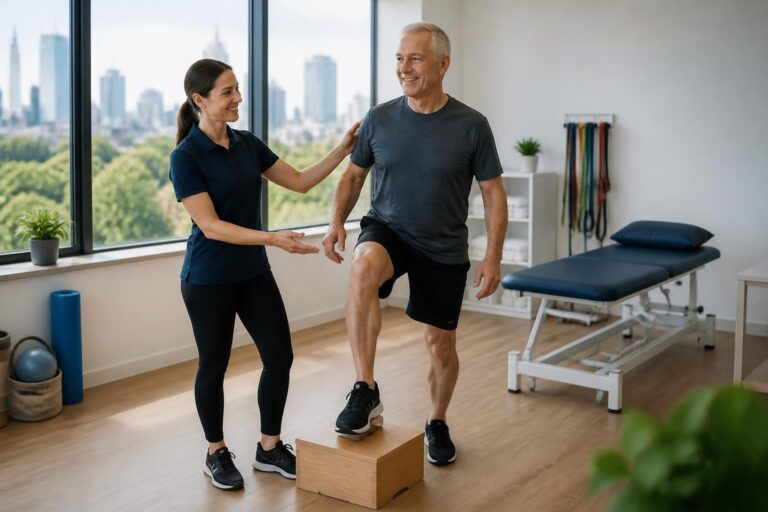
The physiotherapists at SOS Clinic in East Melbourne treat tendon pain in the knee, hip, shoulder and ankle, and arthritis of the hip and knee. Your first visit includes an assessment and a plan that starts at the right level for your pain.
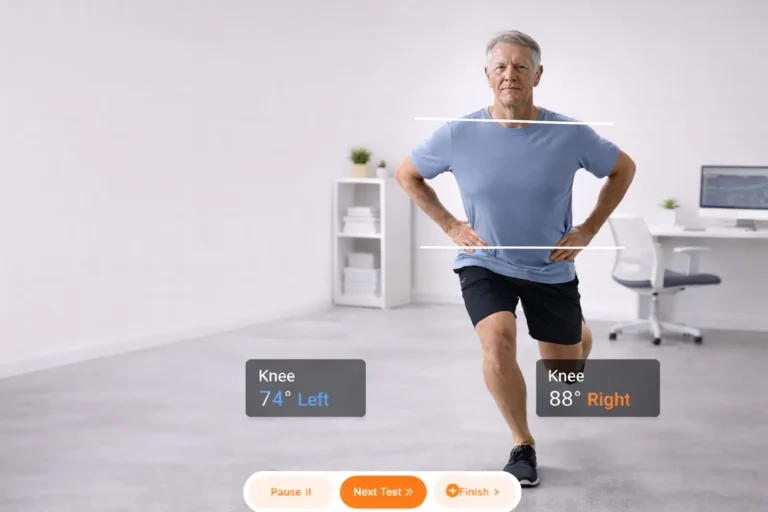
A biomechanical profile assessment brings together the ForceFrame strength frame, ForceDecks force plates and the HumanTrak 3D motion camera to give a fuller picture of strength and movement. Myotherapy can work alongside your program to ease tight, sore muscles.
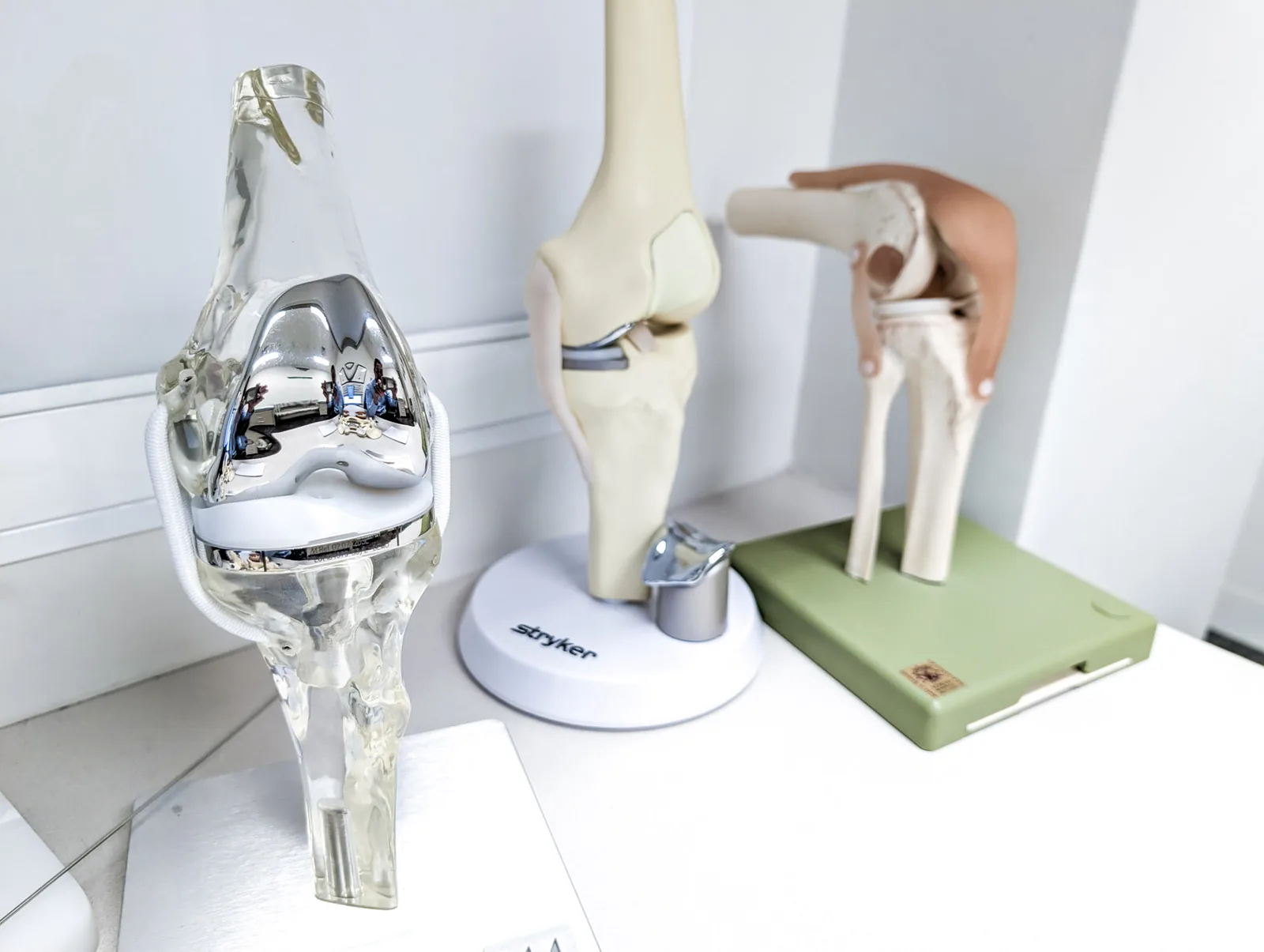
If pain keeps limiting you despite a good program, the clinic team can arrange a review with Prof Phong Tran, an orthopaedic surgeon who works from the same clinic.
When to get help sooner
See a doctor promptly if a joint becomes hot, red and swollen, especially with a fever. The same applies if you felt a sudden snap or pop in a tendon, have sudden loss of strength, cannot put weight on your leg or lift your arm, or have pain that wakes you every night and does not settle. During opening hours, contact the clinic. After hours and on weekends, go to your nearest emergency department.
Book a physiotherapy assessment at SOS Clinic
Frequently asked questions
Should isometric exercises hurt?
Usually they should feel like hard work but not cause sharp pain. Mild discomfort that settles soon after is often fine. Your physiotherapist sets how hard to push so pain stays at a level you can manage.
How long should I hold each one?
It depends on your condition and how you respond. Your physiotherapist sets the hold time, effort and number of repeats, and changes them as you improve.
Can isometric exercise replace my other exercises?
For most people, no. Isometric holds are a useful tool, but tendons and joints usually do best with a program that also includes moving strength work and general fitness.
Can I use isometric holds before sport?
Some athletes use a few holds before training to settle tendon pain. The evidence for this is mixed, so try it with your physiotherapist’s guidance and see how you respond.
Is isometric exercise safe with arthritis?
For most people, yes. It is often a gentle way to start strengthening when movement hurts. The program is adjusted if your pain flares.
References
- Wewege MA, Jones MD. Exercise-induced hypoalgesia in healthy individuals and people with chronic musculoskeletal pain: a systematic review and meta-analysis. J Pain. 2020;22(1):21-31.
- Rio E, Kidgell D, Purdam C, Gaida J, Moseley GL, Pearce AJ, Cook J. Isometric exercise induces analgesia and reduces inhibition in patellar tendinopathy. Br J Sports Med. 2015;49(19):1277-83.
- van Ark M, Cook JL, Docking SI, Zwerver J, Gaida JE, van den Akker-Scheek I, Rio E. Do isometric and isotonic exercise programs reduce pain in athletes with patellar tendinopathy in-season? A randomised clinical trial. J Sci Med Sport. 2015;19(9):702-6.
- Holden S, Lyng K, Graven-Nielsen T, Riel H, Olesen JL, Larsen LH, Rathleff MS. Isometric exercise and pain in patellar tendinopathy: a randomized crossover trial. J Sci Med Sport. 2019;23(3):208-14.
- O’Neill S, Radia J, Bird K, Rathleff MS, Bandholm T, Jorgensen M, Thorborg K. Acute sensory and motor response to 45-s heavy isometric holds for the plantar flexors in patients with Achilles tendinopathy. Knee Surg Sports Traumatol Arthrosc. 2018;27(9):2765-73.
- Fingleton C, Smart KM, Doody CM. Exercise-induced hypoalgesia in people with knee osteoarthritis with normal and abnormal conditioned pain modulation. Clin J Pain. 2017;33(5):395-404.