Inside a biomechanical assessment at SOS Clinic
When a physiotherapist watches you squat or step down from a stair, they can spot a lot. But small differences between your left and right leg, or a muscle that is only a little weaker than it should be, are hard to see by eye.
A biomechanical profile assessment measures these things. It gives you and your physiotherapist clear numbers to build a plan on, and a starting point to check your progress against.
Who is it for?
- People with hip, knee or shoulder pain that keeps coming back
- People with hip or knee arthritis who want to stay active
- Anyone getting ready for a joint replacement, or recovering from one
- People recovering from a knee injury such as an ACL tear, before or after surgery
- Runners and sports players who want to return to sport safely or lower their injury risk
- Anyone who wants to know how their strength and movement compare with others their age
The three tools
SOS Clinic uses three systems made by VALD, an Australian company whose equipment is used in hospitals, clinics and professional sport.
Force plates (ForceDecks)
Two flat plates sit on the floor, one under each foot. They measure how much force each leg makes when you stand, squat, balance or jump. This shows whether you favour one side, even when you cannot feel it.
Strength frame (ForceFrame)
A padded frame holds your leg or arm still while you push or pull as hard as you can. It measures the strength of key muscle groups around the hip, knee and shoulder, on both sides.
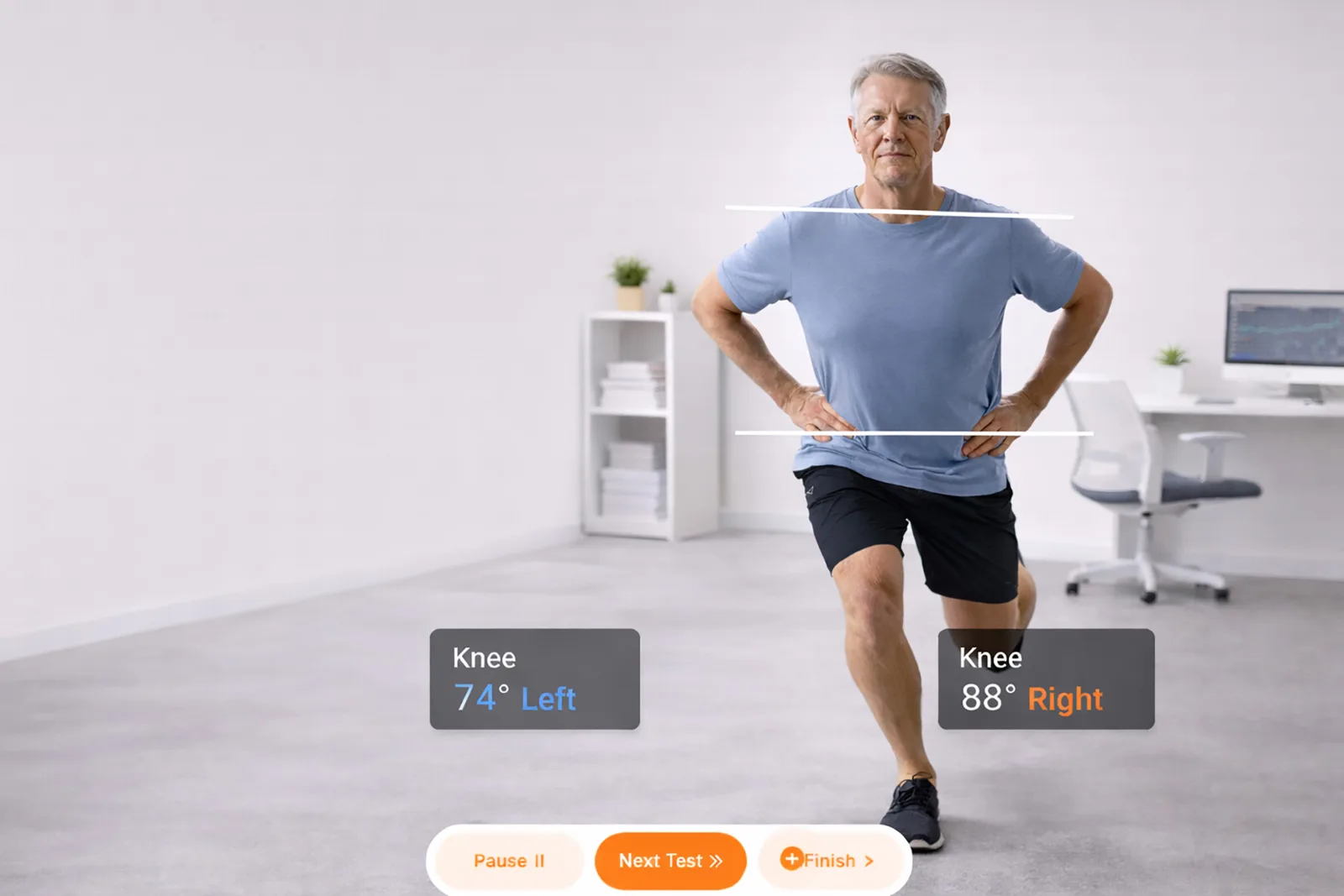
3D motion camera (HumanTrak)
A camera tracks your joints as you squat, lunge or lift your arms. It measures how far each joint bends and how your body lines up. There are no markers or special suits, so you just move as you normally would.
What happens on the day
- A chat first. Your physiotherapist asks about your pain, past injuries, any surgery and your goals.
- A warm-up. A few easy movements get you ready.
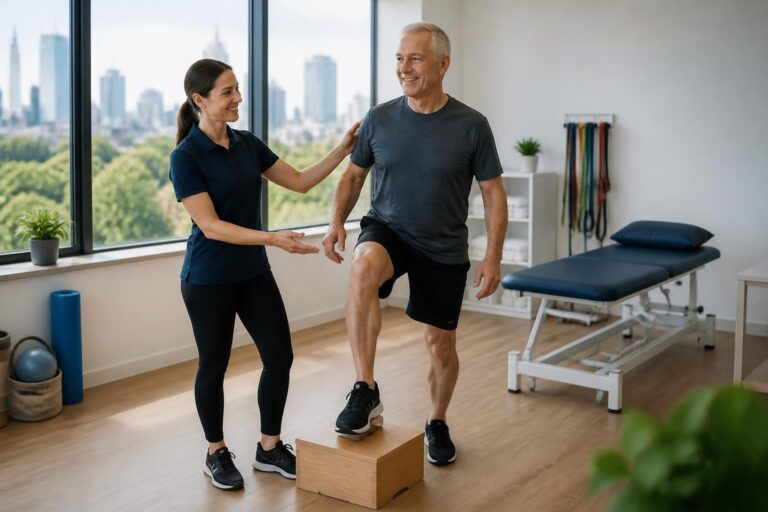
- The tests. You complete a set of tests chosen for you. Someone with knee arthritis does different tests from a footballer after an ACL injury.
- Your results. Results come up on screen as you go, and your physiotherapist explains what they mean.
- Your plan. You leave with clear next steps and exercises that target what the tests found.
The assessment takes about [CONFIRM duration]. Wear comfortable clothes and sports shoes you can move in.
Your results
Your results show how your left and right sides compare. They can also be compared with typical results for people of your age and sex. This helps, because some conditions weaken both legs, so a person can look even from side to side and still be weaker than they should be.
You receive [CONFIRM what the patient gets, for example a printed or emailed report]. With your permission, results can be shared with your GP or surgeon.
Why measure at all?
Muscle strength matters for joint health. Weak thigh muscles, for example, are linked with a higher chance of developing knee arthritis.1 International arthritis guidelines advise exercise programs that are tailored to each person and slowly made harder.2 Measuring strength and movement makes that tailoring more precise.
Numbers also help with motivation. Seeing your strength go up on a retest, even when the pain is slow to change, shows that the work is paying off.
Is it safe?
Yes. Most tests are simple movements such as standing, squatting and pushing against a pad. You control how hard you push. Tests are chosen to suit your condition and stage of recovery. Jumping tests are only used when they are right for you. After surgery, testing follows your surgeon’s advice.
What happens next
Your physiotherapist uses the results to set your exercise program. Retesting every few weeks or months shows what has improved and what needs more work. If muscle tightness is part of the problem, myotherapy can be added to your plan.
Book a biomechanical profile assessment
Frequently asked questions
Do I need a referral?
No. You can book directly through the booking form. Referrals from GPs, surgeons and other physiotherapists are also welcome.
Can I have the assessment if I am in pain?
Usually yes. Tests are adjusted to what you can comfortably do. Tell your physiotherapist about your pain before you start.
Is it covered by private health insurance?
[CONFIRM how the assessment is billed and whether extras cover applies]
How often should I be retested?
It depends on your goals. Many people retest every 6 to 12 weeks during rehab, or before returning to sport.
Is this the same as a gait or running analysis?
Not exactly. The assessment looks at strength, balance and how you move in set tests. Your physiotherapist can add running or walking checks if they suit your goals.
References
- Øiestad BE, Juhl CB, Eitzen I, Thorlund JB. Knee extensor muscle weakness is a risk factor for development of knee osteoarthritis. A systematic review and meta-analysis. Osteoarthritis Cartilage. 2015;23(2):171-7.
- Moseng T, Vliet Vlieland TPM, Battista S, Beckwée D, Boyadzhieva V, Conaghan PG, Costa D, Doherty M, Finney AG, Georgiev T, Gobbo M, Kennedy N, Kjeken I, Kroon FPB, Lohmander LS, Lund H, Mallen CD, Pavelka K, Pitsillidou IA, Rayman MP, Tveter AT, Vriezekolk JE, Wiek D, Zanoli G, Østerås N. EULAR recommendations for the non-pharmacological core management of hip and knee osteoarthritis: 2023 update. Ann Rheum Dis. 2024;83(6):730-40.