
Shoulder physiotherapy in East Melbourne
Shoulder physiotherapy
Assessment and exercise-based care for shoulder pain, stiffness and weakness, in the same rooms as the orthopaedic surgeon.

How physiotherapy helps a painful shoulder
Most shoulder problems improve with a well-planned exercise program. Physiotherapy aims to settle pain, restore movement and rebuild the strength and control your shoulder needs for work, sport and a good night’s sleep.
Your physiotherapist works alongside Professor Phong Tran, orthopaedic surgeon. If your shoulder is not improving as expected, imaging or a surgical opinion can be arranged without starting again somewhere else.
Your first visit
- A detailed history of your pain, your work and your sport
- Examination of shoulder movement, strength and shoulder blade control
- A review of any X-rays, ultrasound or MRI scans you bring
- A clear explanation of the problem and an exercise program to start at home

Shoulder conditions we treat
Choose a condition to read about its causes, treatment and recovery.
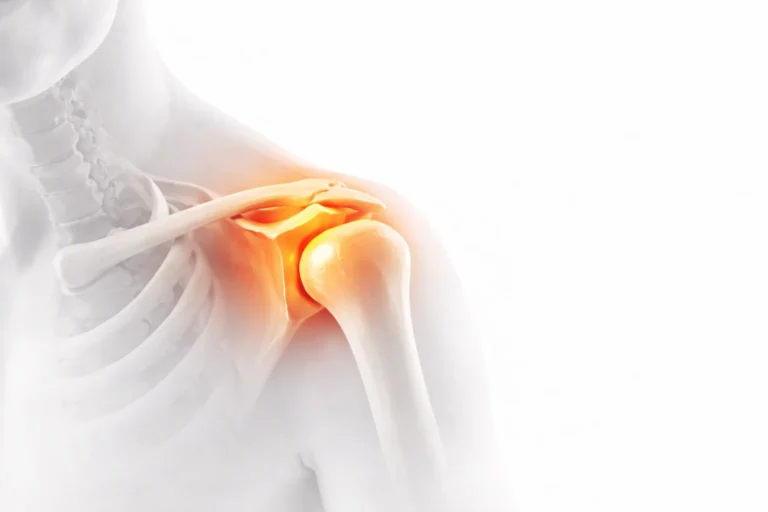

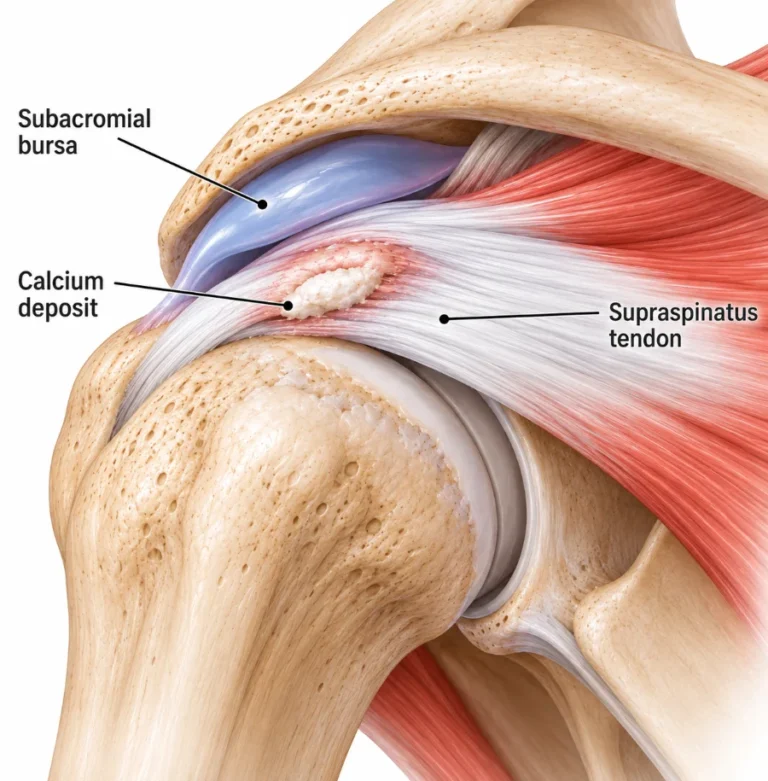
Shoulder impingement and bursitis
Pain when reaching overhead, often from an irritated bursa or tendon.
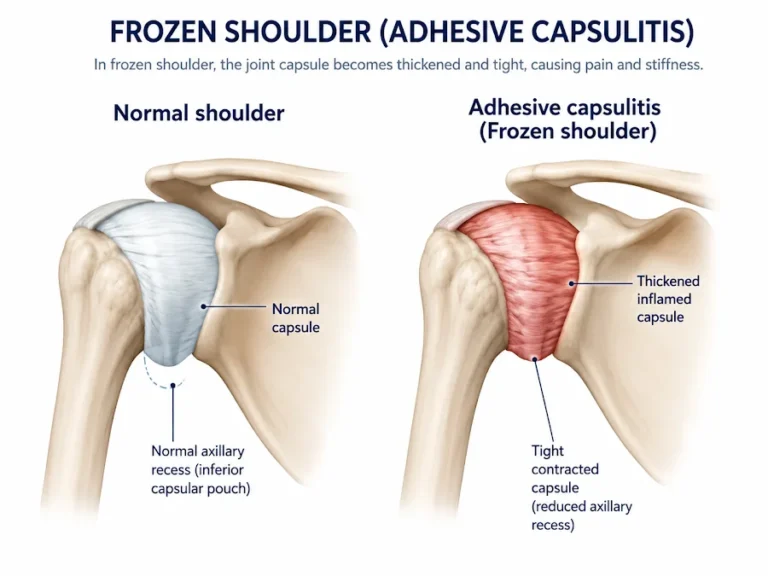


Other shoulder conditions
- Biceps tendinitis, pain at the front of the shoulder with lifting and pulling
- AC joint arthritis, pain on top of the shoulder when reaching across the body
- SLAP lesion, a tear of the labrum with clicking, catching or deep pain
- Scapular dyskinesis, altered shoulder blade movement that can add to shoulder pain
Exercises your program may start with
Every program is tailored to you. Early shoulder rehabilitation often begins with gentle movement and shoulder blade control before strengthening. Check with your physiotherapist before starting any of these.
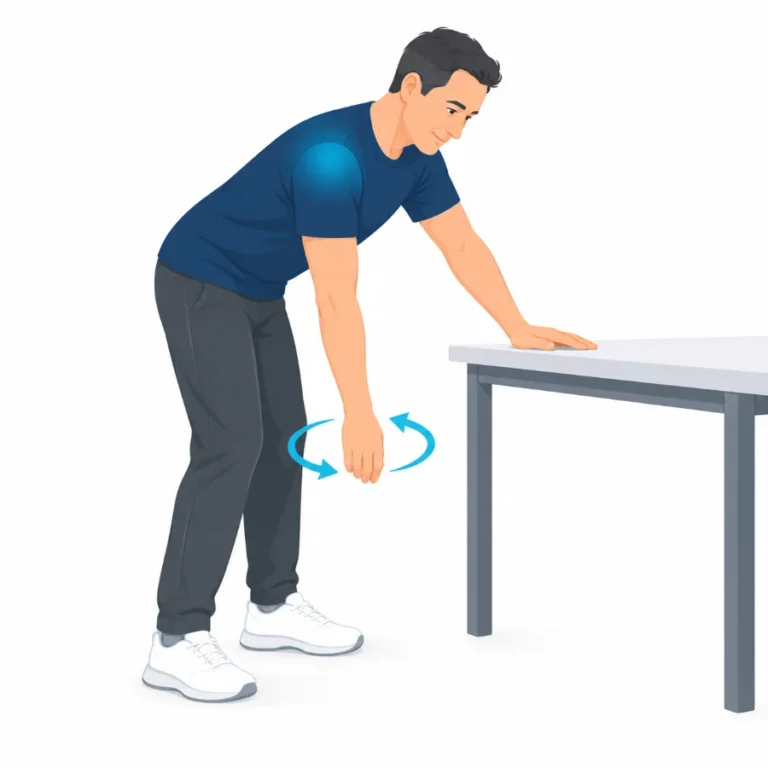
Pendulum swings
Letting the arm hang and swing in small circles eases pain and keeps the joint moving.
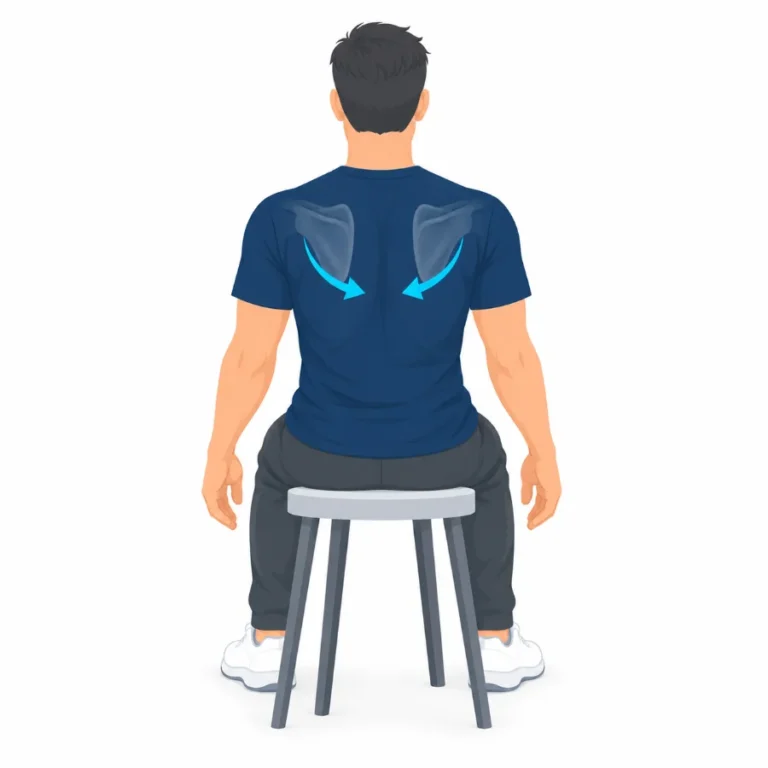
Shoulder blade squeeze
Trains the muscles that position the shoulder blade, which supports the whole arm.
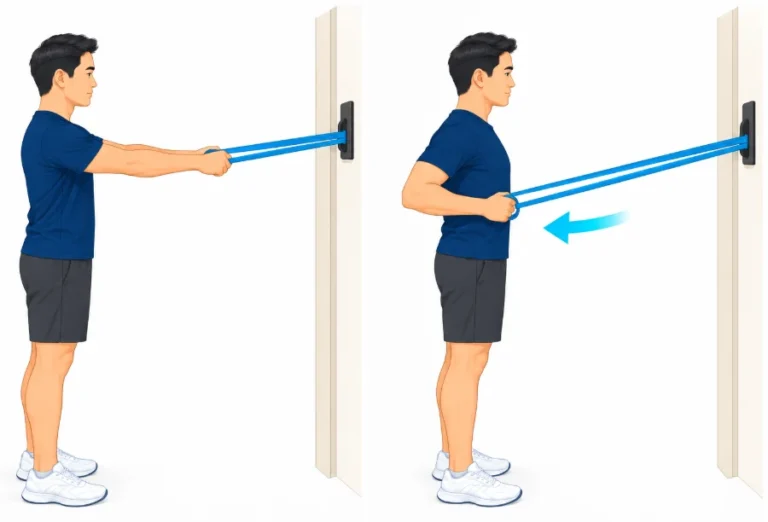
Resistance band row
Builds strength around the back of the shoulder once movement is more comfortable.
Further reading
- Frozen shoulder, what to expect over the months
- Shoulder arthritis, what exercise and physiotherapy can do
When a surgical opinion helps
Surgery is considered only when it is likely to give a better result than continuing with physiotherapy. Examples include a large rotator cuff tear in an active person, repeated dislocations, or advanced arthritis that disturbs sleep and daily life.
Because the physiotherapists and Professor Tran work together, your progress and imaging are shared, and physiotherapy continues before and after any operation.