
Physiotherapy and rehabilitation in East Melbourne
Physiotherapy for frozen shoulder
SOS Clinic provides frozen shoulder physiotherapy in East Melbourne. Treatment changes with each stage of the condition, from easing pain early on to regaining movement as the shoulder loosens.

What is frozen shoulder?
Frozen shoulder, also called adhesive capsulitis, happens when the capsule around the shoulder joint becomes inflamed, then thickened and tight. The shoulder becomes painful and stiff in every direction. Turning the arm outwards is usually the most affected movement.
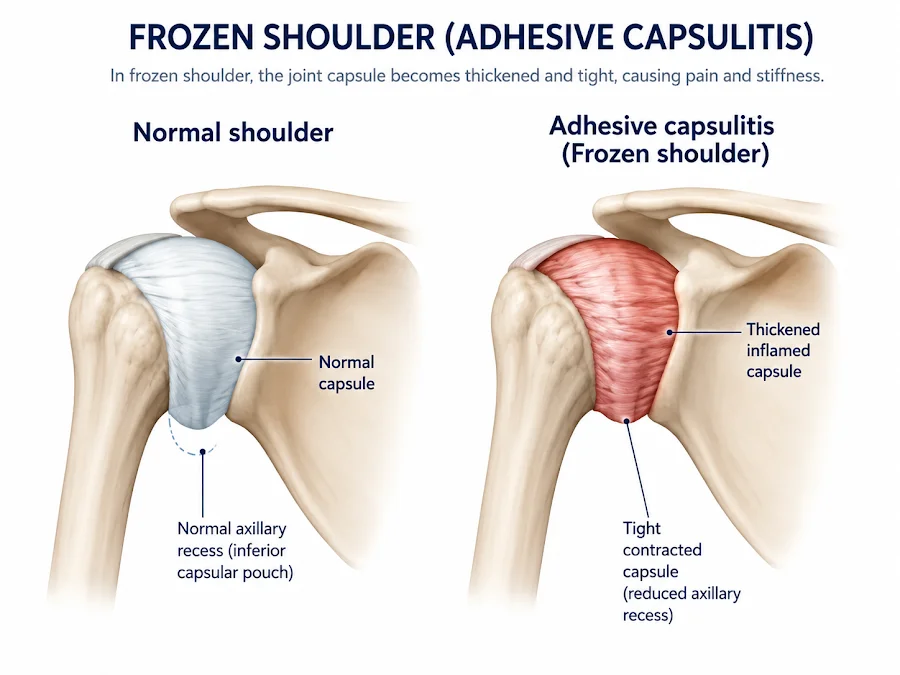
It is most common between the ages of 40 and 65, and more common in people with diabetes or thyroid conditions. It usually gets better on its own, but recovery is slow and often takes one to three years.
How does it change over time?
Frozen shoulder tends to pass through overlapping stages. In the painful stage, pain is often worst at night and movement starts to reduce. In the stiff stage, pain eases but the shoulder stays tight. In the recovery stage, movement gradually returns.
Can physiotherapy help?
Physiotherapy cannot switch the condition off. It can ease pain, keep the shoulder as mobile as the stage allows and help you keep using the arm. Gentle stretching within comfort is the main tool. Hard, painful stretching in the early stage tends to make the shoulder worse.
What happens at the first appointment?
Your physiotherapist checks how the shoulder moves, how sore it is and how much it affects sleep, work and daily tasks. Frozen shoulder can look like other shoulder problems, so they also look for signs that point elsewhere and arrange an X-ray or review if needed.
What might treatment include?
- Advice on sleeping positions and pain relief, which can be reviewed with your GP or pharmacist
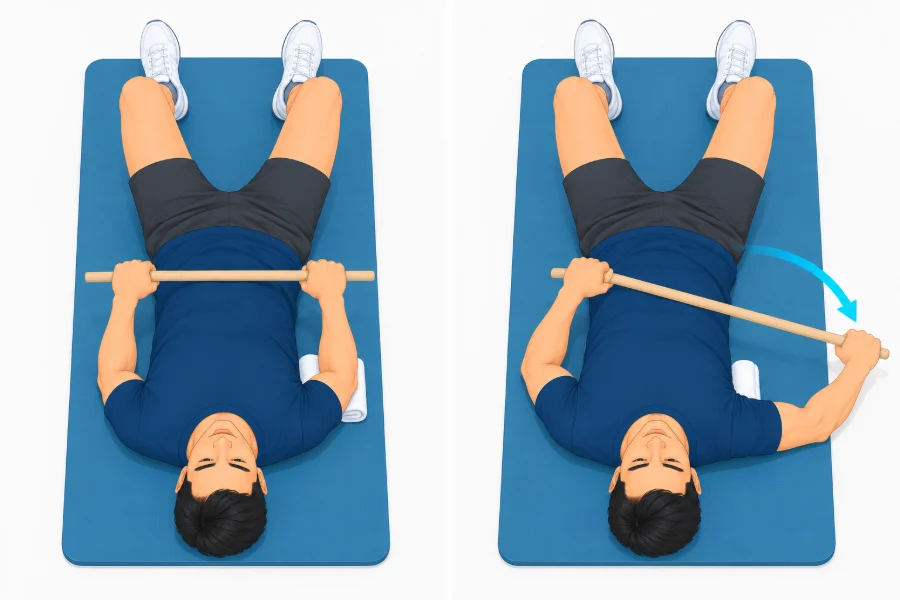
- Gentle movement exercises, such as stick-assisted outward rotation and table slides
- Stretches that build up as pain settles and the stiff stage begins
- Strengthening once movement returns, so the arm works well through its new range
What about injections and other procedures?
A corticosteroid injection into the joint during the painful stage can ease pain and may help movement return sooner. Hydrodilatation, where fluid is injected to stretch the capsule, is another option. Injections are not given at the clinic. If one is recommended, your GP can arrange it, usually through a radiology practice.
When is surgery considered?
Surgery is rarely needed. When stiffness stays severe after many months of treatment, Professor Phong Tran may discuss an arthroscopic capsular release. Physiotherapy starts soon after the operation to keep the movement gained.
Shoulder physiotherapy at SOS Clinic
Associate Professor Amir Takla and Imogen Clark are the physiotherapists at SOS Clinic. They work in the same rooms as Professor Phong Tran at 166 Gipps Street, East Melbourne, so care can move between physiotherapy and a surgical opinion without starting again.
More on shoulder physiotherapy
- Shoulder physiotherapy
- Physiotherapy for rotator cuff pain
- Physiotherapy for dislocation and instability
- Rehabilitation after surgery
Read more about frozen shoulder and shoulder physiotherapy.
Evidence and further reading
Kelley MJ, Shaffer MA, Kuhn JE, Michener LA, Seitz AL, Uhl TL, Godges JJ, McClure PW. Shoulder pain and mobility deficits: adhesive capsulitis. J Orthop Sports Phys Ther. 2013;43(5):A1-31.
Arrange physiotherapy at SOS Clinic
Visit Specialist Orthopaedic Surgery Clinic at St Francis Building, Ground Floor, 166 Gipps Street, East Melbourne VIC 3002. Bring any relevant scans and a list of the activities you would like to return to.
Book an appointment or call (03) 9928 6161.
This information is general. Follow the advice and precautions provided by your own surgeon and physiotherapist.