Physiotherapy and rehabilitation in East Melbourne
Physiotherapy for rotator cuff pain and tears
SOS Clinic provides physiotherapy for rotator cuff pain in East Melbourne. Treatment centres on a graded exercise program, with advice on how to keep using the arm while the shoulder settles.

What is rotator cuff related shoulder pain?
The rotator cuff is a group of four muscles and their tendons. They hold the ball of the shoulder in its socket and help lift and turn the arm. Pain from the cuff is usually felt at the front and side of the shoulder and often spreads down the upper arm. It tends to be worse when reaching overhead, lifting away from the body or lying on the sore side.
Many people with this pain have tendon changes that come with age and load, sometimes with a partial or small full-thickness tear. Scans often show the same changes in people with no pain at all, so the scan result is only one part of the picture.
Can physiotherapy help?
Exercise-based physiotherapy is the first treatment for most people with rotator cuff related shoulder pain, including many with tears that came on gradually. The aim is to make the cuff and the muscles around the shoulder blade stronger and better able to handle daily life, work and sport.
A sudden tear after a fall or heavy lift, with marked weakness, is different. These tears are best assessed early, because some do better with repair. Your physiotherapist can arrange a prompt review with Professor Phong Tran if needed.
What happens at the first appointment?
Your physiotherapist asks how the pain started, what makes it worse and what you want to get back to. They check movement, strength and the control of the shoulder blade, and look at any scans you bring. You leave with an explanation of the problem and a starting set of exercises.
What might my exercise program include?
- Early exercises that load the cuff without flaring the pain, such as gentle holds against resistance
- Strengthening for the muscles that turn the arm outwards and inwards, often with a resistance band
- Exercises for the muscles that control the shoulder blade
- A gradual return to overhead reaching, lifting and the movements your sport or work needs
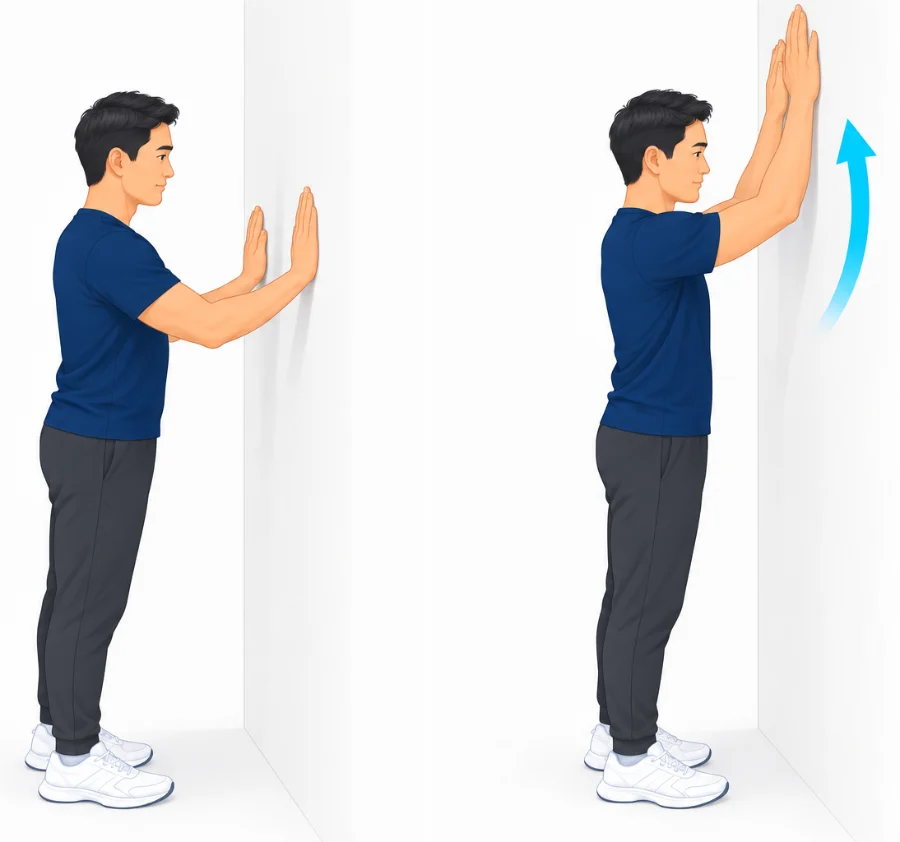
Exercises are progressed every few weeks as strength improves. Some discomfort during exercise is acceptable as long as it settles by the next day.
How long does it take?
Most people need about three months of regular exercise to see a clear change, and some take longer. Progress is measured against the tasks you find hard at the start, such as dressing, reaching a high shelf or sleeping through the night.
What about injections?
A corticosteroid injection may ease pain for a few weeks and make it easier to exercise, but it does not strengthen the tendon. Injections are not given at the clinic. If one is recommended, your GP can arrange it, usually through a radiology practice.
When is surgery considered?
Surgery may be discussed when a tear is large or recent, or when pain and weakness continue despite a well-run exercise program. Professor Tran consults at the clinic, and his website explains rotator cuff repair. After any repair, physiotherapy continues as part of rehabilitation after surgery.
Shoulder physiotherapy at SOS Clinic
Associate Professor Amir Takla and Imogen Clark are the physiotherapists at SOS Clinic. They work in the same rooms as Professor Phong Tran at 166 Gipps Street, East Melbourne, so care can move between physiotherapy and a surgical opinion without starting again.
More on shoulder physiotherapy
- Shoulder physiotherapy
- Physiotherapy for frozen shoulder
- Physiotherapy for dislocation and instability
- Rehabilitation after surgery
Read more about rotator cuff tendinitis, rotator cuff tears and shoulder physiotherapy.
Evidence and further reading
Lewis J. Rotator cuff related shoulder pain: assessment, management and uncertainties. Man Ther. 2016;23:57-68.
Arrange physiotherapy at SOS Clinic
Visit Specialist Orthopaedic Surgery Clinic at St Francis Building, Ground Floor, 166 Gipps Street, East Melbourne VIC 3002. Bring any relevant scans and a list of the activities you would like to return to.
Book an appointment or call (03) 9928 6161.
This information is general. Follow the advice and precautions provided by your own surgeon and physiotherapist.