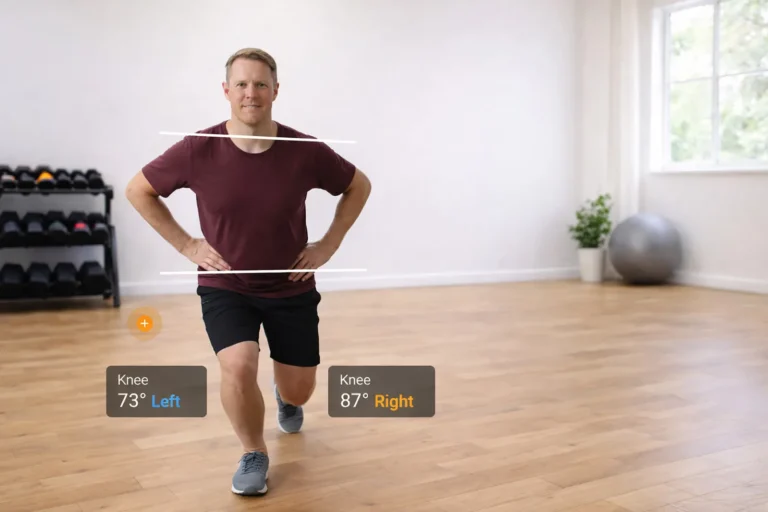

Meniscal tears after 40, exercise first
You have had knee pain for a while. Maybe it came on slowly, or after a simple twist. An MRI scan shows a “meniscal tear”, and it is easy to assume the tear needs to be fixed.
For most people over 40, that is not the case. Good trials show that a supervised exercise program works about as well as keyhole surgery for this kind of tear.
What is the meniscus?
Each knee has two menisci. They are C-shaped pads of tough, rubbery tissue that sit between the thigh bone and the shin bone. They help spread load and keep the knee steady.
In younger people, a meniscus usually tears from a strong twist during sport. From middle age, the meniscus slowly wears and becomes more fragile, a bit like hair or skin changing with age. Tears can then appear with little or no injury. These are called degenerative tears. For more detail, see the meniscus tear page.
Tears are common, even in knees that do not hurt
A large study scanned the knees of people aged 50 to 90 from the general community, whether they had knee problems or not.1 Meniscal tears were common and became more common with age. Most people with a tear on their scan had not had any knee pain, aching or stiffness in the month before.
This means a tear on an MRI may not be the cause of your pain. Knee pain after 40 is often linked to early arthritis, weak thigh muscles and a change in activity, as well as to the meniscus.
What the research shows about surgery
For many years, keyhole surgery to trim the torn part of the meniscus was one of the most common knee operations. It is called arthroscopic partial meniscectomy.
A trial in Finland compared this surgery with a sham (fake) operation in people aged 35 to 65 with a degenerative tear and no arthritis.2 Neither the patients nor the people measuring results knew who had real surgery. A year later, both groups had improved by about the same amount.
A trial in Norway compared the same surgery with a 12 week supervised exercise program in middle aged people with a degenerative tear.3 After two years, there was no meaningful difference in pain, function or quality of life between the groups. The exercise group had stronger thigh muscles at three months. About one in five people in the exercise group chose to have surgery later, and they did not do better for it.
In 2017, an international panel reviewed all of this research for the BMJ.4 It made a strong recommendation against keyhole surgery for almost everyone with degenerative knee disease, including degenerative meniscal tears.
What exercise can and cannot do
Exercise will not join the torn tissue back together. Instead, it builds the strength and control of the muscles around your knee, so the joint copes better with load. Most people in the trials improved a lot over time, whichever treatment they had. Some improvement is likely to come from time and the natural settling of pain, as well as from the exercise itself.
Progress is often gradual. It can take several weeks before you notice a clear change, and it helps to keep going for the full program.
What a good program looks like
- It starts with an assessment. Your physiotherapist checks your strength, movement, balance and what you want to get back to.
- It builds thigh and hip strength. Exercises such as sit to stand, step-ups, leg press and bridges, made harder over time.
- It trains balance and control. Single leg work helps the knee feel steady again.
- It keeps you active. Cycling, swimming and walking keep your fitness up while the knee settles.
- It is supervised, at least at first. The trial programs were run with a physiotherapist, which helps you progress safely.
- It uses pain as a guide. Mild soreness that settles by the next day is usually fine.
When surgery may still be considered
A knee that is locked and cannot fully straighten, or a large tear from a clear injury, may still need a surgical opinion, and the clinic team can arrange a review with Prof Phong Tran, an orthopaedic surgeon who works from the same clinic. Read about knee arthroscopy with Prof Phong Tran.
How SOS Clinic can help
The physiotherapists at SOS Clinic in East Melbourne see people with knee pain and meniscal tears every week. Your first visit includes a full assessment, an explanation of your scan in plain words, and a plan you can start straight away. See the knee physiotherapy page for more.
A biomechanical profile assessment uses VALD ForceDecks force plates and the ForceFrame strength frame to measure how each leg is working. Repeat tests show your progress over the program.
When to get help sooner
Get checked promptly if your knee locks and will not straighten, gives way often, or swells up quickly after an injury. See a doctor urgently if your knee becomes hot, red and swollen, especially with a fever, or if you suddenly cannot put weight on your leg. During opening hours, contact the clinic. After hours and on weekends, go to your nearest emergency department.
Book a physiotherapy assessment at SOS Clinic
Frequently asked questions
Will the tear get worse if I exercise?
The trials did not find exercise made things worse. A well planned program that builds up slowly is safe for most people with a degenerative tear.
My knee clicks. Does that mean I need surgery?
No. Clicking and catching are common with this kind of tear. The 2017 expert panel found that keyhole surgery did not help people with these symptoms either.4 A knee that is locked and cannot straighten is different and should be checked.
Should I get an MRI?
Often it is not needed to start treatment. Because tears are so common with age, a scan may show a tear that is not the main cause of your pain. Your physiotherapist or doctor can advise if a scan would change your care.
How long should I try exercise before thinking about other options?
The trial programs ran for about 12 weeks. Giving a supervised program a fair trial over a similar time is sensible before deciding on anything else.
Does a meniscal tear mean I will get arthritis?
Degenerative tears and early arthritis often go together, as both are part of the knee ageing. Keeping your muscles strong and staying active is good for your knee either way.
References
- Englund M, Guermazi A, Gale D, Hunter DJ, Aliabadi P, Clancy M, Felson DT. Incidental meniscal findings on knee MRI in middle-aged and elderly persons. N Engl J Med. 2008;359(11):1108-15.
- Sihvonen R, Paavola M, Malmivaara A, Itälä A, Joukainen A, Nurmi H, Kalske J, Järvinen TL. Arthroscopic partial meniscectomy versus sham surgery for a degenerative meniscal tear. N Engl J Med. 2013;369(26):2515-24.
- Kise NJ, Risberg MA, Stensrud S, Ranstam J, Engebretsen L, Roos EM. Exercise therapy versus arthroscopic partial meniscectomy for degenerative meniscal tear in middle aged patients: randomised controlled trial with two year follow-up. BMJ. 2016;354:i3740.
- Siemieniuk RAC, Harris IA, Agoritsas T, Poolman RW, Brignardello-Petersen R, Van de Velde S, Buchbinder R, Englund M, Lytvyn L, Quinlan C, Helsingen L, Knutsen G, Olsen NR, Macdonald H, Hailey L, Wilson HM, Lydiatt A, Kristiansen A. Arthroscopic surgery for degenerative knee arthritis and meniscal tears: a clinical practice guideline. BMJ. 2017;357:j1982.