ACL rehab and the tests that come before return to sport
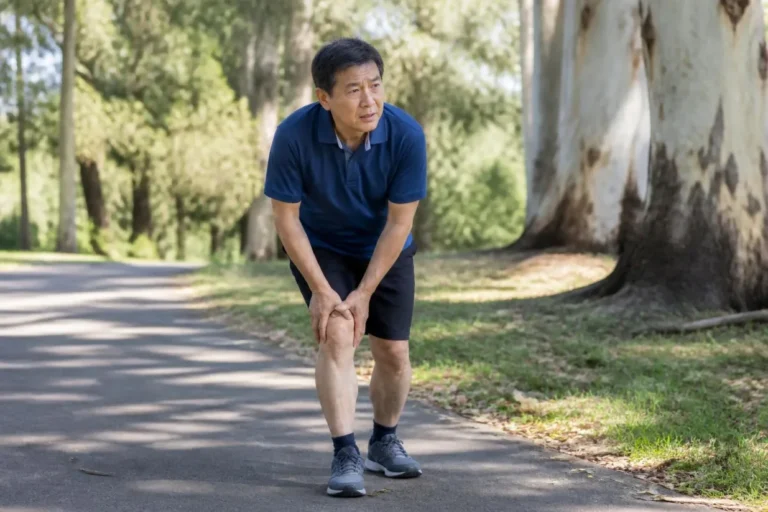
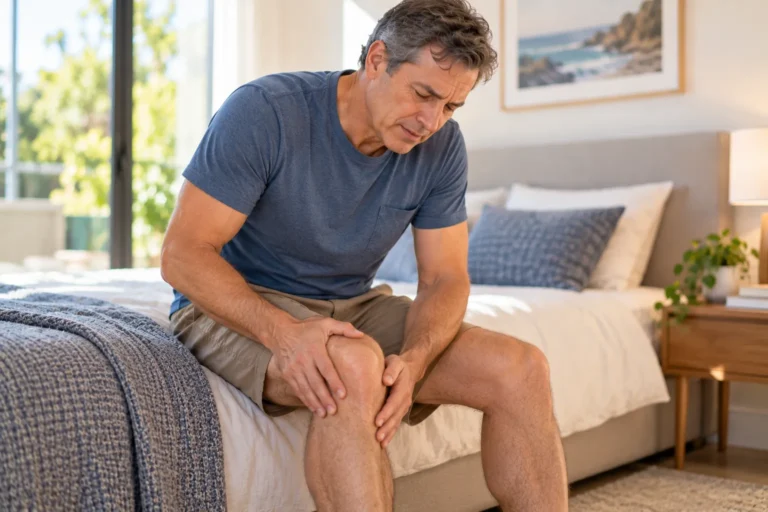
An anterior cruciate ligament (ACL) injury is one of the most common serious knee injuries in sport. Whether or not you have surgery, rehab is the main part of recovery, and it takes many months.
The hardest question often comes near the end. When is it safe to go back to sport? Testing your strength, hopping and movement helps answer it, together with how your knee feels and how confident you are.
Surgery is not the only path
Many people assume an ACL tear always needs a reconstruction. For some people it does. For others, rehab alone can work well.
A well known Swedish trial, the KANON trial, studied young active adults with a new ACL tear. One group had rehab plus early reconstruction. The other had rehab first, with the option of surgery later if the knee stayed unstable.1 At two years, both groups had similar results for pain, symptoms, sport and quality of life, and the rehab first approach meant far fewer operations.1 At five years the results were still similar, and about half of the rehab first group had not needed a reconstruction.2
The right choice depends on your knee, your sport and your goals. People in pivoting sports, or whose knee keeps giving way, often choose surgery. This decision is made with an orthopaedic surgeon who performs ACL surgery.
Why reinjury is a concern
Going back to sport after an ACL reconstruction carries a risk of a second injury, either to the new graft or to the other knee. A review found that among athletes younger than 25 who returned to sport, nearly one in four had another ACL injury.3 A longer term review found graft ruptures and new injuries to the other knee happened at similar rates over about ten years.4
This is why rehab does not stop once you can jog. The later stages focus on strength, landing, cutting and confidence.
Using tests as well as time
Return to sport used to be decided mostly by time since surgery. Many clinicians now also use criteria, which are tests your knee needs to pass before you return.
In one study of athletes in pivoting sports, people who returned later, and whose thigh strength was closer to the other side when they returned, had fewer reinjuries. People who failed a set of return to sport tests had more reinjuries than those who passed, although that study was small and this difference did not reach statistical significance.5 Not every study agrees on the role of time. The ten year review did not find that delaying return clearly lowered the risk of a second injury.4 So time and tests are both used, and neither gives a guarantee.
The tests that come before return to sport
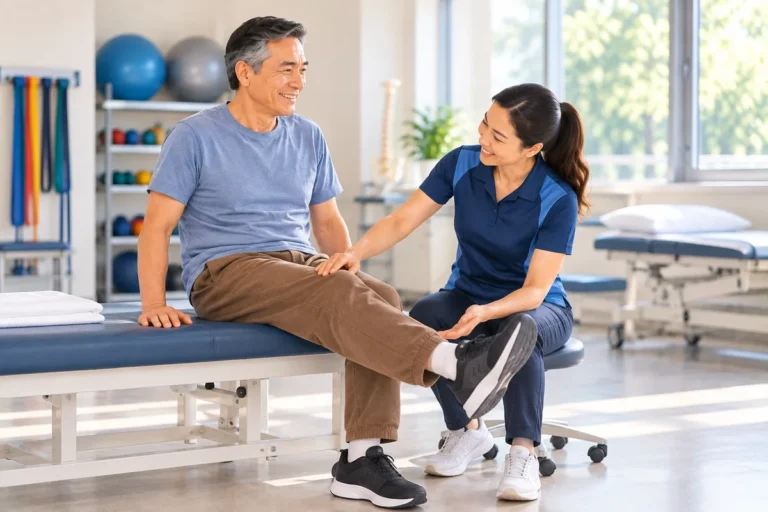
Your physiotherapist builds up a picture from several tests, repeated over time.
- Thigh and hamstring strength. The ForceFrame strength frame measures how hard each leg can push and pull, so the injured side can be compared with the other.
- Jump and landing tests. ForceDecks force plates measure how you take off and land on each leg, and how evenly you share the load when landing on both.
- Hop tests. Single leg hops for distance and for repeated hops show power, control and confidence on the injured leg.
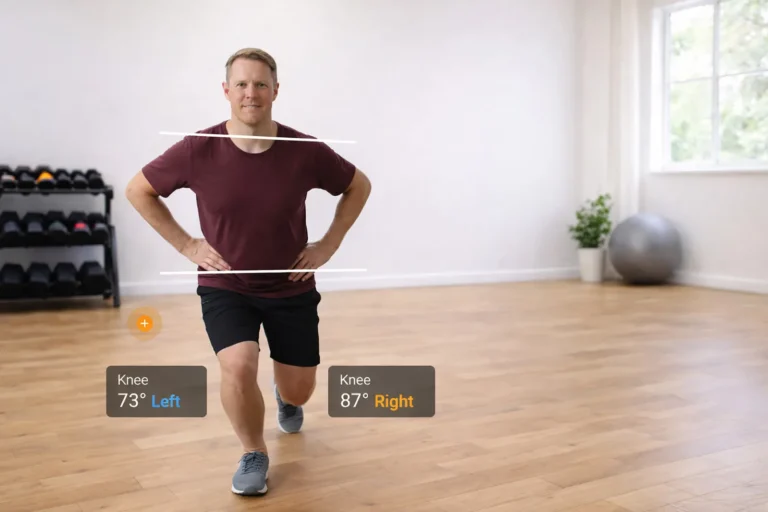
- Movement quality. Your physiotherapist watches how your knee lines up when you land, squat and change direction.
- Sport specific drills. Running, cutting and sport drills at full speed, built up step by step.
- How you feel. Questionnaires about your knee and your confidence. Fear of another injury is one of the most common reasons people do not return to sport.6
The goal is for the injured leg to be close to the other side in strength and hopping, and for you to move well and feel ready. There is no single number that clears you. Your physiotherapist, and your surgeon if you had surgery, look at the whole picture.
The stages of ACL rehab
- Early stage. Calming swelling, getting the knee fully straight, and switching the thigh muscle back on.
- Strength stage. Progressive leg strength work, balance and walking without a limp.
- Running and jumping. Starting to run, then learning to jump and land well.
- Sport stage. Change of direction, sport drills and training with your team.
- Ongoing prevention. A warm up and strength program to keep doing after you return.
After surgery, follow your surgeon’s advice on timelines and any limits on bending, weight bearing or bracing.
How SOS Clinic can help
The physiotherapists at SOS Clinic in East Melbourne rehabilitate ACL injuries before and after reconstruction by any surgeon, and also guide people through rehab without surgery. They work within your surgeon’s plan when you have had an operation.
A biomechanical profile assessment uses VALD force plates, a strength testing frame and a 3D motion camera to measure strength, landing and movement. Repeat tests show how the injured leg is catching up.
Prof Phong Tran, who consults from the same clinic, does not perform ACL reconstruction. If surgery is being considered, the clinic team can help you find a knee surgeon who does.
When to get help sooner
See a doctor promptly if your knee swells quickly after a new twist, keeps giving way, or locks so you cannot straighten it. After surgery, contact your surgeon promptly if the wound becomes red, hot or leaks, or you have a fever. Seek urgent care if your calf becomes swollen and painful, or you have chest pain or trouble breathing. During opening hours, contact the clinic. After hours and on weekends, go to your nearest emergency department.
Book an ACL rehab assessment at SOS Clinic
Frequently asked questions
Can I recover from an ACL tear without surgery?
Some people can. In the KANON trial, many young active adults did well with rehab alone. Whether it suits you depends on your knee, your sport and whether the knee gives way.
When can I go back to sport after ACL reconstruction?
It varies from person to person. Return is usually guided by your surgeon’s advice, time since surgery and passing a set of strength, hop and movement tests.
What is a hop test?
Hop tests compare how far and how well you can hop on each leg. They show power and control, and how much you trust the injured knee.
Do I need to see the surgeon who did my ACL to have physio at SOS Clinic?
No. The physiotherapists see people after ACL reconstruction by any surgeon, and follow that surgeon’s advice.
Can ACL injuries be prevented?
The risk can be lowered. A regular warm up with strength, balance and landing practice is commonly used in sport to reduce knee injuries.
References
- Frobell RB, Roos EM, Roos HP, Ranstam J, Lohmander LS. A randomized trial of treatment for acute anterior cruciate ligament tears. N Engl J Med. 2010;363(4):331-42.
- Frobell RB, Roos HP, Roos EM, Roemer FW, Ranstam J, Lohmander LS. Treatment for acute anterior cruciate ligament tear: five year outcome of randomised trial. BMJ. 2013;346:f232.
- Wiggins AJ, Grandhi RK, Schneider DK, Stanfield D, Webster KE, Myer GD. Risk of secondary injury in younger athletes after anterior cruciate ligament reconstruction: a systematic review and meta-analysis. Am J Sports Med. 2016;44(7):1861-76.
- Khan ZA, Stålman A, Impieri L, Butt U, Vuletic F. Ten-year risk of graft re-rupture and contralateral anterior cruciate ligament injury after primary anterior cruciate ligament reconstruction: a systematic review and meta-analysis. J ISAKOS. 2026;18:101094.
- Grindem H, Snyder-Mackler L, Moksnes H, Engebretsen L, Risberg MA. Simple decision rules can reduce reinjury risk by 84% after ACL reconstruction: the Delaware-Oslo ACL cohort study. Br J Sports Med. 2016;50(13):804-8.
- Yensen K, Mayfield CK, Bolia IK, Palmer RA, Brown M, Kim DR, Abu-Zahra MS, Kotlier JL, Webb T, Cleary E, Saboori N, Petrigliano FA, Weber AE. Subjective causes for failure to return to sport after anterior cruciate ligament reconstruction: a systematic review and meta-analysis. Sports Health. 2024;17(2):243-251.