
Rotator cuff tendinopathy, why loading beats rest
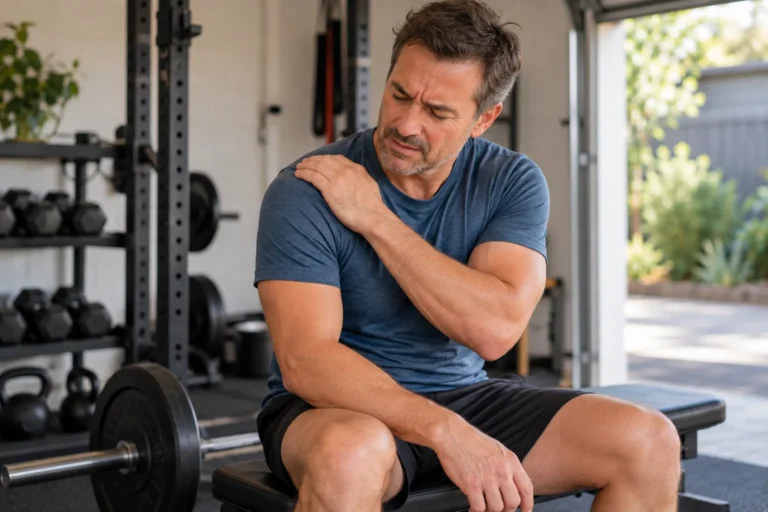
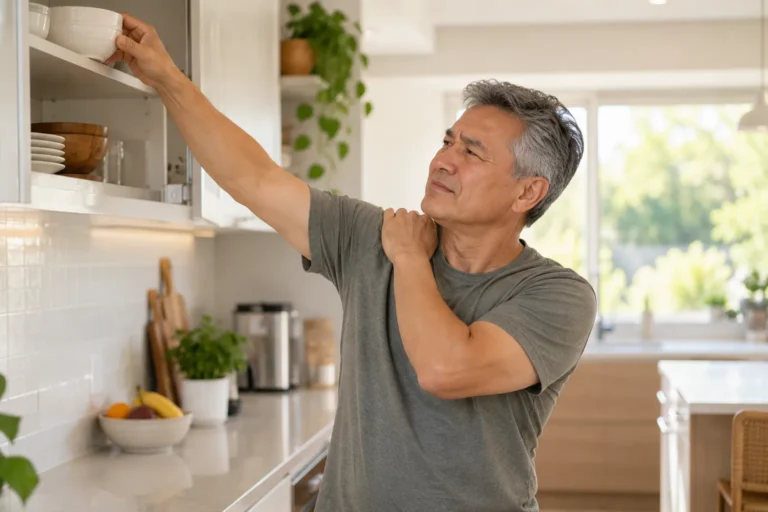
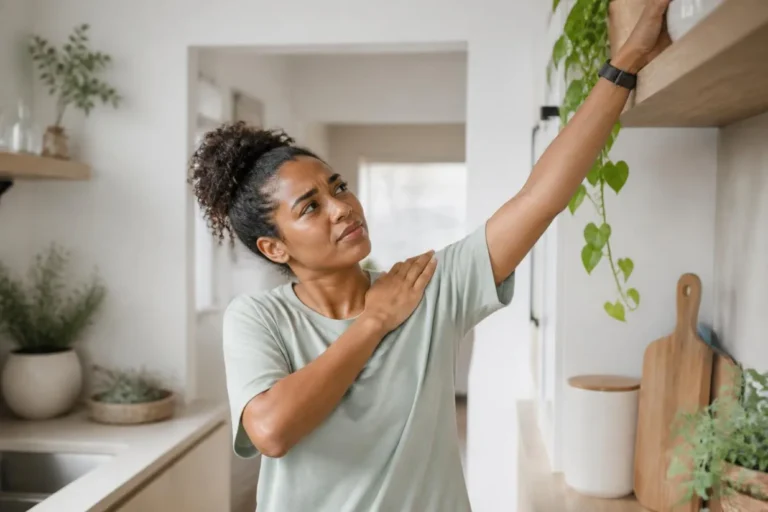
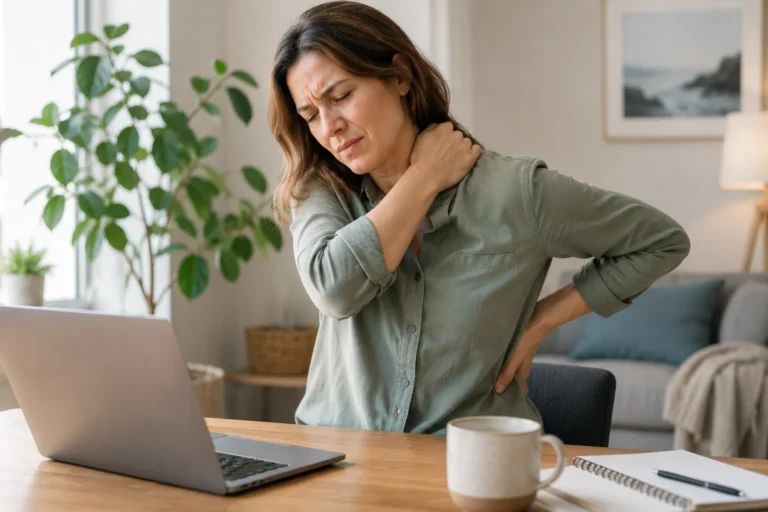
A sore shoulder that aches when you lift your arm, reach behind your back or lie on that side is very common. It often comes from the rotator cuff, the group of four muscles and tendons that hold the ball of the shoulder in its socket.
Many people rest the arm and wait for it to settle. Others are told they need an operation to make more room in the joint. The research gives a clearer and more hopeful picture.
What is rotator cuff tendinopathy?
Tendinopathy means a sore tendon that is less able to cope with load. It often follows a change in activity, such as more overhead work, a new gym program or a busy weekend in the garden. It also becomes more common with age, because tendons change over time.
You may also hear the terms shoulder impingement, subacromial pain or rotator cuff related shoulder pain. They describe much the same problem. The SOS Clinic page on rotator cuff tendinitis explains the condition in more detail.
Why rest alone rarely fixes it
A short break from the activity that set off the pain can help. Long periods of rest are a different matter. Tendons and muscles that are not used become weaker and less able to cope with load. When you go back to normal activity, the pain often returns.
Tendons respond to load. Exercise that slowly builds the strength of the rotator cuff and the muscles around the shoulder blade helps the tendon get used to work again.
What the research says about exercise
A large review of trials found that exercise reduced pain more than treatments without exercise. Exercises aimed at the shoulder did better than general exercise. The authors noted that the quality of the evidence was very low, so the size of the benefit is uncertain.1
The UK GRASP trial compared up to six sessions of progressive physiotherapy exercise with a single session of best practice advice from a physiotherapist.2 Over a year, there was no clear difference between the two groups in shoulder pain and function. The trial also tested a steroid injection and found no long term benefit. SOS Clinic does not give injections, and the injection arm is mentioned here only as part of the study.
So more sessions are not always better. Good advice, a clear home program and steady progress may be enough for many people. Others need more hands-on guidance to build their program and confidence.
What placebo surgery trials found
Subacromial decompression is an operation that shaves bone and soft tissue under the point of the shoulder. For many years it was a common treatment for this kind of pain. Two well known trials tested it against a placebo operation, where the surgeon looked inside the joint but did not remove any bone.
- CSAW, from the UK. People who had decompression did no better than people who had the placebo operation. Both surgery groups did slightly better than a group who had no treatment, but the difference was too small to be important to patients.3
- FIMPACT, from Finland. At two years, decompression gave no benefit over the placebo operation. Compared with a group who had exercise therapy, decompression scored a little better on pain, but the difference was below the level that patients usually notice.4
A Cochrane review that combined these trials found high certainty evidence that decompression gives no important benefit over placebo surgery for pain, function or quality of life.5 These results apply to painful shoulders where the rotator cuff is not fully torn.
A full thickness rotator cuff tear is a different problem, and some tears are best repaired. Read about rotator cuff repair with Prof Phong Tran.
What a shoulder loading program looks like
- It starts with an assessment. Your physiotherapist checks your movement, strength and the positions that bring on pain, and asks what you want to get back to.
- It begins where your shoulder is today. Early exercises may be gentle holds or movements below shoulder height.
- It builds slowly. Load, range and speed increase over weeks as the tendon copes.
- It works the whole shoulder. The rotator cuff, the muscles around the shoulder blade and the upper back all play a part.
- It allows some pain. Mild pain during exercise that settles by the next day is usually fine. Your physiotherapist will help you judge this.
- It links back to your life. Work, sport and daily tasks are added back step by step.
How SOS Clinic can help
The physiotherapists at SOS Clinic in East Melbourne assess shoulders every day. You leave your first visit with clear advice and a home program you can start straight away.
A biomechanical profile assessment can measure shoulder strength with the VALD ForceFrame. Repeat testing shows how your strength changes as your program progresses.
Myotherapy can ease tight muscles in the neck, upper back and shoulder while you build strength.
If your shoulder is not improving, or a tear is suspected, the clinic team can arrange a review with Prof Phong Tran, an orthopaedic surgeon who works from the same clinic.
When to get help sooner
See a doctor promptly if you cannot lift your arm after a fall or a sudden jerk, if the shoulder looks out of shape, or if it is hot, red and swollen with a fever. The same applies to shoulder or arm pain that comes with chest pain or shortness of breath, which needs urgent care. During opening hours, contact the clinic. After hours and on weekends, go to your nearest emergency department. Call 000 for chest pain.
Book a shoulder physiotherapy assessment at SOS Clinic
Frequently asked questions
Should I stop going to the gym?
Usually not. You may need to change or lighten the exercises that hurt for a while, such as overhead pressing. Your physiotherapist can help you adjust your program so you keep training.
How long does it take to get better?
Tendons change slowly. Many people notice progress over several weeks, and full recovery can take a few months. Steady work on the program helps.
Do I need a scan?
Not always. Many people over 40 have tendon changes on scans without any pain. A scan may help if you have lost strength after an injury or are not improving with treatment.
Can I sleep on my sore shoulder?
Lying on the sore side often hurts early on. Try lying on the other side with a pillow to hug, or on your back with a pillow under the arm.
Is surgery ever needed?
Sometimes. Placebo surgery trials show that decompression does not help most people with this kind of pain. A full thickness tear or loss of strength after an injury may need a surgical opinion.
References
- Steuri R, Sattelmayer M, Elsig S, Kolly C, Tal A, Taeymans J, Hilfiker R. Effectiveness of conservative interventions including exercise, manual therapy and medical management in adults with shoulder impingement: a systematic review and meta-analysis of RCTs. Br J Sports Med. 2017;51(18):1340-7.
- Hopewell S, Keene DJ, Marian IR, Dritsaki M, Heine P, Cureton L, Dutton SJ, Dakin H, Carr A, Hamilton W, Hansen Z, Jaggi A, Littlewood C, Barker KL, Gray A, Lamb SE. Progressive exercise compared with best practice advice, with or without corticosteroid injection, for the treatment of patients with rotator cuff disorders (GRASP): a multicentre, pragmatic, 2 × 2 factorial, randomised controlled trial. Lancet. 2021;398(10298):416-28.
- Beard DJ, Rees JL, Cook JA, Rombach I, Cooper C, Merritt N, Shirkey BA, Donovan JL, Gwilym S, Savulescu J, Moser J, Gray A, Jepson M, Tracey I, Judge A, Wartolowska K, Carr AJ. Arthroscopic subacromial decompression for subacromial shoulder pain (CSAW): a multicentre, pragmatic, parallel group, placebo-controlled, three-group, randomised surgical trial. Lancet. 2018;391(10118):329-38.
- Paavola M, Malmivaara A, Taimela S, Kanto K, Inkinen J, Kalske J, Sinisaari I, Savolainen V, Ranstam J, Järvinen TLN. Subacromial decompression versus diagnostic arthroscopy for shoulder impingement: randomised, placebo surgery controlled clinical trial. BMJ. 2018;362:k2860.
- Karjalainen TV, Jain NB, Page CM, Lähdeoja TA, Johnston RV, Salamh P, Kavaja L, Ardern CL, Agarwal A, Vandvik PO, Buchbinder R. Subacromial decompression surgery for rotator cuff disease. Cochrane Database Syst Rev. 2019;1(1):CD005619.