Hamstring strain, recovery and preventing the next one
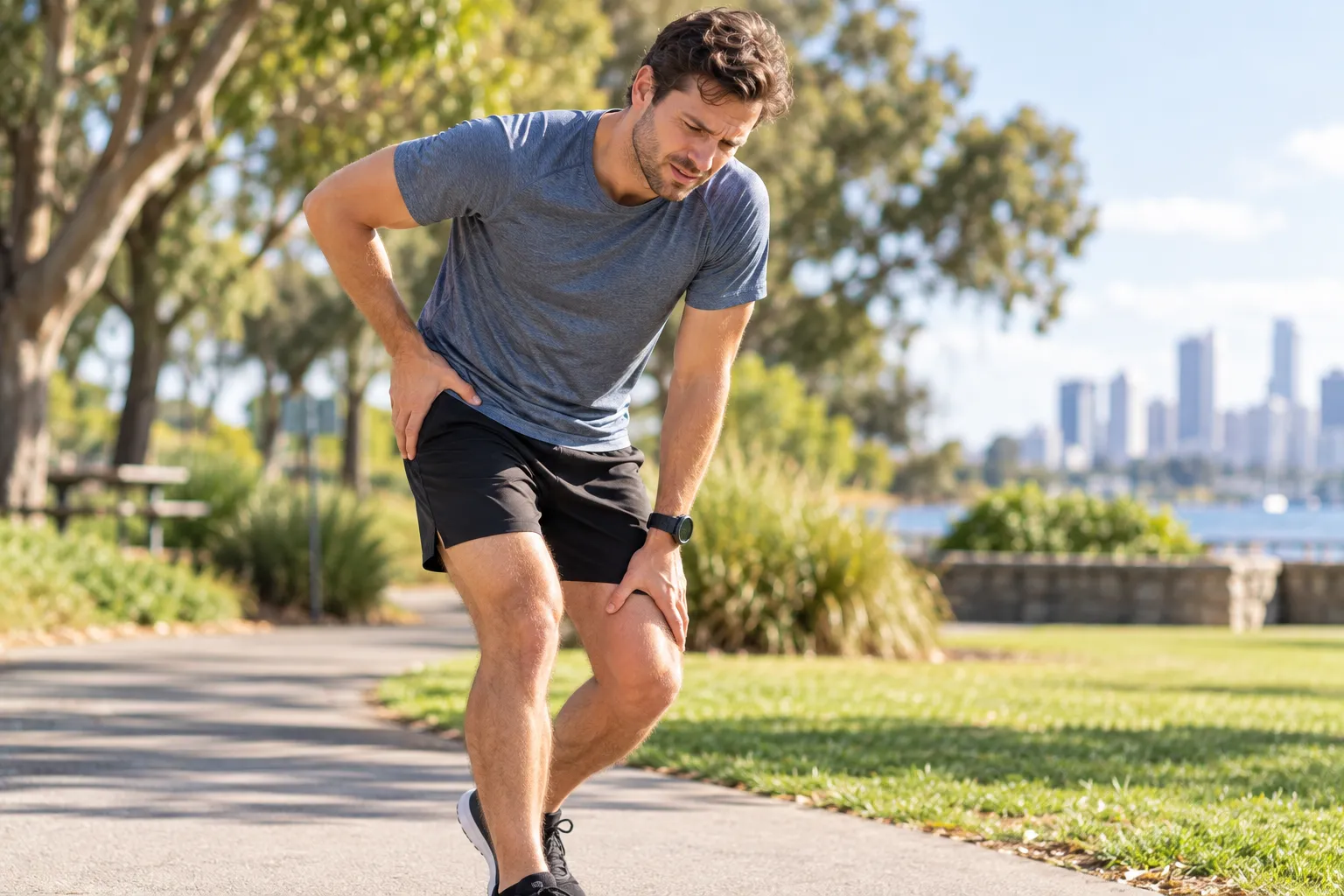
A hamstring strain often happens in a split second. You are sprinting for a ball or kicking hard, and you feel a sharp grab at the back of your thigh. Some people hear or feel a pop. Most have to stop straight away.
The good news is that most hamstring strains heal well with the right rehab. The harder part is stopping it from happening again, because hamstring injuries often come back.1
What is a hamstring strain?
The hamstrings are a group of three muscles at the back of your thigh. They bend your knee and help straighten your hip. When you sprint, they work hard to slow your leg down as it swings forward. That is when they are most likely to tear.
A strain means some of the muscle fibres have been overstretched or torn. Small strains may settle in a few weeks. Larger ones, or ones that involve the tendon near the buttock, take longer.3,4
Who gets them?
Hamstring strains are common in football codes, sprinting, cricket and other sports with fast running. They can also happen in dancers and in people doing big stretches, such as high kicks or the splits. A past hamstring injury is one of the strongest signs that another one may follow.
The first few days
In the first few days, protect the leg. Walk if you can do so without much pain, and avoid stretching hard or running. Ice and gentle compression may help you feel more comfortable.
Total rest is usually not needed. Gentle movement and early, pain-guided exercise help the muscle heal in a stronger, more organised way. Your physiotherapist can check how bad the strain is and start the right exercises early.
What rehab does the research support?
Two trials from Sweden compared two rehab programs after hamstring strains in elite football players and in sprinters and jumpers.3,4 One program focused on “lengthening” exercises. These load the hamstring while it is being stretched out, such as a slow forward lean on one leg or a controlled slide of the leg away from you. The other program used more traditional exercises.
In both trials, athletes who did the lengthening program got back to full training sooner. These were small trials in elite athletes, so the exact time frames may not apply to you. Still, lengthening exercises are now a usual part of hamstring rehab.
A later trial asked whether starting these exercises on day one, instead of a little later, would speed things up further.5 It did not. Return to sport and reinjury rates were similar in both groups. This suggests the type of exercise and a steady, well guided build up both play a part, and there is no need to rush the hardest exercises in the first days.
How a good rehab program builds up
- Calm things down. Gentle walking, easy hamstring contractions and keeping the rest of your body fit.
- Build strength. Bridges, lengthening exercises and leg work that slowly get heavier.
- Add speed. Jogging, then faster running, with plenty of control.
- Get sport ready. Sprinting, changing direction, kicking and the skills of your sport.
- Keep going. A short strength routine continues after you are back, to lower the chance of reinjury.
Your physiotherapist moves you through these stages based on how your leg responds, not just on the calendar. Before you go back to full sport, your hamstring strength should be close to the other side, and you should be able to sprint without pain or fear.
Preventing the next one
The Nordic hamstring exercise is one of the best studied injury prevention exercises in sport. You kneel on a mat while someone holds your ankles. Then you slowly lower your body forward, using your hamstrings to control the fall.
A trial in Dutch amateur football players found that teams who added this exercise to training had far fewer hamstring injuries over a season than teams who did not.1 It did not make the injuries that did happen any less severe. A review that pooled 15 studies found that programs including the Nordic exercise roughly halved the rate of hamstring injuries across different sports.2
The exercise is hard work and can make your hamstrings very sore at first. Starting with a small number of slow reps and building up over a few weeks makes it easier to stick with. The benefit only comes if you keep doing it through the season.
How SOS Clinic can help
The physiotherapists at SOS Clinic in East Melbourne assess your strain, explain what has happened and set out a plan from the first visit. Your program is adjusted as you improve.
As part of a biomechanical profile assessment, the VALD ForceFrame strength frame can measure the pulling strength of each hamstring. Testing both legs shows how your injured side compares with your other side, and repeat tests track your progress during rehab. ForceDecks force plates can also show how each leg is working in jumping and landing tasks before you return to sport.
Myotherapy can work alongside your rehab to ease tight muscles around the hip and thigh.
When to get help sooner
Get checked promptly if you felt a loud pop high up near your buttock, if there is a lot of bruising at the back of your thigh, or if you cannot walk normally after the injury. These can be signs of a tendon tear that needs early review. Seek urgent help if your calf or leg becomes very swollen and painful, or you notice numbness, tingling or weakness in your foot. During opening hours, contact the clinic. After hours and on weekends, go to your nearest emergency department.
Book a physiotherapy assessment at SOS Clinic
Frequently asked questions
Should I stretch my hamstring after a strain?
Not hard, and not in the first few days. Gentle movement is fine. Strong stretching early on can make the injury worse. Your physiotherapist will add stretching and lengthening work at the right time.
How long will it take to get back to sport?
It depends on the size and place of the strain. Small strains may settle in a few weeks, while larger strains or tendon injuries take longer. Your return is guided by strength, running and sport tests, not just by time.
Do I need a scan?
Most hamstring strains do not. A scan may help if a tendon tear is suspected, if you play elite sport, or if recovery is slower than expected.
Can I do the Nordic hamstring exercise at home?
Yes, with a partner to hold your ankles or a secure anchor under a couch. Start with a few slow reps and build up. If you are recovering from a strain, check with your physiotherapist first.
Why do hamstring injuries keep coming back?
Often the muscle has not fully regained its strength, or the return to sprinting was too fast. Keeping up a short strength routine after you are back helps lower the risk.
References
- van der Horst N, Smits DW, Petersen J, Goedhart EA, Backx FJ. The preventive effect of the nordic hamstring exercise on hamstring injuries in amateur soccer players: a randomized controlled trial. Am J Sports Med. 2015;43(6):1316-23.
- van Dyk N, Behan FP, Whiteley R. Including the Nordic hamstring exercise in injury prevention programmes halves the rate of hamstring injuries: a systematic review and meta-analysis of 8459 athletes. Br J Sports Med. 2019;53(21):1362-70.
- Askling CM, Tengvar M, Thorstensson A. Acute hamstring injuries in Swedish elite football: a prospective randomised controlled clinical trial comparing two rehabilitation protocols. Br J Sports Med. 2013;47(15):953-9.
- Askling CM, Tengvar M, Tarassova O, Thorstensson A. Acute hamstring injuries in Swedish elite sprinters and jumpers: a prospective randomised controlled clinical trial comparing two rehabilitation protocols. Br J Sports Med. 2014;48(7):532-9.
- Vermeulen R, Whiteley R, van der Made AD, van Dyk N, Almusa E, Geertsema C, Targett S, Farooq A, Bahr R, Tol JL, Wangensteen A. Early versus delayed lengthening exercises for acute hamstring injury in male athletes: a randomised controlled clinical trial. Br J Sports Med. 2022;56(14):792-800.