Kneecap pain in runners
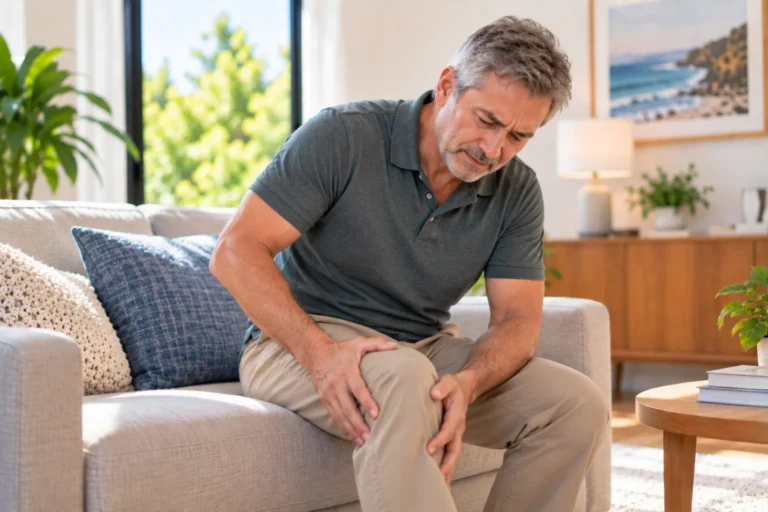
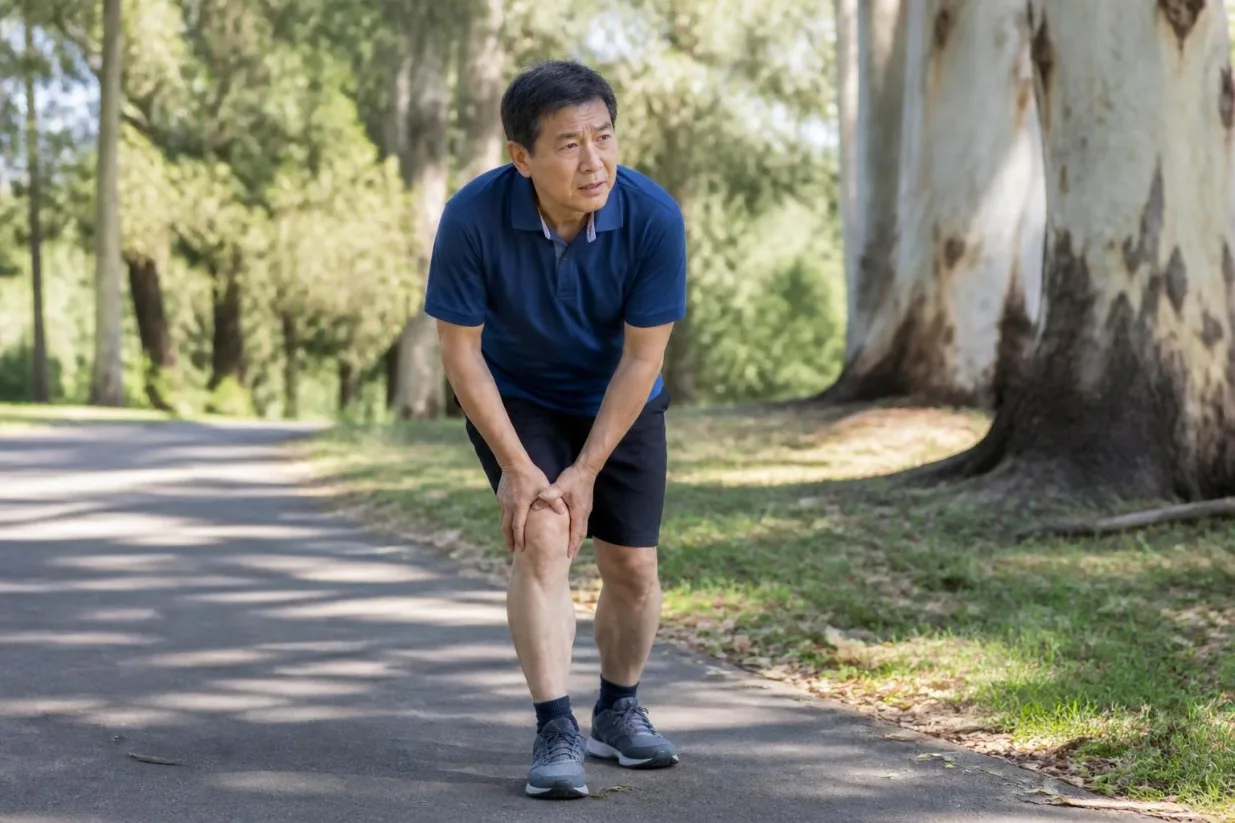
Pain around or behind the kneecap is one of the most common reasons runners stop running. It often creeps in slowly. At first it is a dull ache on a long run or going down a hill. Later it may bother you on stairs, when you squat, or after sitting for a long time with your knees bent.
This kind of pain has a name. It is called patellofemoral pain, and you may also hear it called runner’s knee. The good news is that exercise helps most people, and many keep running while they recover.
What is patellofemoral pain?
Your kneecap, or patella, sits in a groove at the front of your thigh bone. When you bend and straighten your knee, it glides up and down in this groove. Patellofemoral pain is pain around or behind the kneecap that is brought on by activities that load the bent knee. Running, squatting, stairs, jumping and kneeling are common triggers.1
There is usually no single damaged structure to point to on a scan. The joint is often normal on an X-ray. The pain seems to come from the joint and the tissues around it being loaded more than they can handle for a while.
Why does it happen in runners?
Most of the time it follows a change in load. You may have added distance, sped up, started hill work or come back after a break. The knee needs time to adapt to more work, and when the load rises faster than that, pain can follow.
Strength plays a part too. Weakness in the thigh and hip muscles is common in people with this problem. The way you land and move can also add to the load on the front of the knee.
Will it go away on its own?
Sometimes, but not always. For some people the pain hangs around for years if nothing changes.1 This is why it helps to act early, with a plan that adjusts your running and builds strength.
What helps most, according to the research
International experts in this condition met in 2016 and again in 2017 to review the research. Both times, exercise therapy was the main treatment they recommended.2,3
The 2017 group found the best support for combining hip exercises with knee exercises.3 A review of trials found that adding hip strengthening to thigh strengthening reduced pain and improved function more than thigh work alone, both in the short term and up to a year later.4 Most of these trials were small, so the size of the benefit varies from person to person.
Foot orthoses (shoe inserts) may help some people in the short term.3 Combining exercise with other treatments, such as taping or advice, can also help.2,3 On their own, hands-on joint treatments and machines such as ultrasound are not recommended.3
Changing the way you run, often called gait retraining, is sometimes used. The experts were not sure how well it works, because there is not yet enough good research.3 It may suit some runners, but it is not a first step for everyone.
What a good program looks like
- It adjusts your running. You may cut back distance, hills or speed for a while, instead of stopping completely.
- It strengthens your hips. Side-lying leg lifts, bridges and band work target the muscles at the side and back of the hip.
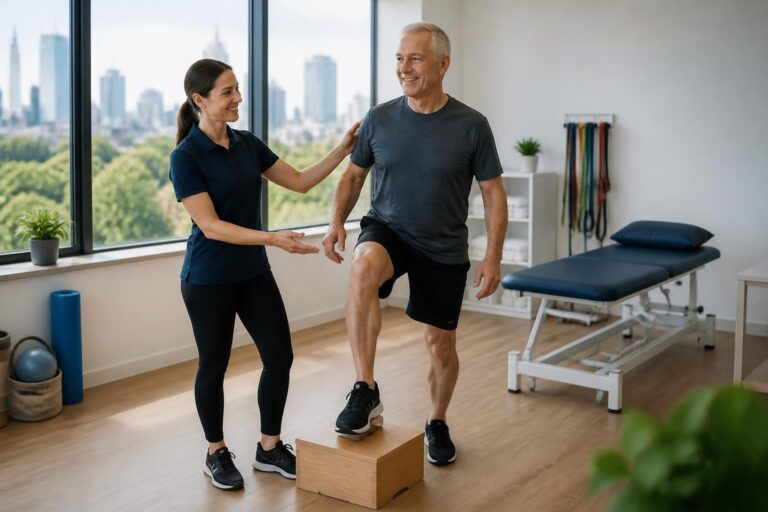
- It strengthens your thighs. Squats, step-ups and leg press work build the quadriceps, starting in a range that does not flare your pain.
- It builds up slowly. Exercises get harder as your knee settles.
- It uses pain as a guide. Mild discomfort that settles by the next day is usually fine. Pain that is worse the next morning means the load was too much.
- It runs long enough. Most programs in the research ran for around six to twelve weeks.
Can you keep running?
Often, yes. Many runners can keep going at a lower level while they build strength. Flat ground, shorter runs and an easier pace are usually better tolerated than hills, long runs and speed work. Your physiotherapist can help you find a level that keeps pain mild and steady, then build back up from there.
How SOS Clinic can help
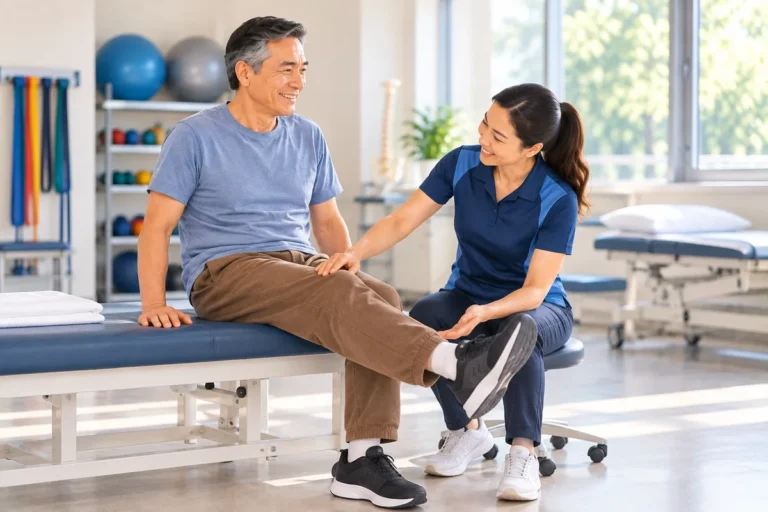
The physiotherapists at SOS Clinic in East Melbourne assess your knee, hips and running history, and set out a plan you can start straight away. See the knee physiotherapy page for more on how the clinic treats knee pain.
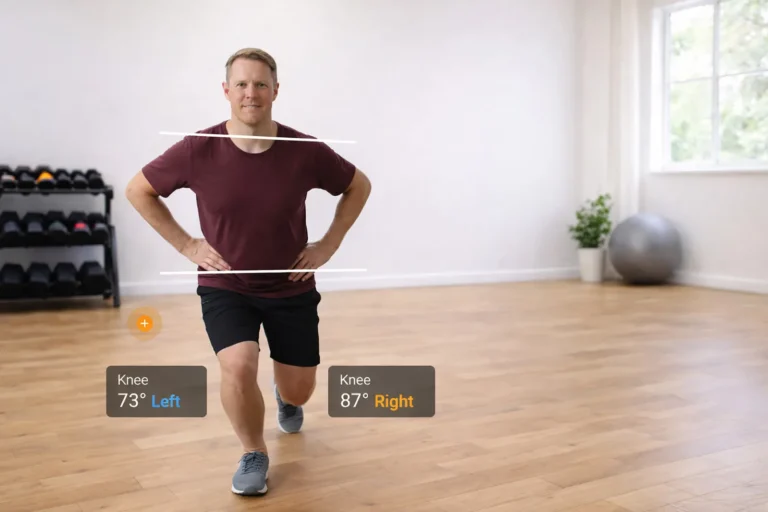
A biomechanical profile assessment can add more detail. The VALD ForceFrame strength frame measures the strength of your hip and thigh muscles on each side. The HumanTrak 3D motion camera records how your hips, knees and ankles move as you squat, lunge and land, so you and your physiotherapist can see patterns that may be adding to the load on your knee. Repeat tests show how you are improving.
Myotherapy can work alongside your program to ease tight muscles around the hip and thigh.
When to get help sooner
See a doctor promptly if your knee swells up quickly, locks or gives way, or if you cannot take weight on it. The same applies if your knee is hot and red, especially with a fever, or if pain wakes you at night and does not settle. These signs point to a problem other than typical kneecap pain. During opening hours, contact the clinic. After hours and on weekends, go to your nearest emergency department.
Book a physiotherapy assessment at SOS Clinic
Frequently asked questions
Do I need a scan for kneecap pain?
Usually not. The diagnosis is made from your story and a physical examination. Scans are often normal and do not change the treatment for most people.
Should I buy new running shoes?
Comfortable shoes that suit you are a good idea. A sudden big change in shoe type can change the load on your knee, so make any switch slowly. Your physiotherapist can advise whether shoe inserts might help.
Is knee taping worth trying?
Taping may ease pain for a short time in some people. The research on it is mixed, so it is best used alongside exercise.
Will kneecap pain lead to arthritis?
This is not clear. Researchers are still studying the link. Keeping your legs strong and staying active is good for your knees either way.
How long until I can run normally again?
It varies. Many people notice improvement within a few weeks of starting strength work, but full recovery can take a few months. Your progress depends on how your knee responds as the load is increased.
References
- Crossley KM, Stefanik JJ, Selfe J, Collins NJ, Davis IS, Powers CM, McConnell J, Vicenzino B, Bazett-Jones DM, Esculier JF, Morrissey D, Callaghan MJ. 2016 Patellofemoral pain consensus statement from the 4th International Patellofemoral Pain Research Retreat, Manchester. Part 1: Terminology, definitions, clinical examination, natural history, patellofemoral osteoarthritis and patient-reported outcome measures. Br J Sports Med. 2016;50(14):839-43.
- Crossley KM, van Middelkoop M, Callaghan MJ, Collins NJ, Rathleff MS, Barton CJ. 2016 Patellofemoral pain consensus statement from the 4th International Patellofemoral Pain Research Retreat, Manchester. Part 2: recommended physical interventions (exercise, taping, bracing, foot orthoses and combined interventions). Br J Sports Med. 2016;50(14):844-52.
- Collins NJ, Barton CJ, van Middelkoop M, Callaghan MJ, Rathleff MS, Vicenzino BT, Davis IS, Powers CM, Macri EM, Hart HF, de Oliveira Silva D, Crossley KM. 2018 Consensus statement on exercise therapy and physical interventions (orthoses, taping and manual therapy) to treat patellofemoral pain: recommendations from the 5th International Patellofemoral Pain Research Retreat, Gold Coast, Australia, 2017. Br J Sports Med. 2018;52(18):1170-8.
- Lack S, Barton C, Sohan O, Crossley K, Morrissey D. Proximal muscle rehabilitation is effective for patellofemoral pain: a systematic review with meta-analysis. Br J Sports Med. 2015;49(21):1365-76.