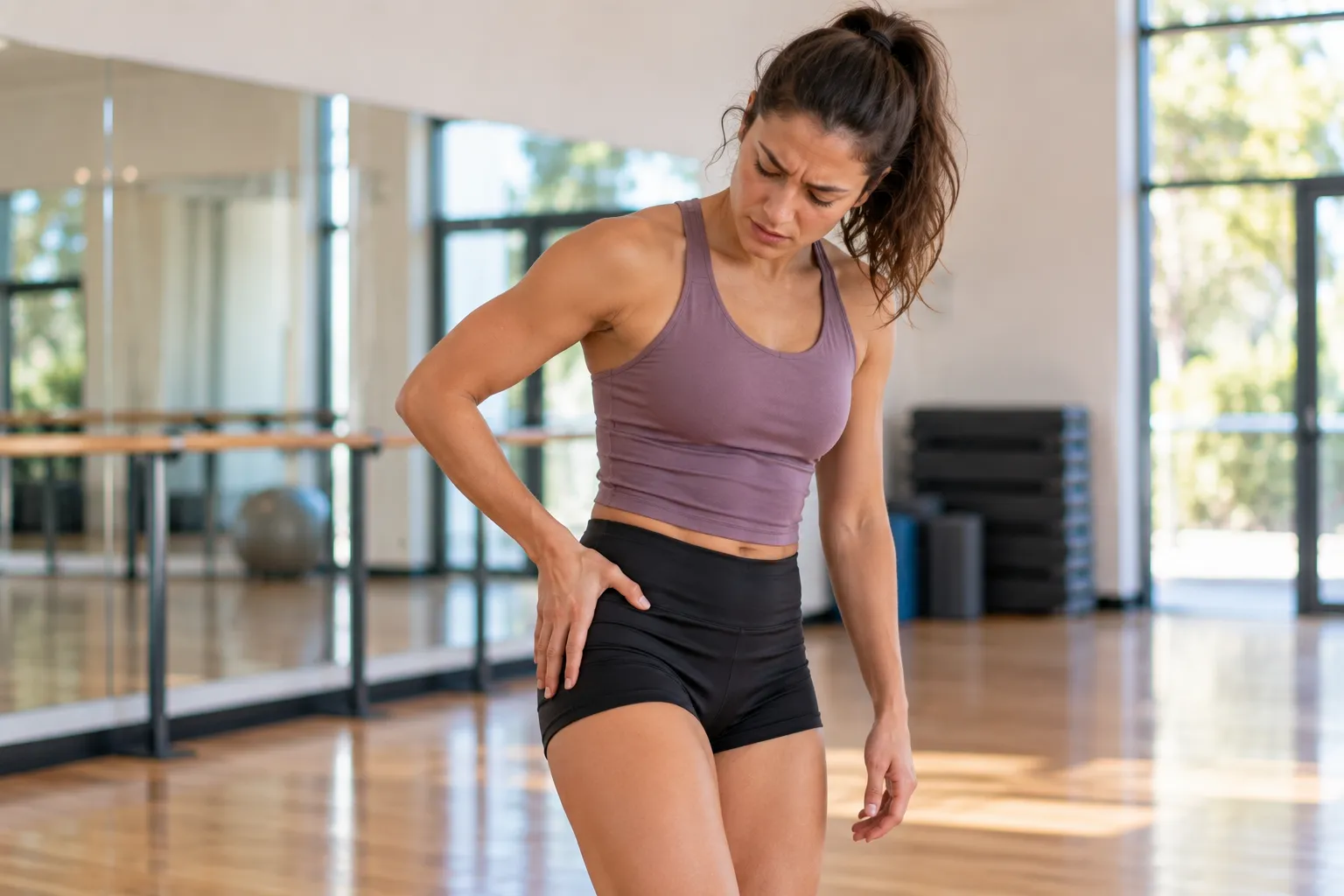
Groin pain in football codes and the squeeze test
Groin pain is one of the most common problems in Australian football, soccer and rugby. These sports involve kicking, sprinting and sharp changes of direction, which all put a lot of load through the groin.
Groin pain often starts as a niggle that you can play through. Over weeks it can build until it stops you kicking or running properly. Finding the cause early and building strength helps you get back sooner.
Not all groin pain is the same
In 2014, a group of international experts met in Doha to agree on names for groin pain in athletes.1 They sorted it into three main groups, based on your story and a physical examination.
- Adductor-related groin pain. Pain in the inner thigh muscles, which pull your legs together. This is the most common type in football.
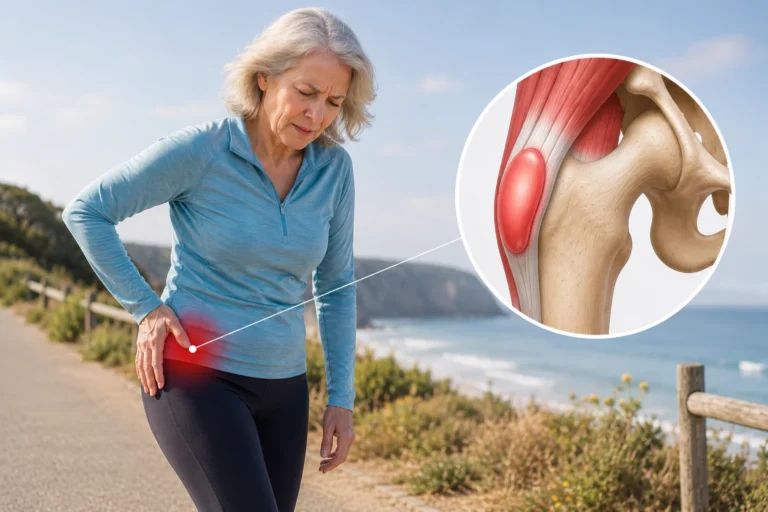
- Iliopsoas-related groin pain. Pain from the deep hip flexor muscle at the front of the hip.
- Inguinal-related groin pain. Pain in the lower belly area near the inguinal canal, often worse with coughing or sit-ups.
- Pubic-related groin pain. Pain over the joint at the front of the pelvis where the two pubic bones meet.
- Hip-related groin pain. Pain coming from the hip joint itself, such as from hip impingement or a labral tear.
- Other causes. A small number of cases come from other problems, such as the lower back, a hernia or problems not related to muscles and joints.
The first four make up the first group, hip-related pain is the second, and other causes are the third. More than one type can be present at the same time.
What is the squeeze test?
The squeeze test checks the strength of your adductor muscles. You lie on your back with your knees bent or straight, and squeeze your legs together against a device or your physiotherapist’s fist. Your physiotherapist notes how strong the squeeze is and whether it brings on your groin pain.
A review of studies found that athletes with groin pain had weaker adductor squeeze strength than athletes without it.3 A study in elite junior Australian football players tested squeeze strength every week. Players who went on to develop groin pain had a drop in strength in the week before their pain started, as well as when it began.4 This was a small study, but it suggests regular testing may pick up early changes.
How rehab works
Most groin pain in football gets better with a well planned exercise program. Rehab usually focuses on the following.
- Settling the pain. Reducing kicking, sprinting and change of direction for a while, without stopping all activity.
- Building adductor strength. Starting with gentle squeezes and building up to harder side-lying and standing exercises.
- Strengthening the hip and trunk. The muscles around the hip and the core help share the load.
- Bringing back running and kicking. Straight line running first, then changes of direction, then longer and harder kicks.
- Testing before return. Your squeeze strength should be close to normal for you and pain free before you go back to full training.
Preventing groin problems
The Copenhagen adduction exercise is a side plank with your top leg resting on a bench or a partner’s arm. You lift your body up and hold, using your inner thigh muscles to take the weight. Easier versions bend the knee or shorten the lever.
A trial in Norwegian semi-professional football teams found that adding a short program of this one exercise lowered the risk of players reporting groin problems during the season by about 40 percent, compared with teams who trained as normal.2 Players did the exercise a few times a week in preseason and once a week during the season.
The exercise can be hard and may cause soreness at first, so it is best to start with the easier versions and build up.
When surgery may be discussed
Most groin pain settles without an operation. If your pain comes from the hip joint and does not improve with a good rehab program, the clinic team can arrange a review with Prof Phong Tran, an orthopaedic surgeon who works from the same clinic. Read about hip arthroscopy and labral repair with Prof Phong Tran.
How SOS Clinic can help
The physiotherapists at SOS Clinic in East Melbourne assess your groin pain to work out which type you have, then build a plan around your sport and season. See the hip physiotherapy page for more.
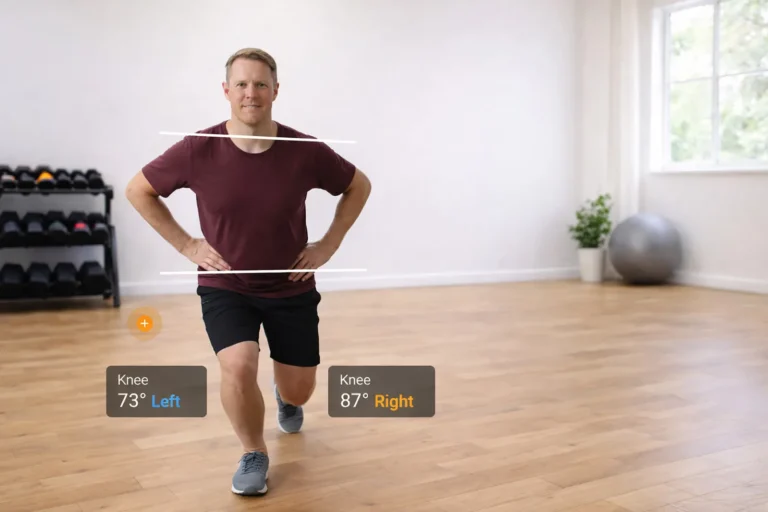
As part of a biomechanical profile assessment, the VALD ForceFrame strength frame measures your adductor squeeze strength and your hip abductor strength. It can test both legs together and each side separately. Repeat tests show how your strength is changing during rehab, and regular checks during the season can help you and your coach spot early drops in strength.
Myotherapy can work alongside your rehab to ease tight muscles around the hip and thigh.
When to get help sooner
See a doctor promptly if you notice a lump in your groin, pain or swelling in the testicles, fever, pain when passing urine, or groin pain with no clear link to sport. The same applies if you cannot walk or put weight on your leg after an injury, or if pain is severe at night. These can be signs of a hernia or another problem that needs a different kind of care. During opening hours, contact the clinic. After hours and on weekends, go to your nearest emergency department.
Book a physiotherapy assessment at SOS Clinic
Frequently asked questions
Can I keep playing with groin pain?
Sometimes, if the pain is mild and does not get worse during or after games. Playing through pain that is building often leads to a longer time out. Your physiotherapist can help you decide.
Do I need a scan for groin pain?
Not usually at first. The type of groin pain is mostly worked out from your story and an examination. A scan may help if the hip joint is the likely cause, or if pain is not improving with rehab.
Is stretching enough to fix groin pain?
Stretching alone is unlikely to fix it. Strength training of the adductors and hips is the main part of rehab.
Should the whole team do the Copenhagen exercise?
The trial that tested it was done with whole teams, and it lowered groin problems across the season. A short program that builds up slowly in preseason is a good place to start.
Is groin pain a hernia?
Sometimes, but most groin pain in footballers comes from the muscles, tendons or hip. If you notice a lump or swelling, see your doctor.
References
- Weir A, Brukner P, Delahunt E, Ekstrand J, Griffin D, Khan KM, Lovell G, Meyers WC, Muschaweck U, Orchard J, Paajanen H, Philippon M, Reboul G, Robinson P, Schache AG, Schilders E, Serner A, Silvers H, Thorborg K, Tyler T, Verrall G, de Vos RJ, Vuckovic Z, Hölmich P. Doha agreement meeting on terminology and definitions in groin pain in athletes. Br J Sports Med. 2015;49(12):768-74.
- Harøy J, Clarsen B, Wiger EG, Øyen MG, Serner A, Thorborg K, Hölmich P, Andersen TE, Bahr R. The Adductor Strengthening Programme prevents groin problems among male football players: a cluster-randomised controlled trial. Br J Sports Med. 2019;53(3):150-7.
- Kloskowska P, Morrissey D, Small C, Malliaras P, Barton C. Movement Patterns and Muscular Function Before and After Onset of Sports-Related Groin Pain: A Systematic Review with Meta-analysis. Sports Med. 2016;46(12):1847-67.
- Crow JF, Pearce AJ, Veale JP, VanderWesthuizen D, Coburn PT, Pizzari T. Hip adductor muscle strength is reduced preceding and during the onset of groin pain in elite junior Australian football players. J Sci Med Sport. 2010;13(2):202-4.